

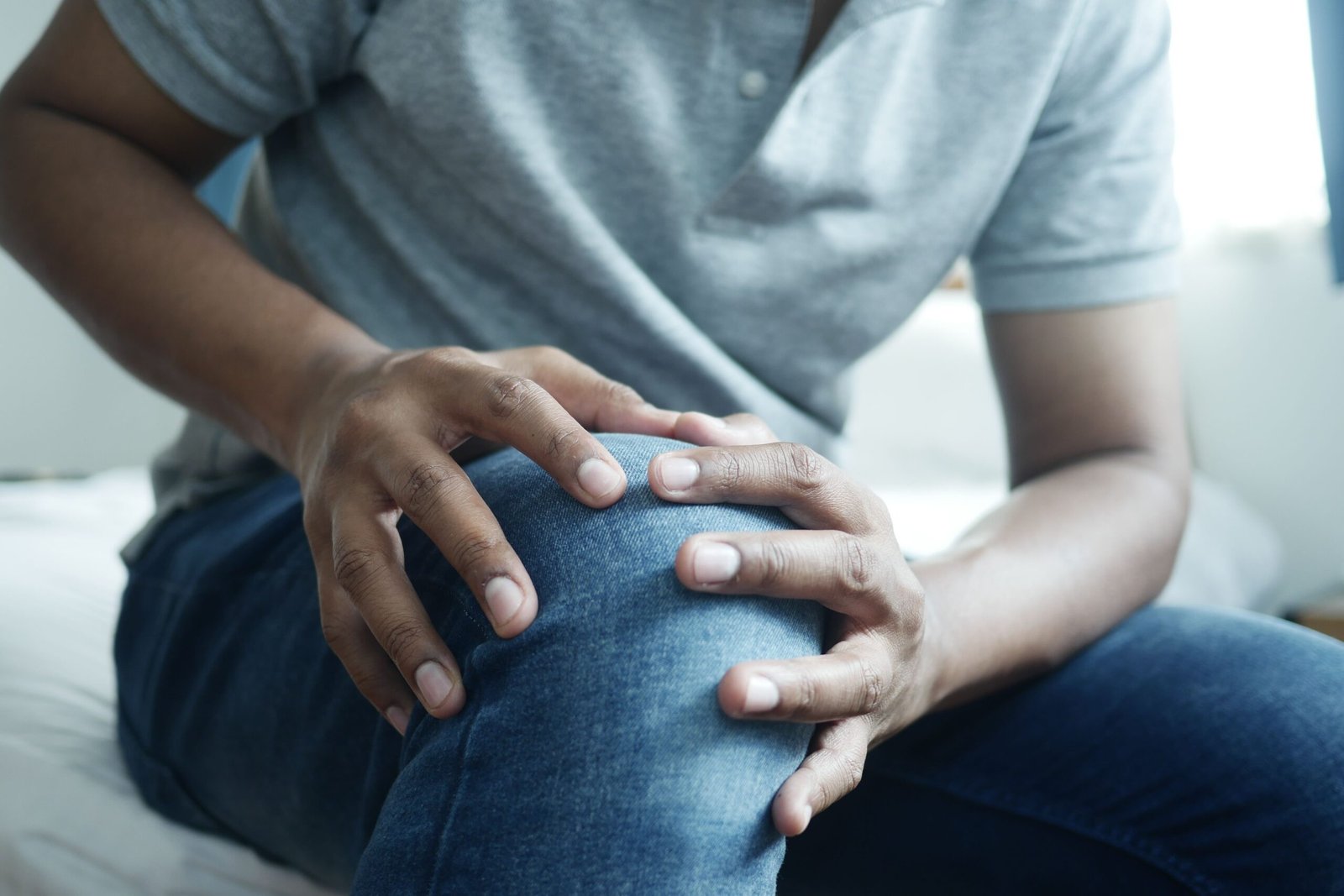
Joint pain has a frustrating way of changing ordinary parts of the day.
Getting out of bed can suddenly require more thought. Walking up a flight of stairs may feel different than it used to. Opening a jar, standing after sitting for a long time, gardening, exercising, or even getting comfortable at night can become noticeably harder when a joint is stiff, swollen, or painful.
What makes joint pain particularly challenging is that there is no single explanation for it. Pain around a joint can develop because of osteoarthritis, an inflammatory form of arthritis, an old injury, overuse, muscle weakness, gout, or several other conditions. Arthritis itself is not one disease but a broad group of conditions affecting joints and surrounding tissues. (Mayo Clinic)
That is why I have become cautious whenever I see joint-pain advice reduced to something like, “Take this supplement,” “Stop exercising,” or “Just stretch more.”
Joint health is usually more complicated than that.
At the same time, complicated does not mean hopeless. There are plenty of sensible habits that can make living with joint discomfort easier. Some can reduce stiffness, some help preserve mobility, and others strengthen the muscles that take pressure off vulnerable joints.
The goal, at least the way I look at it, is not to chase a magical overnight fix. I would rather build a combination of small habits that makes movement easier and protects my ability to stay active over the long term.
Below are the joint-pain strategies I consider most useful.
First, I Try to Understand What My Joint Pain Is Telling Me
Before doing anything else, I think it is worth paying attention to the pattern of the pain.
Not every aching knee, finger, hip, shoulder, or ankle is arthritis. Even among people who do have arthritis, different forms of the condition can require very different treatment approaches.
I pay attention to questions such as:
- Which joint hurts?
- Did the pain begin suddenly or gradually?
- Is there visible swelling?
- Is the joint warm or red?
- Does it hurt more during movement or afterward?
- Is stiffness particularly noticeable after waking?
- Was there a recent injury?
- Does the joint feel unstable?
- Are multiple joints affected?
- Does the discomfort improve after gentle movement?
- Is the pain interfering with sleep or normal activities?
These details can be surprisingly useful.
Osteoarthritis, for example, commonly involves pain, stiffness, and reduced function in affected joints. Rheumatoid arthritis is an inflammatory autoimmune disease and may involve joint tenderness, warmth, swelling, and morning stiffness, often affecting joints on both sides of the body. Gout can produce episodes of intense pain and swelling. (MedlinePlus)
In other words, “joint pain” describes a symptom rather than a diagnosis.
If pain keeps returning, becomes progressively worse, follows a significant injury, or comes with substantial swelling or other concerning symptoms, I would rather have the cause evaluated than spend months guessing.
1. I Keep Moving Instead of Becoming Completely Sedentary
One of the biggest lessons I have learned about joint pain is that protecting a painful joint does not necessarily mean avoiding movement altogether.
When something hurts, staying still feels logical. I understand the temptation. If walking makes the knee uncomfortable, why walk? If the shoulder aches when it moves, why not simply rest it?
Short periods of rest can certainly be appropriate, particularly after an injury or during an acute flare. But chronic inactivity creates its own problems.
Muscles can weaken. Flexibility can decrease. Stiffness may become more noticeable. Everyday activities can gradually feel harder.
For arthritis in particular, regular physical activity is an important part of symptom management. The CDC reports that physical activity can reduce arthritis pain and improve physical function, and the National Institute on Aging notes that appropriately performed exercise can reduce joint pain and stiffness while improving flexibility, strength, and endurance. (CDC)
I therefore think in terms of appropriate movement rather than maximum movement.
That distinction matters.
If my joints are irritated, it is probably not the day to prove how hard I can train. But completely abandoning activity is not automatically the better answer either.
Sometimes a comfortable ten-minute walk is enough. Other days it may be some gentle mobility work, light cycling, or exercises in a swimming pool.
Consistency matters far more to me than turning every session into a workout.
2. I Choose Low-Impact Exercise When My Joints Need a Break
When joints hurt, I prefer activities that let me move without repeatedly pounding them.
Some of my favorite examples include:
- Walking
- Swimming
- Water exercise
- Cycling
- Tai chi
- Light gardening
- Gentle dancing
The CDC identifies activities such as walking, cycling, swimming, tai chi, dancing, water exercise, and light gardening as joint-friendly options because they place relatively little stress on the joints. (CDC)
Swimming and pool-based exercise can be particularly appealing.
Water supports part of the body’s weight, which can make movement more comfortable for people who struggle with weight-bearing exercise. NIAMS specifically includes water exercise among approaches that can reduce stress on joints while remaining physically active. (NIAMS)
Walking is simpler, of course, and requires no membership or equipment.
I prefer beginning at a duration that feels manageable and gradually increasing it rather than starting aggressively and spending the next several days recovering.
Someone who has been sedentary does not have to jump immediately into long workouts.
Five or ten comfortable minutes can be a perfectly reasonable starting point.
The habit comes first.
3. I Strengthen the Muscles Around My Joints
Cardiovascular activity gets a lot of attention, but I think strength training deserves equal respect when talking about joint health.
Our muscles help support and stabilize our joints.
Weak muscles can mean that everyday movement becomes more difficult, while improving strength may make tasks such as getting up from a chair, climbing stairs, carrying groceries, or maintaining balance easier.
NIAMS recommends strengthening exercises as part of osteoarthritis management and notes that weights or resistance bands can be used to strengthen muscles supporting affected joints. (NIAMS)
I do not interpret that as an instruction to immediately start lifting extremely heavy weights.
Strength training can be simple.
Depending on the joint involved and someone’s physical ability, a program might include controlled exercises using:
- Body weight
- Resistance bands
- Light dumbbells
- Weight machines
- Chair-supported movements
- Physical-therapy exercises
Technique matters enormously.
If an exercise repeatedly creates sharp joint pain, I do not consider that something to “push through.” Changing the movement, range of motion, resistance, or exercise itself makes more sense.
For significant joint problems, working with a physical therapist can be especially valuable because exercises can be selected according to the joint involved, mobility limitations, strength deficits, and individual diagnosis.
4. I Make Flexibility and Range of Motion Part of My Routine
Strength alone is not enough.
A strong joint that barely moves comfortably can still make everyday life difficult.
That is why I like including gentle range-of-motion exercises alongside strengthening and cardiovascular activity.
NIAMS includes range-of-motion and stretching activities among strategies used to help keep joints mobile. (NIAMS)
I usually prefer gentle, controlled movement rather than forceful stretching.
The goal is not to see how far I can pull a painful joint. I am trying to maintain useful movement.
A few minutes can make a difference, particularly after spending a long time sitting.
I also find that warming up first makes stretching feel much more natural. Walking around the room, marching gently in place, or taking a warm shower can make movement more comfortable before I start trying to increase range of motion.
I never want flexibility work to feel like punishment.
5. I Avoid the “Weekend Warrior” Trap
One pattern I have seen repeatedly is doing very little Monday through Friday and then trying to make up for it with an enormous amount of activity over the weekend.
The joints are rarely impressed.
A sudden jump in walking distance, heavy lifting, running volume, gardening, home renovations, or recreational sports can leave an underprepared body feeling miserable.
I prefer gradual progression.
If I currently walk for 15 minutes comfortably, I do not need to suddenly turn that into a two-hour hike.
If I have not strength trained in six months, my first session does not need to resemble something designed for an athlete.
The body adapts when it is given manageable challenges consistently.
This approach may feel less exciting, but it is far easier to sustain.
6. I Pay Attention to Body Weight Without Turning It Into a Crash Diet
Weight is a sensitive subject, so I think it deserves a sensible discussion.
For people who are overweight or obese and dealing with osteoarthritis, particularly in weight-bearing joints such as the knees and hips, weight management can be an important part of treatment.
NIAMS notes that losing excess weight can lower stress on joints and may help decrease pain and improve movement. American College of Rheumatology/Arthritis Foundation guidelines strongly recommend weight loss for people who are overweight or obese and have knee or hip osteoarthritis. (NIAMS)
I would not translate that into “lose as much weight as possible, as quickly as possible.”
Extreme dieting can bring its own health problems and is notoriously difficult to sustain.
A better goal is often gradual progress through habits that can realistically become part of normal life: balanced meals, appropriate portions, adequate protein, vegetables and fruit, whole foods, regular activity, and fewer highly processed foods that contribute large amounts of calories without keeping me satisfied.
Even beyond joint health, those are habits with much broader benefits.
7. I Use Heat When Stiffness Is the Bigger Problem
There are days when pain is not necessarily the main issue.
Stiffness is.
That uncomfortable “rusty hinge” feeling can be particularly noticeable after waking or sitting in the same position for too long.
Personally, warmth is one of the simplest comfort measures I reach for in those situations.
A warm shower, heating pad, warm towel, or heated wrap may help muscles relax and make gentle movement feel easier.
The important word is warm, not painfully hot.
I also avoid sleeping on a heating pad or putting intense heat directly against skin for prolonged periods because burns can happen surprisingly easily.
People with reduced skin sensation, circulation problems, diabetes-related neuropathy, or certain other medical conditions may need to be especially cautious with temperature therapies.
Heat is a comfort strategy, not a treatment for every underlying cause of joint pain.
8. I Use Cold Strategically When a Joint Feels Irritated
Cold can be useful in a different situation.
If a joint feels particularly swollen or irritated, especially after activity or a minor injury, a wrapped cold pack may provide temporary relief.
I never put ice directly against bare skin.
Instead, I keep a thin layer of fabric between the cold source and my body and limit exposure rather than leaving it in place indefinitely.
Heat versus cold does not need to become a philosophical debate.
Sometimes I prefer warmth for stiffness and cold for temporary relief after aggravation.
What matters is using either method safely and recognizing that neither substitutes for medical evaluation when something more serious is happening.
9. I Break Up Long Periods of Sitting
Modern life encourages us to stay in one position far longer than our bodies seem to enjoy.
I notice this most when working at a desk.
A perfectly tolerable knee or hip can feel surprisingly stiff after sitting for several hours.
Rather than waiting until everything feels locked up, I prefer changing positions regularly.
That can mean standing, walking around for a few minutes, performing a few gentle movements, or simply taking the stairs to another floor.
The National Institute on Aging encourages people to stay active throughout the day and avoid prolonged sitting when possible. (National Institute on Aging)
I find this strategy useful because it does not require another “workout.”
It simply distributes movement across the day.
10. I Take Footwear More Seriously Than I Used To
Shoes are easy to overlook until the knees, ankles, feet, or hips start complaining.
Poorly fitting footwear can alter comfort during walking and may make exercise harder than necessary.
For everyday activity, I look for shoes that fit properly, feel stable, provide appropriate cushioning for the activity I am doing, and do not force my feet into an unnatural position.
Someone with significant foot deformities, severe arthritis, instability, or a major difference in walking mechanics may benefit from professional assessment rather than randomly buying increasingly expensive shoes or inserts.
The larger lesson for me is simple: if walking is part of my joint-health strategy, the equipment connecting me to the ground deserves some attention.
11. I Respect Pain, but I Do Not Automatically Fear Every Ache
This balance can be difficult.
Ignoring pain completely is not sensible.
Being terrified by every small sensation is not helpful either.
Exercise can create normal muscular fatigue and mild soreness, particularly when returning to activity after a long break. Joint pain that is sharp, rapidly worsening, associated with substantial swelling, or persists after every attempt at a particular movement deserves more caution.
I try to look at the overall pattern.
If I repeatedly feel significantly worse after an activity, I modify it.
Perhaps the session is too long.
Maybe the resistance is too heavy.
Perhaps the terrain is too steep.
Maybe I need a different exercise entirely.
The goal of joint-friendly exercise is to expand what the body can comfortably tolerate over time, not repeatedly provoke it.
12. I Treat Sleep as Part of Pain Management
Pain and sleep can become an unpleasant cycle.
Pain makes it harder to sleep.
Poor sleep makes the following day harder.
Fatigue can reduce motivation to exercise, cook well, or perform rehabilitation exercises. Then stiffness and inactivity can become more noticeable.
So although sleep is not a direct cure for arthritis or joint damage, I consider a reasonable sleep routine part of my overall strategy.
I try to maintain consistent sleep and wake times, keep the room comfortable, reduce late-night screen exposure when possible, and experiment with pillows or sleeping positions that reduce unnecessary pressure on painful areas.
Persistent nighttime joint pain is also something I would mention to a healthcare professional rather than simply accepting it indefinitely.
13. I Try to Eat for Overall Health Rather Than Searching for a Miracle “Arthritis Diet”
Few areas of joint-pain advice generate more exaggerated promises than food.
I have seen individual foods presented as if they could rebuild cartilage, remove arthritis, or eliminate inflammation within days.
I do not find that kind of thinking useful.
Instead, I prefer an overall eating pattern built around nutritious foods.
That means plenty of vegetables, fruit, legumes, whole grains where appropriate, nuts and seeds, healthy fats, and quality protein sources, while keeping excessive highly processed food and added sugar in perspective.
For someone whose joint pain is connected to gout, dietary advice may need to be much more specific. Likewise, people with diabetes, kidney disease, cardiovascular disease, gastrointestinal conditions, food allergies, or medication-related restrictions may need individualized nutritional guidance.
Diet should fit the person, not the latest internet trend.
14. I Am Careful With Joint Supplements
The joint supplement aisle can make it look as though every bottle has solved arthritis.
Reality is much less dramatic.
Glucosamine and chondroitin are among the most widely promoted supplements for osteoarthritis, yet research findings have been inconsistent. NCCIH states that despite extensive research, uncertainty remains about whether glucosamine and chondroitin have a meaningful effect on osteoarthritis symptoms or joint structure. (NCCIH)
That does not mean every complementary approach is useless.
For example, evidence suggests tai chi may improve pain, stiffness, and physical function in some people with knee or hip osteoarthritis, and certain other mind-body or complementary approaches may help some chronic pain conditions. (NCCIH)
What I avoid is assuming that “natural” automatically means safe.
Supplements may cause side effects or interact with medications. Quality can also vary considerably.
The FDA has specifically warned about products marketed for pain and arthritis that were found to contain undeclared drug ingredients. (U.S. Food and Drug Administration)
That is enough reason for me to be selective.
15. I Do Not Treat Over-the-Counter Pain Medicine as Risk-Free
Over-the-counter pain medicine can certainly have a role in joint-pain management, but the fact that something is available without a prescription does not mean it is appropriate for everyone.
Nonsteroidal anti-inflammatory drugs, or NSAIDs, include medications such as ibuprofen and naproxen. These medicines can reduce pain and inflammation, but they can also cause important adverse effects.
FDA warnings associated with NSAIDs include gastrointestinal bleeding and increased cardiovascular risks, particularly when medicines are taken inappropriately or longer than directed. Certain people with kidney disease, heart problems, ulcers, bleeding risks, medication interactions, pregnancy, or other medical issues may need to avoid particular pain relievers or use them only under professional guidance. (U.S. Food and Drug Administration)
I therefore read labels carefully and speak with a pharmacist or healthcare professional when I am unsure.
Taking two different products that contain overlapping ingredients is another easy mistake to make.
More pain medicine is not automatically better pain control.
16. I Consider Physical Therapy When I Need More Than General Advice
Sometimes generic advice reaches its limit.
If one specific knee, hip, shoulder, ankle, hand, or other joint keeps causing trouble, a physical therapist may be able to identify weaknesses, mobility restrictions, balance issues, or movement patterns that are difficult to notice on my own.
A personalized program may include:
- Strengthening
- Range-of-motion work
- Balance exercises
- Functional movement training
- Gradual return to activity
- Guidance on assistive devices
- Strategies for modifying aggravating activities
Physical therapy is among the treatment approaches used for arthritis and other musculoskeletal problems. (CDC)
I particularly value the individualized nature of it.
Instead of asking, “What exercises are good for knees?” the better question becomes, “What does this knee need, given this person’s diagnosis, strength, mobility, activity level, and goals?”
That is a much more useful conversation.
17. I Think About Everyday Joint Protection
Managing joint pain is not limited to formal exercise.
Small changes in daily movement can reduce unnecessary strain.
I might:
- Use both hands instead of one when carrying something heavy.
- Break a heavy load into two smaller loads.
- Avoid staying bent or crouched for unnecessarily long periods.
- Alternate repetitive tasks.
- Arrange frequently used items where they are easy to reach.
- Use kitchen or household tools with comfortable handles.
- Sit down for tasks that do not need to be performed standing.
- Ask for help rather than forcing a painful joint through something it clearly dislikes.
These adjustments may sound minor, but joint pain often builds from hundreds of ordinary movements.
Making everyday life easier can matter just as much as the exercise routine.
18. I Keep Stress Management in the Conversation
Chronic pain is not “all in the mind,” but the nervous system and emotional state absolutely influence how people experience and cope with persistent pain.
That is why relaxation practices, mindfulness, tai chi, yoga, and similar approaches sometimes appear in chronic-pain management discussions.
NCCIH reports that several complementary approaches—including mindfulness meditation, tai chi, yoga, acupuncture, massage, and others—may be useful for certain chronic pain conditions, although evidence and effectiveness differ by condition and technique. (NCCIH)
I personally think of these methods as additions rather than replacements.
Meditation cannot repair a torn ligament.
Relaxation cannot reverse severe structural joint damage.
But improving stress, sleep, confidence in movement, and the ability to cope with chronic discomfort may still make daily life considerably better.
19. I Keep Track of What Makes My Joints Better or Worse
When pain is unpredictable, memory becomes unreliable.
After several weeks it can be surprisingly difficult to remember whether a particular activity actually made things worse or whether I simply happened to have a bad day afterward.
A simple pain journal can help.
I might note:
- Pain level
- Location
- Stiffness
- Swelling
- Exercise performed
- Sleep quality
- Unusual physical activity
- Medication taken
- Relevant foods if gout is suspected
- How long symptoms lasted
I am not looking to obsess over every sensation.
I am looking for patterns.
That information can also make an appointment with a healthcare professional more productive.
20. I Know When Joint Pain Deserves Medical Attention
Home management has limits.
Some symptoms should not be brushed off with another heating pad and a few stretches.
I would seek prompt medical advice for joint pain that follows a significant injury, becomes severe, causes major difficulty using the joint, or is accompanied by concerning swelling or other new symptoms.
A hot, red, intensely painful, swollen joint—especially when accompanied by fever or feeling unwell—deserves urgent medical assessment because infection and other serious causes have to be considered.
Sudden weakness, substantial numbness, loss of bowel or bladder control, or severe symptoms after trauma can also require urgent evaluation depending on where and how symptoms occur. MedlinePlus advises medical assessment for several such neurological and post-injury warning signs. (MedlinePlus)
I also think persistent pain deserves attention even when it is not an emergency.
Pain that regularly interferes with walking, work, exercise, sleep, or ordinary activities is enough reason to have a conversation with a healthcare professional.
You do not have to wait until you can barely move.
What I Would Do First If My Joints Started Hurting Regularly
If I noticed recurring joint discomfort and had no known serious injury, my starting strategy would be fairly straightforward.
First, I would observe the symptoms carefully rather than guessing at a diagnosis.
Next, I would keep moving within a comfortable range. Walking, cycling, swimming, gentle mobility work, or another low-impact activity would probably be my first choice.
I would gradually strengthen the muscles surrounding the problem area instead of relying entirely on passive treatments.
If I were carrying excess body weight and had pain in weight-bearing joints, I would also work toward gradual, sustainable weight management.
For temporary comfort, I might experiment responsibly with warmth or cold depending on the situation.
I would break up long periods of sitting, pay attention to footwear and ergonomics, prioritize sleep, and stop expecting one supplement or one “anti-inflammatory” food to solve everything.
Most importantly, if the pain kept returning, worsened, or came with unusual symptoms, I would get it evaluated.
That combination feels far more sensible to me than simply living on pain relievers or avoiding movement indefinitely.
A Simple Joint-Friendly Routine I Like
For someone who has already been medically cleared for exercise, a basic routine does not need to be elaborate.
I like the idea of starting the day with several minutes of gentle range-of-motion movements.
Later, I might walk for 10 to 30 minutes at a comfortable pace or choose cycling or water exercise instead.
On a couple of days during the week, I would add appropriate resistance exercises targeting the major muscle groups and the muscles supporting the troublesome joint.
During a long workday, I would get up periodically rather than remaining in the same chair for hours.
Then I would adjust the plan according to how my body responds.
Eventually, many adults can work toward broader public-health physical activity targets. CDC and NIA guidance generally encourages about 150 minutes of moderate-intensity aerobic physical activity per week for adults, alongside muscle-strengthening activity, although people with chronic conditions or significant limitations may need an individualized plan. (CDC)
The target is useful.
But I would never let the perfect target discourage me from doing something.
Ten minutes of movement is still movement.
My Final Thoughts on Tips to Help With Joint Pain
The biggest mistake I think people make with joint pain is looking for a single thing that will fix everything.
Joint pain rarely works that way.
I see better results as the product of several sensible decisions working together: staying active, building strength, preserving mobility, managing body weight where appropriate, sleeping well, modifying aggravating activities, using medication carefully, and getting professional help when symptoms call for it.
I also think it helps to stop viewing exercise and joint protection as opposites.
Appropriate exercise is part of protecting our joints.
A safe, well-rounded exercise program can decrease pain and stiffness while improving strength, flexibility, and endurance in people with osteoarthritis, and major arthritis-management guidelines consistently emphasize exercise as a central non-drug strategy. (National Institute on Aging)
That does not mean every exercise is appropriate for every person.
A 25-year-old recovering from a sports injury, a 55-year-old with knee osteoarthritis, and a 70-year-old with rheumatoid arthritis clearly should not receive identical advice.
The principle is to find movement that matches the person and the condition.
If there is one idea I would want readers to take away from these tips to help with joint pain, it is this:
Do not give up on movement simply because movement has become uncomfortable. Find safer ways to move, strengthen what supports your joints, respect warning signs, and get help when you need it.
Joint pain may require us to change the way we move.
It does not automatically mean we have to stop moving.
References
The following sources were consulted when preparing this article. I prioritize government health agencies, medical organizations, and peer-reviewed clinical guidance rather than relying on commercial joint-pain websites.
- National Institute on Aging (NIH) — Osteoarthritis
https://www.nia.nih.gov/health/osteoarthritis/osteoarthritis
Guidance on exercise, stretching, balance training, low-impact activity, joint stiffness, and osteoarthritis management. (National Institute on Aging) - Centers for Disease Control and Prevention (CDC) — About Physical Activity and Arthritis
https://www.cdc.gov/arthritis/prevention/index.html
Information on joint-friendly activities including walking, cycling, swimming, tai chi, dancing, and water exercise. (CDC) - Centers for Disease Control and Prevention (CDC) — Self-Care for Arthritis: Five Ways to Manage Your Symptoms
https://www.cdc.gov/arthritis/caring/index.html
Evidence-based recommendations on physical activity and arthritis self-management. (CDC) - National Institute of Arthritis and Musculoskeletal and Skin Diseases (NIAMS/NIH) — Osteoarthritis: Diagnosis, Treatment, and Steps to Take
https://www.niams.nih.gov/health-topics/osteoarthritis/diagnosis-treatment-and-steps-to-take
Information about range-of-motion exercise, strengthening, water exercise, balance training, and osteoarthritis treatment. (NIAMS) - National Institute of Arthritis and Musculoskeletal and Skin Diseases (NIAMS/NIH) — Living With Arthritis: Health Information Basics for You and Your Family
https://www.niams.nih.gov/community-outreach-initiative/understanding-joint-health/living-with-arthritis
Information regarding physical activity, weight management, joint stress, pain, and mobility. (NIAMS) - American College of Rheumatology / Arthritis Foundation — Arthritis Care & Research — 2019 American College of Rheumatology/Arthritis Foundation Guideline for the Management of Osteoarthritis of the Hand, Hip, and Knee
https://acrjournals.onlinelibrary.wiley.com/doi/10.1002/art.41142
Clinical guideline covering exercise, weight management, and other osteoarthritis interventions. (Acr Journals) - National Center for Complementary and Integrative Health (NCCIH/NIH) — Arthritis and Complementary Health Approaches
https://www.nccih.nih.gov/health/providers/digest/arthritis-and-complementary-health-approaches
Scientific overview of tai chi, acupuncture, massage, glucosamine, chondroitin, and other complementary approaches to arthritis. (NCCIH) - National Center for Complementary and Integrative Health (NCCIH/NIH) — 7 Things To Know About Complementary Health Approaches for Osteoarthritis
https://www.nccih.nih.gov/health/tips/things-to-know-about-complementary-health-approaches-for-osteoarthritis
Evidence-based discussion of tai chi and other complementary approaches studied for osteoarthritis. (NCCIH) - National Center for Complementary and Integrative Health (NCCIH/NIH) — Chronic Pain and Complementary Health Approaches: Usefulness and Safety
https://www.nccih.nih.gov/health/chronic-pain-and-complementary-health-approaches-usefulness-and-safety
Scientific information about complementary approaches including mindfulness, massage, acupuncture, tai chi, yoga, and related pain-management strategies. (NCCIH) - U.S. Food and Drug Administration (FDA) — Pain and Arthritis Products Containing Hidden Ingredients
https://www.fda.gov/drugs/medication-health-fraud-notifications/pain-and-arthritis-products-containing-hidden-ingredients
FDA safety information regarding products marketed for arthritis and pain that may contain undeclared pharmaceutical ingredients. (U.S. Food and Drug Administration) - U.S. Food and Drug Administration (FDA) — FDA Approves First Nonprescription Fixed-Dose Combination of Acetaminophen and Naproxen Sodium for 12-Hour Pain Relief
https://www.fda.gov/drugs/news-events-human-drugs/fda-approves-first-nonprescription-fixed-dose-combination-acetaminophen-and-naproxen-sodium-12-hour
Includes important safety information concerning acetaminophen and NSAID-containing pain medicines, including gastrointestinal and cardiovascular warnings. (U.S. Food and Drug Administration) - National Institute on Aging (NIH) — Three Types of Exercise Can Improve Your Health and Physical Ability
https://www.nia.nih.gov/health/exercise-and-physical-activity/three-types-exercise-can-improve-your-health-and-physical
Guidance on aerobic physical activity, staying active throughout the day, and exercise for people living with chronic conditions. (National Institute on Aging)
Disclaimer
This article is provided for general educational and informational purposes only and is not intended to diagnose, treat, cure, or prevent any disease or medical condition. It should not be considered a substitute for personalized medical advice, diagnosis, or treatment from a physician, physical therapist, pharmacist, registered dietitian, or other qualified healthcare professional.
Joint pain can have many causes, including osteoarthritis, rheumatoid arthritis, gout, injuries, infections, and other medical conditions, and the appropriate treatment depends on the underlying cause. Anyone experiencing persistent, severe, unexplained, rapidly worsening, or injury-related joint pain—or significant swelling, redness, warmth, fever, weakness, numbness, or loss of normal joint function—should seek appropriate medical evaluation.
Always consult a qualified healthcare professional before starting a new exercise program, substantially changing your diet, taking a dietary supplement, or beginning, stopping, or changing pain medication, particularly if you have an existing medical condition, take prescription medications, are pregnant or breastfeeding, or have a history of kidney, liver, gastrointestinal, cardiovascular, or bleeding problems.
I made the title deliberately include “Tips to Help With Joint Pain” while still sounding natural enough for a blog rather than an exact-match keyword stuffed headline.