

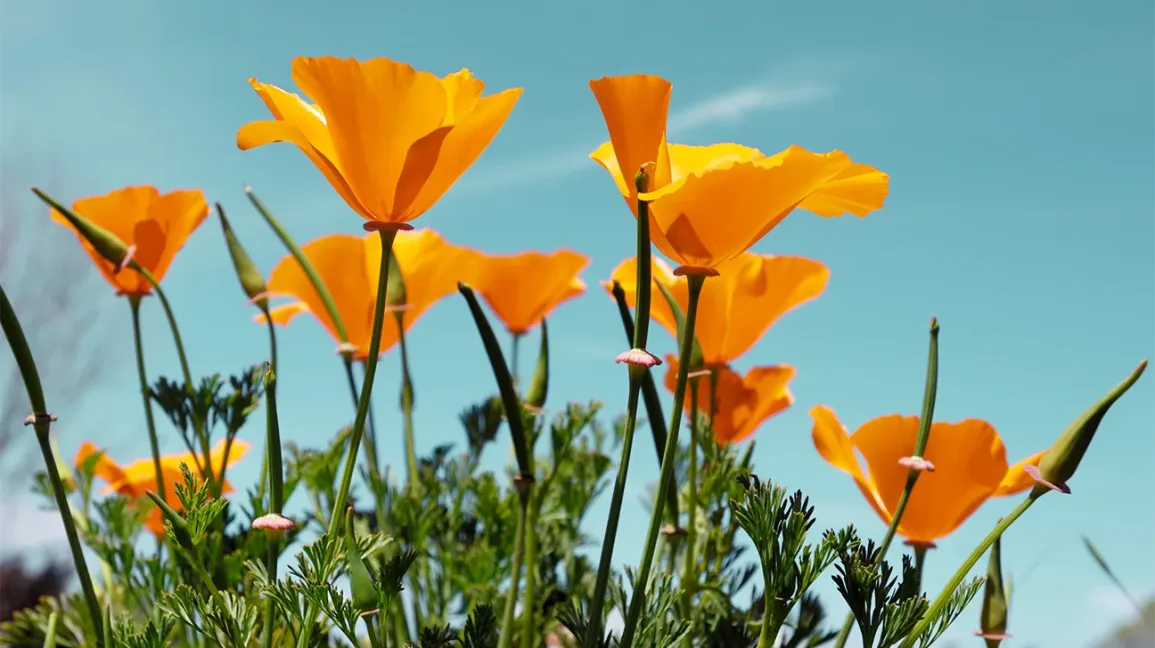
When I first started looking seriously at herbs used for nerve discomfort, passion flower and California poppy stood out for a reason that goes beyond simple pain relief. Neither plant should be thought of as a proven cure for neuropathy, and I think making that distinction from the beginning is important. What interested me instead was the way both herbs have traditionally been used to influence the nervous system, relaxation, sleep, tension, and the perception of discomfort—all factors that can become deeply intertwined when someone is living with persistent nerve pain.
Nerve pain is rarely as straightforward as an occasional sore muscle. People commonly describe neuropathic discomfort as burning, tingling, electrical sensations, pins and needles, hypersensitivity, numbness, stabbing pain, or uncomfortable sensations that seem to appear without an obvious external cause. The discomfort can also become more noticeable at night, which may interfere with sleep and create a frustrating cycle in which poor rest makes the following day feel even harder.
That is where I believe herbs such as Passiflora incarnata, commonly known as passion flower, and Eschscholzia californica, or California poppy, become particularly interesting. Their potential value may not come from simply “switching off” nerve pain. Instead, researchers have investigated properties involving nervous-system relaxation, anxiety, sleep, GABA-related activity, and—in preclinical research—analgesic effects.
After reviewing the research, my view is that these herbs are best approached as potential supportive ingredients rather than substitutes for proper diagnosis or evidence-based treatment. The distinction matters because neuropathic pain can sometimes signal conditions that need medical attention. At the same time, understanding the supportive role of botanicals can help people make much more informed decisions about nerve-support supplements.
Understanding Nerve Pain Before Looking at Herbal Support
Before discussing passion flower and California poppy individually, I think it is worth understanding what makes nerve pain different from ordinary aches and pains.
When I bump my knee or strain a muscle, the pain is usually linked fairly clearly to tissue damage or inflammation. Neuropathic pain is different because the problem involves the nerves themselves or the pathways responsible for transmitting sensory information. A nerve may become damaged, irritated, compressed, metabolically affected, or otherwise dysfunctional, causing signals to be processed differently.
That is one reason nerve discomfort can produce such unusual sensations. Someone may experience burning without an obvious burn, tingling without pressure on the limb, shooting sensations, extreme sensitivity to touch, numbness mixed with pain, or an electric-like feeling running along a particular area.
There are many possible causes of neuropathic symptoms, including diabetes, vitamin deficiencies, certain medications, nerve compression, injuries, infections, autoimmune conditions, alcohol-related nerve damage, and various neurological disorders. Because the causes differ so widely, I would never personally assume that an herbal product is the appropriate response to unexplained nerve symptoms without first considering why those symptoms are occurring.
What makes the subject more complicated is the relationship between pain and the wider nervous system. Persistent discomfort can affect sleep, mood, stress levels, concentration, and quality of life. Meanwhile, poor sleep and psychological stress can make pain feel harder to tolerate. The relationship can become circular: discomfort interferes with rest, poor rest reduces resilience, and heightened stress makes the discomfort even harder to ignore.
This broader picture helps explain why calming herbs can be relevant even when they do not directly repair damaged nerves.
Why Passion Flower Interests Me for Nerve Pain Support
Passion flower has a long history of traditional use, particularly as a calming botanical. The species most commonly discussed in supplements and scientific literature is Passiflora incarnata.
Historically, passion flower preparations have been associated with anxiety, nervousness, insomnia, and relaxation. Reviews of its traditional applications also describe past use for pain-related purposes and neuralgia, although historical use by itself does not prove effectiveness.
For me, the most interesting thing about passion flower is not the idea that it functions as a conventional painkiller. The more realistic possibility is that its influence on nervous-system activity, stress, relaxation, and sleep could provide indirect support to someone dealing with nerve discomfort.
The National Center for Complementary and Integrative Health notes that passion flower has been promoted for anxiety, sleep problems, stress, pain, and other conditions. However, the agency also makes an important point: research remains limited, particularly outside anxiety and sleep-related applications.
That nuance is essential. I would not describe passion flower as a clinically proven neuropathy treatment. I would describe it as a botanical with interesting nervous-system properties that may complement a broader approach to comfort and relaxation.
Passion Flower May Help Calm an Overstimulated Nervous System
One of passion flower’s most discussed characteristics is its calming activity.
Anyone who has lived with persistent nerve discomfort knows that pain is not purely mechanical. The brain and nervous system constantly interpret incoming signals. Stress, anticipation, anxiety, and poor sleep can change the way those signals are experienced.
This does not mean nerve pain is psychological. The pain can be completely physical while still being influenced by the state of the nervous system.
Passion flower has been studied primarily for anxiety and related nervous-system effects. A systematic review examining randomized clinical trials involving Passiflora incarnata found that many included studies reported reductions in anxiety, although the research base was relatively small and heterogeneous.
That matters to me because persistent pain and nervous tension often reinforce each other. When someone becomes anxious about discomfort returning, the body can remain tense and alert. Every unusual sensation starts receiving more attention. Falling asleep becomes harder because the mind is waiting for the next tingling, burning, or shooting sensation.
A botanical that supports relaxation could therefore have value even if it is not directly changing the damaged nerve.
I think of this as supporting the environment surrounding the pain rather than claiming to eliminate its underlying cause.
The GABA Connection Is Particularly Interesting
Whenever I research calming herbs, I pay close attention to GABA because it is one of the nervous system’s most important inhibitory neurotransmitters.
GABA helps reduce excessive neuronal excitability. In simplified terms, it acts as part of the nervous system’s braking system, counterbalancing signals that would otherwise leave the brain and body excessively stimulated.
Passion flower has frequently been discussed in connection with GABAergic mechanisms, although its chemistry is complex and researchers continue investigating precisely how different extracts and compounds act.
This potential interaction helps provide a biological explanation for passion flower’s traditional reputation as a relaxing herb.
I would still be cautious about jumping from “GABA activity” to “nerve pain treatment.” Those are not equivalent statements. An herb can influence neurotransmitter activity without repairing neuropathy or eliminating neuropathic pain.
Where I see the connection becoming practical is relaxation. Someone dealing with uncomfortable nighttime nerve sensations may benefit from strategies that help reduce nervous-system arousal, assuming those strategies are safe and compatible with their medications and medical circumstances.
Passion Flower May Be Particularly Relevant When Nerve Pain Disrupts Sleep
Of all the possible benefits of passion flower for people dealing with nerve discomfort, sleep support may be one of the most practical.
Nighttime can be particularly difficult for neuropathic symptoms. During the day, work, conversation, movement, and environmental stimulation provide distractions. At night, there may be very little competing for attention, allowing burning or tingling sensations to become much more noticeable.
Poor sleep then creates its own problems.
When I evaluate any natural nerve-support formula, I therefore do not look only for ingredients advertised as “nerve nutrients.” I also consider whether the formula addresses sleep quality, stress, muscular tension, and nervous-system relaxation.
The NCCIH reports that a small amount of research suggests oral passion flower may improve total sleep time in adults with insomnia, although results involving sleep onset and staying asleep have been mixed. More recent randomized controlled research has also continued investigating standardized passion flower extracts for stress and sleep problems.
That does not make passion flower a guaranteed sleep aid, but the evidence gives its traditional use more credibility than I would give to an ingredient supported only by marketing claims.
For somebody whose nerve discomfort becomes particularly bothersome at bedtime, this relaxation-and-sleep dimension may be one of the strongest reasons passion flower appears in comprehensive nerve-support formulas.
Passion Flower and the Stress–Pain Relationship
Another reason I like looking at passion flower from a broader perspective is the connection between chronic stress and pain perception.
Stress activates biological systems designed to help us respond to threats. That response is useful when danger is temporary. Persistent stress is different. Muscle tension increases, sleep can deteriorate, attention becomes focused on unpleasant sensations, and emotional resilience decreases.
When pain becomes chronic, people can understandably start worrying about the next flare-up. Even sitting quietly may become uncomfortable because attention gravitates toward the affected nerves.
Passion flower’s potential anxiolytic effects may therefore have supportive value.
I want to emphasize again that reducing anxiety does not mean the underlying nerve damage has disappeared. Instead, reducing unnecessary nervous-system arousal may make the entire experience easier to manage.
That distinction is one of the biggest lessons I have taken from researching natural pain-support ingredients. Sometimes an herb contributes not by attacking the primary cause but by improving one of the secondary factors making the problem more difficult.
What California Poppy Brings to the Conversation
California poppy, scientifically known as Eschscholzia californica, is another traditional botanical associated with relaxation and nervous-system support.
Despite the name “poppy,” California poppy is not the same plant as the opium poppy, Papaver somniferum. That distinction is worth making because the word poppy understandably makes some readers think immediately about opioid drugs.
California poppy has traditionally been used for calming, sleep, anxiety, and discomfort. Research remains far less extensive than I would like, particularly when it comes to well-designed human studies of neuropathic pain.
Still, the available pharmacological research makes the plant interesting.
Animal research published in Planta Medica found sedative and anxiolytic activity in extracts of California poppy. Other preclinical work examining the plant’s neurophysiological effects reported peripheral analgesic activity in animal models.
The important phrase there is animal models. Results in mice or laboratory experiments cannot automatically be translated into proven benefits for human neuropathy.
Nevertheless, such findings can help explain why California poppy has remained a popular ingredient in traditional calming and pain-support preparations.
California Poppy May Support Relaxation Without Being an Opioid
One of the misconceptions I occasionally see is the assumption that every plant carrying the word “poppy” must act like an opioid. That is not a good way to think about California poppy.
Its phytochemistry is different, and the plant contains various alkaloids that researchers have studied for nervous-system activity.
Research has investigated whether some California poppy constituents may interact with GABA-related pathways. Laboratory work examining isolated alkaloids has found modulatory effects involving certain GABA-A receptor subtypes.
From a practical perspective, this gives researchers a plausible mechanism for some of the herb’s calming effects.
Again, I would not translate that into a claim that California poppy works like a prescription sedative or that it can be used interchangeably with medication. Botanical extracts vary enormously in concentration and chemical composition, and laboratory receptor activity does not tell us exactly how a commercial supplement will affect an individual person.
What I take from the research is simply that California poppy’s traditional reputation as a calming botanical has a pharmacological basis worth investigating further.
The Potential Analgesic Angle of California Poppy
California poppy becomes particularly interesting in a nerve-pain discussion because researchers have also explored analgesic effects.
A study published in Phytotherapy Research investigated an Eschscholzia californica extract and reported peripheral analgesic effects in animal experiments. That is promising from a research standpoint because it suggests the plant may influence pathways related to discomfort rather than functioning exclusively as a sedative botanical.
However, this is precisely where responsible health writing matters.
I would not say that this research proves California poppy relieves human neuropathic pain. It does not. Preclinical research is usually an early stage of investigation. Human metabolism, dosing, disease mechanisms, extract composition, and many other variables can produce very different results.
What I would say is that these findings make California poppy worthy of additional clinical investigation and help explain its inclusion in some natural pain-support formulas.
The combination of traditional analgesic use, calming activity, and laboratory or animal evidence involving pain-related mechanisms gives the herb an interesting profile without justifying exaggerated treatment claims.
Sleep May Be One of California Poppy’s Most Useful Supporting Roles
Just as with passion flower, I think California poppy’s potential relationship with nerve discomfort becomes much more understandable when sleep enters the discussion.
Chronic pain and poor sleep have an unfortunate tendency to reinforce each other. Someone who cannot sleep because of uncomfortable nerve sensations may wake up physically and mentally exhausted. That exhaustion can make coping with discomfort more difficult the following day.
California poppy has traditionally been used as a sedating or sleep-support botanical, and animal experiments have supported sedative activity.
I see that as potentially valuable in a properly formulated supplement intended for evening relaxation and nervous-system support.
The limitation is that human research on California poppy is much thinner than the research available for many conventional treatments. That means I would never choose a supplement solely because the label contains this herb and promises dramatic results.
Instead, I would examine the entire formula, dosage transparency, manufacturer quality, possible interactions, and whether the product fits the individual’s actual needs.
Why Passion Flower and California Poppy May Complement Each Other
Looking at these herbs together makes sense because their traditional uses overlap while their chemical profiles differ.
Passion flower has a relatively stronger body of human research surrounding anxiety, stress, relaxation, and sleep, although even that evidence remains limited compared with mainstream pharmaceutical research.
California poppy has intriguing preclinical evidence involving sedation, anxiety-related behavior, GABA-associated activity, and analgesic effects, but direct clinical evidence for neuropathic pain is limited.
In a combination, I would view them as ingredients designed primarily to create a calmer nervous-system environment.
Passion flower may contribute to relaxation and sleep quality, while California poppy may provide additional calming activity and potentially contribute to discomfort support. The result could make sense conceptually for somebody whose nerve symptoms are especially bothersome when stressed or trying to sleep.
Still, complementary mechanisms do not automatically create clinical proof. A formula containing two promising herbs is not necessarily twice as effective, and combination supplements need to be judged on their actual composition rather than ingredient reputation alone.
That is an important point because supplement marketing often skips directly from “this ingredient has interesting research” to “therefore our formula works.” I prefer to leave that leap out and look at what the evidence genuinely supports.
Could These Herbs Actually Repair Damaged Nerves?
This is one of the most important questions to address because “nerve support” and “nerve regeneration” are sometimes used almost interchangeably in supplement advertising.
Based on the evidence I reviewed, I would not claim that passion flower or California poppy has been proven to regenerate damaged human peripheral nerves.
Their most defensible role lies elsewhere.
Passion flower appears more relevant to relaxation, anxiety, and sleep. California poppy has traditional calming and analgesic uses supported by some preclinical pharmacological findings.
Those effects could still be meaningful to someone living with nerve discomfort, but supporting comfort is different from repairing the structural cause of neuropathy.
Actual nerve recovery depends heavily on the cause. A vitamin B12 deficiency requires a very different approach from diabetic neuropathy, a compressed spinal nerve, chemotherapy-induced neuropathy, an autoimmune disorder, or nerve damage caused by injury.
That is why identifying the underlying cause remains so important.
How Supplements Can Fit Into a Nerve-Support Routine
I am open to supplements, but I prefer to treat them as one part of a much larger strategy rather than the entire strategy.
A well-designed nerve-support supplement may combine botanicals that encourage relaxation with nutrients involved in normal nerve function, antioxidant compounds, or ingredients intended to support metabolic health. Depending on the formula, the goal may be to address several different aspects of nerve wellness rather than relying on a single herb.
This is where a supplement such as NervoVive can enter the conversation.
When I evaluate a product like NervoVive, I would not judge it simply by seeing phrases such as “natural nerve support” on the bottle. I would turn the bottle around and examine the Supplement Facts panel. I want to know exactly which ingredients are present, their amounts, whether proprietary blends obscure the dosages, how many capsules are required, whether there are unnecessary stimulants, and whether the botanical extracts are adequately identified.
If a NervoVive formulation contains calming botanicals such as passion flower, California poppy, or similar ingredients, I would interpret those components primarily through their nervous-system relaxation, stress, sleep, and comfort-supporting roles unless the finished product itself has been clinically tested for stronger claims.
That difference is extremely important. Evidence about an individual ingredient does not automatically prove that a finished supplement containing it will produce the same outcome.
I also think supplements make the most sense when the fundamentals are being addressed. Good nutrition, appropriate physical activity, adequate sleep, management of blood glucose when relevant, correction of identified nutritional deficiencies, limiting excessive alcohol, and following professional treatment recommendations can all be much more important than simply adding another bottle of capsules.
A supplement may complement those efforts. It should not become a reason to ignore the cause of persistent nerve symptoms.
What I Would Look for in a High-Quality Nerve Supplement
If I were choosing a formula containing passion flower or California poppy, quality would matter as much as the ingredient list.
Botanical supplements are not automatically equivalent just because the same herb name appears on two labels. The species used, plant part, extraction method, concentration, manufacturing controls, and storage conditions can all influence the finished product.
I prefer products that clearly identify ingredients rather than hiding everything inside a large proprietary blend. Transparency makes it easier to evaluate whether the amount of an ingredient resembles quantities investigated in research or whether the product contains little more than label decoration.
I would also look for evidence of responsible manufacturing and preferably independent quality testing. Supplements are regulated differently from prescription drugs in the United States, and the FDA does not approve dietary supplements for effectiveness before they reach consumers.
That means the words “natural” and “clinically inspired” should never replace careful label evaluation.
With something like NervoVive, I would therefore assess the current formula itself rather than relying on the product name. Supplement formulas can also change over time, so the label on the bottle is ultimately more important than an old review or advertisement.
Passion Flower and California Poppy Are Not Instant Painkillers
Another expectation I would keep realistic is speed.
People sometimes approach herbal supplements with the expectation that they will behave like fast-acting pharmaceutical pain medications. That is not necessarily how these botanicals should be viewed.
Their potential role may be subtler. Somebody might notice easier relaxation, less nervous tension, or improved ability to settle down at bedtime before noticing any meaningful difference in the overall experience of discomfort.
Other people may notice nothing at all.
Natural ingredients do not work uniformly across every person, and the severity and cause of neuropathic symptoms matter tremendously.
I would be particularly skeptical of any advertisement promising that passion flower or California poppy will permanently eliminate neuropathy within a certain number of days. The scientific evidence does not justify that level of certainty.
Safety Matters More Than the Word “Natural”
Passion flower and California poppy may come from plants, but that does not mean they should automatically be treated as harmless.
Passion flower may cause drowsiness, dizziness, or confusion in some people. Because of its potential effects on the central nervous system, combining it with sedating medications or substances deserves particular caution.
The NCCIH also advises that passion flower should not be used during pregnancy because it may cause uterine contractions. Safety during breastfeeding has not been adequately established.
Surgery is another consideration. Because passion flower may interact with anesthesia or other medications used around surgical procedures, professional guidance is important when surgery is planned.
California poppy can also have sedating properties, which makes me cautious about combining it with alcohol, sleeping medications, sedatives, anti-anxiety drugs, opioid medications, or other substances that depress the central nervous system.
Combination supplements require even more attention because several individually mild ingredients may produce a stronger overall sedating effect.
For that reason, anyone already taking prescription medications should discuss herbal nerve-support supplements with a physician or pharmacist before combining them.
Who Should Be Especially Careful?
I would be particularly cautious with these herbs in people who are pregnant or breastfeeding, preparing for surgery, taking sedatives, using multiple prescription medications, experiencing unexplained neurological symptoms, or managing significant liver, kidney, neurological, or cardiovascular conditions.
Children should not be given concentrated herbal supplements simply because an ingredient is plant-derived unless an appropriate healthcare professional specifically recommends it.
Older adults may also need greater caution because sedating substances can contribute to dizziness, confusion, or falls, particularly when combined with medication.
Most importantly, new or rapidly worsening neurological symptoms should not be self-treated indefinitely.
Sudden weakness, loss of bladder or bowel control, rapidly increasing numbness, major balance problems, paralysis, facial drooping, severe unexplained pain, or neurological symptoms appearing suddenly require prompt medical evaluation.
Those are situations where finding the underlying cause is far more important than experimenting with supplements.
My Overall View of Passion Flower for Nerve Pain
After going through the available research, I see passion flower as a supportive nervous-system herb rather than a direct neuropathy therapy.
Its strongest potential advantages appear to involve relaxation, anxiety reduction, and possibly sleep. Those effects can still be valuable because persistent nerve discomfort does not occur in isolation. Sleep quality, nervous tension, stress levels, and pain perception are interconnected.
The clinical research is encouraging enough to make passion flower interesting, but it is not strong enough for me to describe the herb as a proven treatment for nerve pain.
I actually consider that a more useful conclusion than overstating the evidence. It tells me where passion flower fits naturally: supporting calmness and rest as part of a broader nerve-health strategy.
My Overall View of California Poppy for Nerve Pain
California poppy has a similarly interesting but somewhat different research profile.
The plant has traditional associations with relaxation, sleep, and pain, while laboratory and animal studies provide evidence of sedative, anxiolytic, GABA-related, and analgesic activity.
That combination certainly gives researchers reasons to keep studying it.
At the same time, I think the human evidence needs to become much stronger before anyone can confidently describe California poppy as an established treatment for neuropathic pain.
For now, I would place it in the category of promising complementary botanicals whose potential role is greater in relaxation and comfort support than in proven nerve repair.
That may sound less dramatic than some supplement advertisements, but it is much closer to what the available evidence actually allows us to say.
Can You Take Passion Flower and California Poppy Together?
These ingredients do appear together in some calming and sleep-oriented herbal preparations because their traditional uses overlap.
However, I would not assume that combining them is automatically appropriate for everyone. Both may contribute to sedation, which means their effects could potentially add together.
For somebody taking other sedating substances, that becomes especially relevant.
I would also be careful with driving or operating machinery until I knew how a product containing these ingredients affected me. Even a supplement that feels mild to one person can make another person noticeably sleepy or dizzy.
This is also why I prefer professionally formulated supplements with transparent dosing over randomly combining several tinctures, extracts, teas, and capsules at home.
More herbs do not necessarily mean better results. Sometimes they simply mean more opportunities for side effects and interactions.
The Bottom Line: Useful Support, but Keep the Claims Realistic
After researching the benefits of passion flower and California poppy for nerve pain, I understand why both plants continue to attract attention.
Passion flower brings a long tradition of calming use together with human research involving anxiety, stress, and sleep. California poppy adds traditional sedative and analgesic use alongside intriguing preclinical research involving GABA receptors, nervous-system relaxation, and pain-related activity.
Together, they make an interesting combination for formulas designed to support people experiencing nerve discomfort accompanied by restlessness, tension, stress, or difficulty sleeping.
However, I would not call either herb a proven cure for neuropathy.
The biggest mistake people can make with natural health products is assuming that promising biological mechanisms are the same thing as proven clinical outcomes. They are not. Human trials specifically studying neuropathic pain are still needed before strong conclusions can be made about these herbs.
I therefore see passion flower and California poppy as potential complementary tools. They may help create a calmer nervous-system environment, support relaxation, improve certain aspects of sleep, and possibly influence how discomfort is experienced. California poppy also has particularly interesting preclinical analgesic findings that deserve further investigation.
For products such as NervoVive, I would apply the same evidence-based mindset. Look at the actual current formula, examine the quantities of its ingredients, investigate quality standards, consider potential interactions, and remember that research on an individual herb does not automatically prove that the finished supplement treats neuropathy.
Most importantly, persistent nerve pain deserves to be understood rather than merely silenced. Identifying and treating the underlying cause should always remain the priority.
Used with realistic expectations and appropriate professional guidance, however, passion flower and California poppy may have a sensible place within a comprehensive approach to nervous-system comfort, relaxation, and nighttime support.
References
1. National Center for Complementary and Integrative Health (NCCIH) — “Passionflower: Usefulness and Safety.” This NCCIH resource provides an evidence-based overview of passion flower, including current research involving anxiety and sleep, known safety considerations, possible adverse effects, pregnancy warnings, and precautions involving surgery and medications.
NCCIH — Passionflower: Usefulness and Safety
2. PubMed / Nutrients — “Passiflora incarnata in Neuropsychiatric Disorders—A Systematic Review.” This systematic review evaluated randomized clinical research involving passion flower and neuropsychiatric outcomes, including its potential effects on anxiety and related nervous-system symptoms.
PubMed — Passiflora incarnata in Neuropsychiatric Disorders—A Systematic Review
3. PubMed / Journal of Ethnopharmacology — “Passiflora incarnata L.: Ethnopharmacology, Clinical Application, Safety and Evaluation of Clinical Trials.” This scientific review examines passion flower’s traditional medicinal uses, pharmacology, clinical evidence, safety profile, and limitations of existing human trials.
PubMed — Passiflora incarnata L.: Ethnopharmacology, Clinical Application, Safety and Evaluation of Clinical Trials
4. PubMed / Planta Medica — “Behavioural Effects of the American Traditional Plant Eschscholzia californica: Sedative and Anxiolytic Properties.” This preclinical study investigated California poppy extract and reported sedative and anxiety-related behavioral effects in animal experiments.
PubMed — Behavioural Effects of Eschscholzia californica
5. PubMed / Phytotherapy Research — “Neurophysiological Effects of an Extract of Eschscholzia californica Cham. (Papaveraceae).” This animal research investigated neurological and pharmacological actions of California poppy and reported peripheral analgesic effects as well as findings relating to sedative and anxiolytic activity.
PubMed — Neurophysiological Effects of an Extract of Eschscholzia californica
6. PubMed — “Modulatory Effects of Eschscholzia californica Alkaloids on Recombinant GABAA Receptors.” This laboratory study explored California poppy alkaloids and their interactions with specific GABA-A receptor subtypes, providing possible mechanistic insight into the herb’s traditional calming effects.
PubMed — Modulatory Effects of Eschscholzia californica Alkaloids on Recombinant GABAA Receptors
7. PubMed — “Randomized, Double-Blind, Placebo-Controlled, Clinical Study of Passiflora incarnata in Participants With Stress and Sleep Problems.” This randomized clinical trial evaluated a standardized passion flower extract in adults experiencing stress and sleep difficulties and adds more recent human research to the evidence surrounding passion flower and nighttime support.
PubMed — Randomized Clinical Study of Passiflora incarnata in Stress and Sleep Problems
8. U.S. Food and Drug Administration — “FDA 101: Dietary Supplements.” This FDA consumer resource explains dietary supplement regulation, potential medication interactions, adverse effects, and why consumers should discuss supplement use with qualified healthcare professionals.
FDA — FDA 101: Dietary Supplements
Disclaimer
This article is provided for informational and educational purposes only and is not intended to diagnose, treat, cure, or prevent neuropathy, nerve damage, chronic pain, or any other medical condition. Passion flower, California poppy, NervoVive, and other dietary supplements should not be considered replacements for medical diagnosis, prescription treatment, or individualized advice from a qualified healthcare professional.
Scientific research involving botanical ingredients varies considerably in quality, and evidence from laboratory experiments or animal studies does not establish that the same effects will occur in humans. Individual responses to supplements can also vary based on health status, medication use, dosage, age, and other factors.
Anyone experiencing persistent, severe, unexplained, or worsening nerve pain should consult a qualified healthcare professional to determine the underlying cause. Individuals who are pregnant or breastfeeding, preparing for surgery, taking prescription medications, using sedatives or other central-nervous-system depressants, or managing an existing medical condition should speak with a physician or pharmacist before using passion flower, California poppy, NervoVive, or another herbal supplement. Always review the current Supplement Facts label and follow appropriate professional medical guidance.