

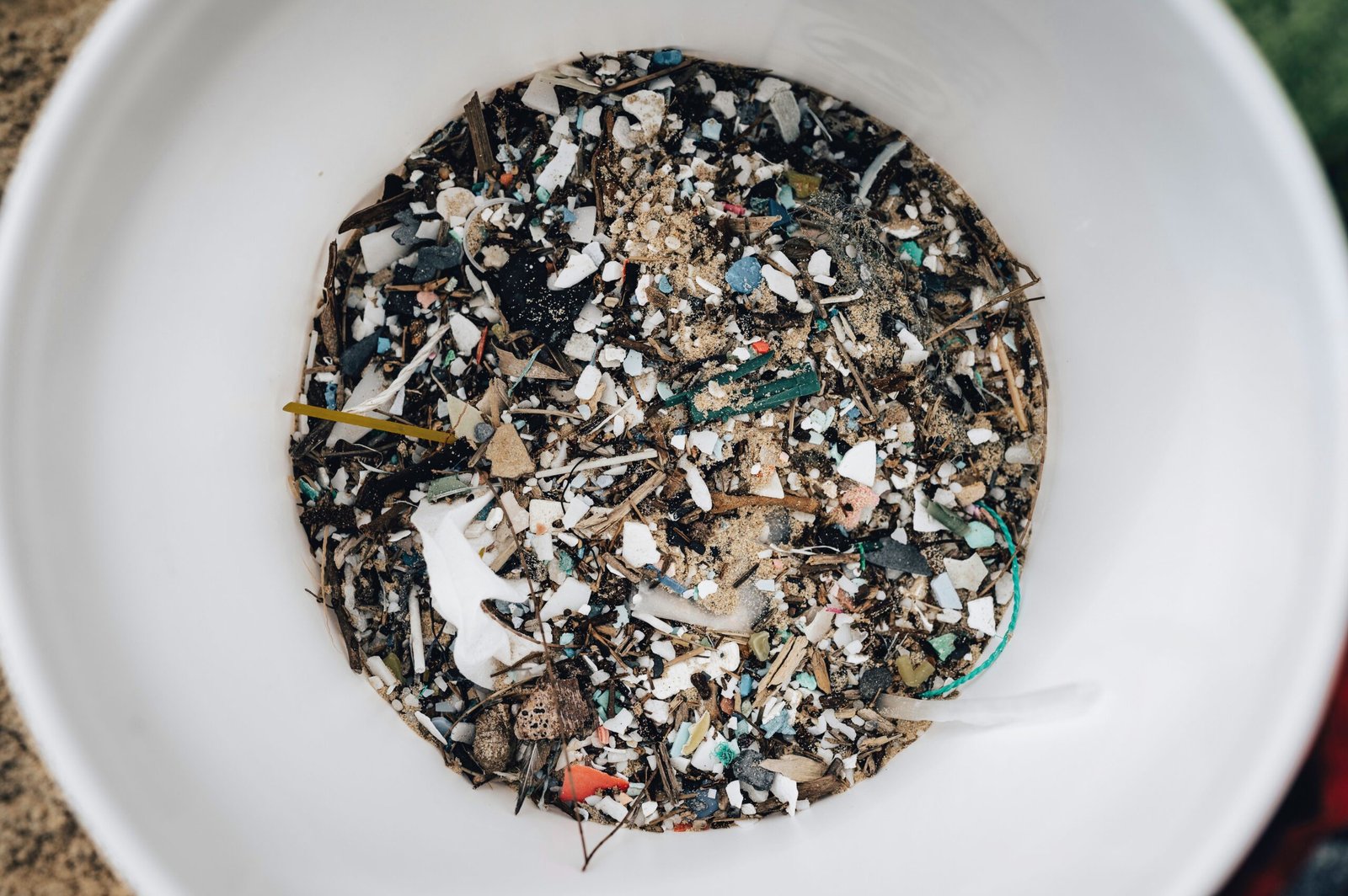
When I first began reading about microplastics several years ago, I mostly associated them with polluted oceans, disposable bottles, synthetic clothing, and the growing environmental problem created by plastic waste. The idea that microscopic fragments of those same materials might eventually find their way into the human body was concerning, but it still felt somewhat distant. What changed my perspective was the emergence of research showing that microplastics and even smaller nanoplastics have been detected inside actual human tissues—including the brain.
That finding deserves attention, but it also deserves careful interpretation. I have seen plenty of alarming headlines implying that scientists have already proven microplastics cause dementia, destroy memory, or inevitably damage the human brain. The research simply has not reached that point. What scientists have established is that plastic particles can reach human brain tissue, that animal and laboratory experiments provide several biologically plausible mechanisms through which these particles could cause harm, and that some human brain samples contain surprisingly large amounts of plastic-related material. What researchers have not established is exactly what those particles do over decades of human exposure or whether they directly cause specific neurological diseases.
That distinction is central to understanding the effects of microplastics on human brain tissue. The subject is disturbing enough without exaggeration. In my view, the real scientific findings are far more interesting—and potentially more important—than sensational claims.
What Are Microplastics and Nanoplastics?
Microplastics are small fragments of plastic generally measuring less than 5 millimeters, although definitions vary somewhat between scientific and regulatory organizations. Nanoplastics are dramatically smaller. The U.S. Food and Drug Administration describes nanoplastics as particles generally smaller than one micrometer, while acknowledging that scientists still lack universally standardized size definitions.
That size difference matters tremendously when discussing the brain.
A visible fragment of plastic is unlikely to move freely through biological membranes. A particle measured in nanometers behaves very differently. Once plastic is broken into extremely small fragments, those particles may interact with cells, proteins, fats, biological membranes, immune defenses, and circulation in ways that the original plastic object never could.
Microplastics can originate when larger plastic materials gradually deteriorate through sunlight, heat, friction, mechanical wear, and environmental degradation. Synthetic textiles, vehicle tires, packaging materials, consumer products, industrial materials, and discarded plastic waste all contribute particles to the surrounding environment.
People may consequently encounter micro- and nanoplastics through air, food, drinking water, household dust, and other environmental sources. The FDA confirms that microplastics and nanoplastics have been reported in foods and in human biological samples, although it emphasizes that researchers still have major gaps in their understanding of the associated health consequences.
This creates an unusual scientific problem. Human beings are apparently exposed to extraordinarily diverse particles differing in polymer composition, size, shape, surface chemistry, degradation state, and chemical additives. Researchers therefore cannot realistically treat every microplastic particle as though it were a single toxic substance with a predictable biological effect.
Particle size, polymer type, concentration, exposure route, surface characteristics, and duration of exposure may all influence what happens inside the body.
That complexity is one reason why researchers remain cautious even as evidence of plastic accumulation becomes increasingly difficult to ignore.
The Discovery of Microplastics in Human Brain Tissue
One of the studies that made me pay much closer attention to this issue was published in JAMA Network Open in 2024. Researchers examined olfactory bulb tissue obtained from 15 deceased individuals who had lived in São Paulo, Brazil.
Microplastics were identified in the olfactory bulbs of 8 of the 15 individuals. Investigators detected 16 synthetic polymer particles and fibers altogether, with polypropylene being the most frequently identified polymer. The particles measured approximately 5.5 to 26.4 micrometers, while fibers were also detected.
The olfactory bulb deserves special attention because it participates in processing smell and sits in a location that may provide environmental particles with an alternative pathway into the nervous system.
Researchers therefore raised an intriguing possibility: some inhaled particles may potentially reach the brain through pathways associated with the nose and olfactory system rather than relying exclusively on passage through the bloodstream and blood-brain barrier.
That does not prove every inhaled microplastic particle can travel directly into the brain. It does, however, provide another plausible route researchers must investigate.
Even more attention followed a major study published in Nature Medicine in February 2025.
Researchers analyzed tissue samples from human brains, livers, and kidneys using several analytical techniques, including pyrolysis gas chromatography–mass spectrometry, infrared spectroscopy, and electron microscopy. The investigators reported microplastic and nanoplastic material in all three organs.
What caught my attention was not simply that plastic was found.
Brain samples contained substantially higher concentrations than liver or kidney samples, with the researchers reporting levels approximately 7 to 30 times higher in brain tissue than in those organs. Polyethylene was the dominant polymer, and microscopic examination suggested that much of the material within brain tissue consisted of tiny nanoscale shard-like fragments.
That is an extraordinary observation.
The brain is normally protected by tightly controlled biological systems specifically designed to limit entry of potentially harmful substances. Yet these findings indicate that extremely small plastic particles can somehow overcome or circumvent those defenses.
Evidence That Brain Plastic Levels May Be Increasing
Another detail from the Nature Medicine study deserves careful consideration.
Researchers compared tissue samples collected in 2016 and 2024. They found significantly higher microplastic and nanoplastic concentrations in more recent brain and liver samples, suggesting that tissue burdens may be increasing over time alongside growing environmental exposure.
This does not mean every person’s brain contains progressively increasing plastic concentrations at the same rate. The researchers analyzed postmortem samples from different individuals rather than following the same people longitudinally.
Still, the finding raises an uncomfortable question.
If global plastic production, environmental fragmentation, and human exposure continue increasing, will the amount accumulating in human tissues rise as well?
At the moment, scientists cannot confidently answer that question.
Researchers also continue debating how reliably very small plastic particles can be measured. Analytical methods differ between laboratories, contamination must be meticulously controlled, and nanoplastics are particularly challenging because they are so small. These methodological issues are not minor details—they affect how confidently concentrations from different studies can be compared. A later scientific commentary in Nature Medicine specifically emphasized the analytical challenges involved in studying microplastics in the human brain.
In other words, I think the responsible interpretation is somewhere between complacency and panic.
The evidence of human brain exposure is increasingly convincing, but our ability to precisely quantify that exposure and translate it into individual health risk remains incomplete.
How Could Plastic Particles Reach the Brain?
The brain is protected by the blood-brain barrier, an intricate system of tightly connected cells surrounding blood vessels within the central nervous system. Its job is not simply to create a wall around the brain. Instead, it carefully regulates which substances can pass between circulation and neural tissue.
For years, that made the idea of plastic particles reaching the brain seem difficult to reconcile with normal physiology.
Nanoplastics changed that discussion.
Because nanoplastics can be hundreds or thousands of times smaller than many conventional microplastic fragments, scientists have investigated whether certain particles can interact with or cross the blood-brain barrier.
A 2023 experimental study involving mice found that nanoscale polystyrene particles could reach brain tissue after oral administration. Researchers reported that nanometer-sized particles—but not the larger particles tested—reached the mouse brain within approximately two hours. Their work also suggested that the biological molecules coating a particle after it enters the body, sometimes called a biomolecular corona, may influence its ability to interact with the blood-brain barrier.
Another mouse study found that 50-nanometer polystyrene particles increased blood-brain barrier permeability, accumulated within the brain, activated microglial cells, and were associated with neuronal damage under the experimental exposure conditions.
Animal experiments should never be automatically translated into predictions about ordinary human exposure. Laboratory doses, particle composition, exposure duration, and biological differences all matter enormously.
Nevertheless, they establish something important: there are biologically plausible mechanisms through which sufficiently small plastic particles can interact with the blood-brain barrier and nervous system.
The olfactory pathway provides another possibility. Because microplastics have been identified in human olfactory bulbs, researchers have proposed that inhaled particles may potentially travel through nasal pathways toward brain-associated tissue.
The gut may represent yet another indirect pathway. Ingested particles can interact with the intestinal environment, microbiome, immune system, and circulating metabolites, potentially affecting the brain through the gut-brain axis even when particles themselves do not directly enter neural tissue.
Rather than expecting one single route, I suspect future research will reveal that brain exposure depends on a combination of particle size, inhalation, ingestion, circulation, biological barriers, and individual physiology.
What Could Microplastics Do Once They Reach Brain Tissue?
This is where the conversation becomes both fascinating and uncertain.
Finding plastic inside brain tissue does not automatically prove that the plastic is damaging neurons. Biological consequences have to be demonstrated independently.
Researchers studying microplastics and nanoplastics have identified several mechanisms that could potentially influence brain health. Most mechanistic evidence currently comes from animal experiments, cultured cells, and laboratory models rather than long-term controlled human studies.
The major concerns include oxidative stress, neuroinflammation, mitochondrial dysfunction, disruption of the blood-brain barrier, altered neuronal signaling, and abnormal immune activation. Recent scientific reviews of central nervous system research have highlighted these pathways as priorities for investigation.
Let me break down why each one matters.
Oxidative Stress May Be One of the Most Important Concerns
Our cells constantly generate molecules known as reactive oxygen species during ordinary metabolism. Under healthy conditions, antioxidant systems keep those molecules under control.
Problems arise when reactive oxygen species accumulate faster than the body’s defenses can neutralize them. That imbalance is known as oxidative stress.
The brain is particularly vulnerable because neurons consume substantial energy and contain membranes rich in lipids that can be susceptible to oxidative damage.
Experimental microplastic research has repeatedly raised oxidative stress as a potential mechanism of toxicity. Plastic particles may stimulate reactive oxygen species directly or indirectly through inflammatory responses, mitochondrial disruption, or interactions with cellular membranes.
If chronic exposure caused persistent oxidative stress inside the brain, researchers would reasonably worry about consequences for neuronal integrity, cellular signaling, and long-term neurological resilience.
That is still a hypothesis requiring much more human evidence.
What I would not do is jump from “microplastics can trigger oxidative stress in experimental models” to “microplastics are destroying everyone’s brain.” Those are dramatically different claims.
The first has meaningful experimental support. The second has not been established.
Neuroinflammation and Microglial Activation
Another mechanism that deserves attention involves microglia.
Microglia are specialized immune cells residing within the central nervous system. I like to think of them as part of the brain’s internal surveillance system. They help detect damage, remove cellular debris, respond to infection, and participate in maintaining healthy neural environments.
Their activation is therefore not automatically harmful.
Trouble can arise when immune activation becomes excessive or chronically sustained.
Experimental studies have shown that certain nanoplastics can activate microglia. In the mouse study involving 50-nanometer polystyrene particles, researchers observed microglial activation alongside evidence of neuronal injury.
The concern is that persistent foreign particles inside neural tissue could potentially keep portions of the immune system activated.
Chronic neuroinflammation is already being investigated in many neurological diseases, which makes the possibility especially interesting. But once again, this does not prove that microplastic accumulation produces clinically meaningful neuroinflammation in humans.
We have evidence of a plausible mechanism. We do not yet have proof of its long-term impact at typical real-world human exposure levels.
Mitochondrial Dysfunction Could Affect Brain Energy
Neurons are metabolically demanding cells.
The human brain represents only a fraction of total body weight but requires substantial energy to maintain electrical signaling, neurotransmitter cycling, ion gradients, cellular repair, and countless other processes.
Mitochondria sit at the center of that energy system.
Research investigating nanoplastic neurotoxicity has raised concerns that particle exposure may interfere with mitochondrial function. If mitochondria become dysfunctional, cells may generate less usable energy while simultaneously producing greater oxidative stress.
That combination—lower cellular energy plus increased oxidative damage—is understandably concerning in tissues as energy-intensive as the brain.
Recent reviews have therefore identified mitochondrial impairment among the potential mechanisms through which micro- and nanoplastics could influence central nervous system health.
I still consider this a developing research area rather than a settled clinical conclusion. Human brains are enormously more complicated than cultured cells or short-duration animal experiments, and actual lifetime exposure involves mixtures of different polymers rather than standardized laboratory beads.
Could Microplastics Affect Memory and Learning?
Animal studies have begun providing clues.
One study exposed mice to 80-nanometer polystyrene nanoplastics for 42 days. Researchers found evidence that the particles reached the hippocampus, a brain region deeply involved in learning and memory. They also reported neuronal damage, changes involving neuroplasticity-related molecules, and alterations in learning and memory behavior.
Those results are important, but I would be very cautious about turning them into advice for humans.
An experimentally exposed mouse is not the same thing as a person receiving low-level environmental exposure over several decades. Human populations differ in nutrition, genetics, age, metabolic health, environmental exposures, medications, lifestyle, and countless other variables.
What studies like this provide is biological plausibility.
They show that under certain conditions, nanoplastic exposure can affect pathways involved in neural communication and cognition. They tell researchers where to look next.
They do not prove that a person’s occasional memory lapse is caused by plastic exposure.
Microplastics, Dementia, and the Question Everyone Wants Answered
The dementia findings from the 2025 Nature Medicine paper created some of the most dramatic headlines.
Researchers found higher concentrations of microplastics and nanoplastics in brain samples from individuals who had documented dementia compared with brain samples from individuals without dementia. They also reported notable deposition associated with cerebrovascular walls and immune cells.
It is tempting to read that and immediately conclude that microplastics cause dementia.
The study does not establish that conclusion.
The authors themselves explicitly noted that the findings are associative and do not demonstrate a causal role for the particles in disease.
This is one of the most important points in the entire article.
Dementia itself may potentially alter biological barriers, metabolism, inflammation, circulation, clearance mechanisms, or other processes that influence how particles accumulate. Perhaps higher plastic accumulation contributes to disease. Perhaps disease makes accumulation easier. Perhaps both are influenced by another factor. Those possibilities cannot be separated using postmortem observational data alone.
Establishing causation will require larger studies, better exposure measurement, standardized analytical techniques, longitudinal research, and ideally ways of assessing accumulation while people are still alive.
The association deserves investigation.
It does not justify telling people that microplastics have been proven to cause Alzheimer’s disease.
Why the Brain May Accumulate More Plastic Than Other Organs
Perhaps the finding I keep returning to is the unexpectedly high amount of microplastic and nanoplastic material reported in brain tissue compared with liver and kidney tissue.
The 2025 Nature Medicine researchers reported concentrations in normal decedent brains several times higher than those found in liver or kidney samples.
Why?
Scientists do not yet have a definitive explanation.
One possibility involves the brain’s unusually high lipid content. Some plastics, particularly polyethylene, may interact differently with lipid-rich environments. Particle size and surface chemistry could also affect retention.
Another possibility is inadequate clearance.
The liver and kidneys participate directly in processing and eliminating many substances from the body. The brain has different clearance mechanisms, including cerebrospinal-fluid-related systems, and nanoscale foreign materials may behave unpredictably within them.
Researchers are now investigating possible routes involving the blood-brain barrier, olfactory pathways, immune cells, and glymphatic clearance.
For me, the most scientifically interesting question is no longer simply “Can microplastics reach the brain?”
The evidence increasingly suggests that they can.
The more important questions have become how they get there, why some particles remain, how quickly they are cleared, whether accumulation differs among individuals, and what biological consequences occur after years or decades of exposure.
Does Finding Plastic in the Brain Mean We Are in Immediate Danger?
No responsible discussion should skip this question.
The presence of a foreign material in human tissue understandably sounds frightening. However, toxicology depends heavily on dose, particle properties, exposure duration, location, and biological response.
The FDA currently states that available scientific evidence does not demonstrate that the levels of microplastics or nanoplastics detected in foods pose a known risk to human health. The agency also emphasizes substantial gaps in measurement methods and health-effect data and continues researching the issue.
That statement should not be interpreted as proof that microplastics are harmless.
It means that regulators currently lack sufficient evidence to conclude that ordinary food exposure at measured levels causes specific human health outcomes.
There is an important difference between absence of demonstrated harm and demonstrated absence of harm.
I think that distinction captures the current state of microplastic science better than either extreme.
We have enough evidence to take the issue seriously.
We do not have enough evidence to predict an individual’s neurological risk from everyday exposure.
Can We Reduce Our Exposure While Science Catches Up?
I personally prefer practical precautions that are inexpensive and unlikely to create other problems.
Trying to eliminate every microplastic from modern life is unrealistic. Plastic is embedded throughout transportation, clothing, packaging, electronics, buildings, medical equipment, food production, and household products.
Reducing unnecessary exposure is more realistic than pursuing perfect avoidance.
For example, I prefer not to repeatedly heat food in disposable plastic containers when glass or ceramic is readily available. Heat, wear, and degradation can change plastic materials, so reducing unnecessary high-temperature contact seems reasonable even though the exact contribution of individual behaviors to total brain accumulation remains unknown.
Reducing reliance on heavily worn plastic food-storage items, maintaining good indoor ventilation, controlling household dust, washing hands before eating, and choosing durable reusable products where practical are similarly sensible measures.
I would not recommend becoming obsessive about every piece of plastic in the home.
Microplastic research should encourage reasonable exposure reduction, not fear-driven behavior.
The biggest reductions may ultimately require systemic changes in manufacturing, waste management, textile design, packaging, filtration, and environmental policy rather than placing the entire responsibility on individual consumers.
Can Supplements Help Protect the Brain From Microplastics?
This is an area where I think especially careful language is needed.
Nutrients and plant compounds can absolutely influence biological pathways related to brain health. Antioxidant defenses, inflammation, glucose regulation, vascular health, mitochondrial function, and nutritional status all affect how well the nervous system functions.
That does not mean a dietary supplement has been proven to remove microplastics from brain tissue.
At present, I am not aware of convincing human clinical evidence showing that any dietary supplement can detoxify microplastics from the human brain, dissolve accumulated plastic particles, or prevent neurological disease caused by microplastic exposure.
Those are much stronger claims than the available science can support.
What supplements may potentially do is support aspects of general health that overlap with pathways researchers are studying in microplastic toxicity—for example, antioxidant status or normal metabolic function. Even then, the evidence needs to be evaluated ingredient by ingredient, at relevant doses, and in humans.
That brings me to a supplement called Phytomem One, which is being marketed as a brain-health and memory-support formula.
Where Phytomem One Fits Into This Conversation
According to its promotional materials, Phytomem One is positioned as a 10-ingredient brain-support supplement aimed at memory, focus, mental clarity, antioxidant defenses, and metabolic health. Promotional pages list ingredients including saffron extract, berberine HCl, fucoxanthin, fucoidan, oleuropein, Ceylon cinnamon, corosolic acid, kudzu flower extract, Morosil®, and xylitol.
Some of those ingredients have been independently researched for biological actions involving oxidative stress, metabolism, or other pathways relevant to general health. That provides a reasonable basis for studying them further as nutritional compounds.
However, there is a major difference between saying an ingredient has antioxidant activity and claiming that a finished supplement protects the human brain from accumulated microplastics.
I would not consider Phytomem One—or any supplement—a proven treatment for microplastic accumulation.
Some promotional websites go considerably further and suggest that the formula can address “microplastic-driven neuroinflammation” or help neutralize brain effects attributed to microplastic buildup. Those claims should be viewed cautiously because the emerging studies demonstrating microplastics in human brains did not test Phytomem One as an intervention.
Likewise, a supplement being manufactured in an FDA-registered facility does not mean that the FDA has approved the supplement itself for treating microplastic exposure, memory loss, dementia, or another neurological condition.
One Phytomem One promotional website itself includes the standard disclosure that statements concerning the product have not been evaluated by the FDA and that the product is not intended to diagnose, treat, cure, or prevent disease.
That is an important distinction I would want any reader to understand before buying it.
Click here to read a detailed review about Phytomem One.
How I Would Think About Phytomem One as a Brain-Support Supplement
If I were evaluating Phytomem One, I would look at it as a general cognitive-support dietary supplement, not as a microplastic detoxification therapy.
That framing makes considerably more scientific sense.
Saffron, olive-derived compounds such as oleuropein, marine compounds such as fucoxanthin and fucoidan, berberine, cinnamon, and other botanical ingredients are all interesting areas of nutritional research. Some may influence antioxidant pathways, metabolic markers, inflammatory signaling, or other physiological processes.
But a finished multi-ingredient formulation introduces additional questions.
Are the ingredient doses consistent with doses used in published studies? Are the extracts standardized? Has the exact finished product undergone a randomized, placebo-controlled clinical trial? Have researchers measured meaningful cognitive outcomes? Have they tested long-term safety? Has anyone demonstrated that users eliminate microplastics from their bodies more effectively after taking it?
Those are the questions that matter to me.
Until those kinds of data exist, the responsible conclusion is that Phytomem One may offer ingredients intended to support general brain and metabolic wellness, but it should not be presented as a scientifically proven way to remove microplastics from human brain tissue.
People taking prescription medication should be particularly careful with multi-ingredient supplements. Ingredients such as berberine and cinnamon-related extracts can interact with metabolic pathways and may not be appropriate for everyone. Anyone using medications, managing a medical condition, pregnant or breastfeeding, or preparing for surgery should discuss supplements with an appropriate healthcare professional.
What I Think the Research Means for Everyday Brain Health
After reviewing the current evidence, I am neither dismissive nor convinced that catastrophe has already been proven.
I am concerned because plastic particles have now been detected in human brain tissue through multiple research approaches, including studies examining the olfactory bulb and broader brain samples.
I am also concerned because experimental models provide believable mechanisms for harm. Nanoplastics can interact with the blood-brain barrier, activate immune pathways, promote oxidative stress, interfere with mitochondria, and affect neuronal signaling under certain experimental conditions.
At the same time, I do not think the evidence justifies assuming that microplastics are responsible for every case of brain fog, memory loss, dementia, depression, or neurological disease.
Human neurological conditions are extraordinarily complex. Genetics, vascular health, metabolic health, age, sleep, physical activity, smoking, alcohol consumption, environmental pollution, medications, infections, social factors, nutrition, and many other influences can affect the brain.
Microplastic exposure may eventually become another recognized factor within that much larger picture.
The task now is figuring out exactly how important it is.
The Biggest Questions Scientists Still Need to Answer
The first question is dose.
We need reliable estimates of how many micro- and nanoplastics people are actually absorbing through different exposure routes and how much eventually reaches the brain.
The second question is clearance.
Finding particles in postmortem brain tissue proves that at least some material can remain there, but scientists still need to determine how quickly different particles enter and leave the human nervous system.
The third question is particle identity.
Polyethylene, polypropylene, polystyrene, nylon, and countless other polymers do not necessarily behave identically. Shape matters as well. A smooth spherical laboratory particle may interact with tissue very differently from a jagged environmentally weathered fragment carrying additives or pollutants on its surface.
The fourth question is vulnerability.
Children, developing fetuses, older adults, people with compromised blood-brain barriers, and individuals with metabolic or neurological disease might theoretically respond differently to identical exposures.
Finally, researchers must determine whether brain accumulation is merely a marker of environmental exposure or an active contributor to neurological disease.
That last question will probably require years of carefully designed research.
Why Better Measurement Is Just as Important as More Studies
Microplastic research has a measurement problem.
Scientists use techniques including Fourier-transform infrared spectroscopy, Raman spectroscopy, pyrolysis gas chromatography–mass spectrometry, and electron microscopy to identify plastics. Each method has strengths and weaknesses.
Detecting larger microplastics is considerably easier than accurately characterizing nanoplastics.
Contamination presents another challenge. Plastic particles are present in laboratory air, clothing, equipment, packaging, and surrounding environments. Researchers therefore need strict controls to ensure that detected particles truly originated from biological samples.
This is one reason I pay attention to studies using multiple complementary analytical techniques rather than relying on a single measurement method.
The 2025 Nature Medicine research was notable partly because investigators combined several approaches while characterizing plastic material in human organs.
Even so, scientists continue discussing how methods should be standardized, and regulators such as the FDA have explicitly identified the lack of standardized detection and characterization methods as a major barrier to assessing human health risk.
Better measurement may ultimately change some of today’s estimates substantially.
That is how emerging science works.
My Final Thoughts on Microplastics in Human Brain Tissue
The most important conclusion I reached while researching this topic is surprisingly simple: microplastics in the human brain are no longer merely a theoretical possibility.
Researchers have detected plastic particles in human olfactory bulb tissue. Broader postmortem analyses have identified micro- and nanoplastics in brain tissue and reported concentrations higher than those found in liver and kidney samples. Experimental research provides plausible pathways through which very small particles could cross biological barriers and potentially affect inflammation, oxidative stress, mitochondrial activity, and neuronal function.
Those findings deserve serious scientific attention.
What remains unknown is equally important.
We still do not know the lifetime neurological consequences of typical human exposure. We do not know whether particular concentrations reliably produce disease. We do not know whether higher plastic levels observed in dementia brains are a cause, a consequence, or some combination of both. We do not know how efficiently human brain tissue clears different types of nanoplastics.
And we currently do not have a clinically proven supplement, medication, cleanse, or detox protocol capable of removing microplastics from the human brain.
For me, that makes the most sensible response one of informed caution.
I can reduce unnecessary plastic exposure where doing so is practical. I can prioritize established brain-health fundamentals such as quality sleep, exercise, cardiovascular health, balanced nutrition, metabolic health, and avoiding smoking. If I choose a supplement such as Phytomem One, I can evaluate it for what it realistically is—a dietary supplement intended to support aspects of cognitive and metabolic wellness—rather than assuming it has been proven to detoxify plastic from my brain.
Most importantly, I can follow the research without letting headlines outrun the evidence.
Microplastics have already transformed from an environmental issue into a legitimate human-health research question. The discovery of plastic particles in human brain tissue may ultimately prove to be one of the most consequential findings in environmental health research—or we may learn that the human body tolerates certain burdens better than laboratory studies currently suggest.
Right now, science is still determining where between those possibilities the truth lies.
That uncertainty should not make us ignore the problem.
It should make us study it much more carefully.
References
1. Nature Medicine — “Bioaccumulation of microplastics in decedent human brains”
Nihart AJ, Garcia MA, El Hayek E, et al. Published February 3, 2025. This major human-tissue study examined micro- and nanoplastic accumulation in brain, liver, and kidney samples and reported substantially higher concentrations in brain tissue.
Nature Medicine — Bioaccumulation of microplastics in decedent human brains
2. PubMed / U.S. National Library of Medicine — “Bioaccumulation of microplastics in decedent human brains”
PubMed record for the 2025 Nature Medicine study examining plastic accumulation in human brain tissue.
PubMed — Bioaccumulation of microplastics in decedent human brains
3. JAMA Network Open — “Microplastics in the Olfactory Bulb of the Human Brain”
Amato-Lourenço LF, Dantas KC, Ribeiro Júnior G, et al. Published September 16, 2024. The researchers detected microplastics in olfactory bulb samples from 8 of 15 deceased individuals.
JAMA Network Open — Microplastics in the Olfactory Bulb of the Human Brain
4. PubMed / U.S. National Library of Medicine — “Microplastics in the Olfactory Bulb of the Human Brain”
PubMed record for the human olfactory-bulb case series investigating microplastic particles within brain-associated tissue.
PubMed — Microplastics in the Olfactory Bulb of the Human Brain
5. Nature Medicine — “Nanoplastics in the human brain and their change in abundance over time”
A 2025 research briefing discussing evidence for nanoplastics in human brain tissue and changes observed between tissue samples collected in 2016 and 2024.
Nature Medicine — Nanoplastics in the human brain and their change in abundance over time
6. Nature Medicine — “Challenges in studying microplastics in human brain”
Scientific commentary discussing important methodological and analytical limitations that must be considered when measuring microplastics in brain tissue.
Nature Medicine — Challenges in studying microplastics in human brain
7. PubMed / U.S. National Library of Medicine — “Polystyrene nanoplastics penetrate across the blood-brain barrier and induce activation of microglia in the brain of mice”
Experimental research examining blood-brain barrier permeability, microglial activation, oxidative stress, and neuronal effects following nanoplastic exposure.
PubMed — Polystyrene nanoplastics penetrate across the blood-brain barrier
8. PubMed / U.S. National Library of Medicine — “Micro- and Nanoplastics Breach the Blood-Brain Barrier (BBB): Biomolecular Corona’s Role Revealed”
Experimental research exploring how particle size and biomolecular coatings may influence nanoplastic movement across the blood-brain barrier.
PubMed — Micro- and Nanoplastics Breach the Blood-Brain Barrier
9. PubMed / U.S. National Library of Medicine — “The gut-brain axis involved in polystyrene nanoplastics-induced neurotoxicity via reprogramming the circadian rhythm-related pathways”
Animal research investigating hippocampal exposure, neuronal changes, neuroplasticity-related signaling, and learning and memory following nanoplastic exposure.
PubMed — The gut-brain axis involved in polystyrene nanoplastics-induced neurotoxicity
10. PubMed / U.S. National Library of Medicine — “Microplastic pollution: a review of specific blood-tissue barrier breaches and health effects”
A 2025 scientific review examining how microplastics may interact with biological barriers and reach distant organs.
PubMed — Microplastic pollution and blood-tissue barrier breaches
11. U.S. Food and Drug Administration — “Microplastics and Nanoplastics in Foods”
FDA overview of current evidence concerning microplastics in food, human exposure, analytical limitations, and unresolved health-risk questions.
FDA — Microplastics and Nanoplastics in Foods
Disclaimer
This article is provided for educational and informational purposes only and is not intended to diagnose, treat, cure, or prevent any medical condition. Research concerning microplastics, nanoplastics, and human brain health is rapidly developing, and many questions about exposure, accumulation, toxicity, clearance, and long-term neurological effects remain unresolved.
The discussion of Phytomem One is not medical advice or a claim that the supplement can remove microplastics, prevent dementia, treat cognitive impairment, or reverse neurological damage. Dietary supplements should not replace medical treatment, a balanced diet, or established preventive healthcare. Anyone who is pregnant or breastfeeding, has a medical condition, takes prescription medication, or is considering a new dietary supplement should speak with a qualified healthcare professional before use. Individual results and responses to supplements can vary substantially.