

A toenail can still look damaged after a fungal infection has been successfully treated. The discolored part has to grow out, and a toenail can take up to 18 months to replace itself completely. That delay can make it hard to tell whether a treatment has failed. It also makes one distinction especially useful when shopping for nail care. An oil can improve how dry cuticles and rough-looking nails present today, while treating an infection and growing out the affected nail are separate jobs.
This detailed review of Kerassentials looks at the ingredients, recommended application schedule, and possible side effects. It also examines the seller’s customer testimonials, publicly reported complaints, and whether the offer is legit. Purchases through links in this review may earn the publisher a commission.
What Kind of Nail Oil Is Kerassentials?
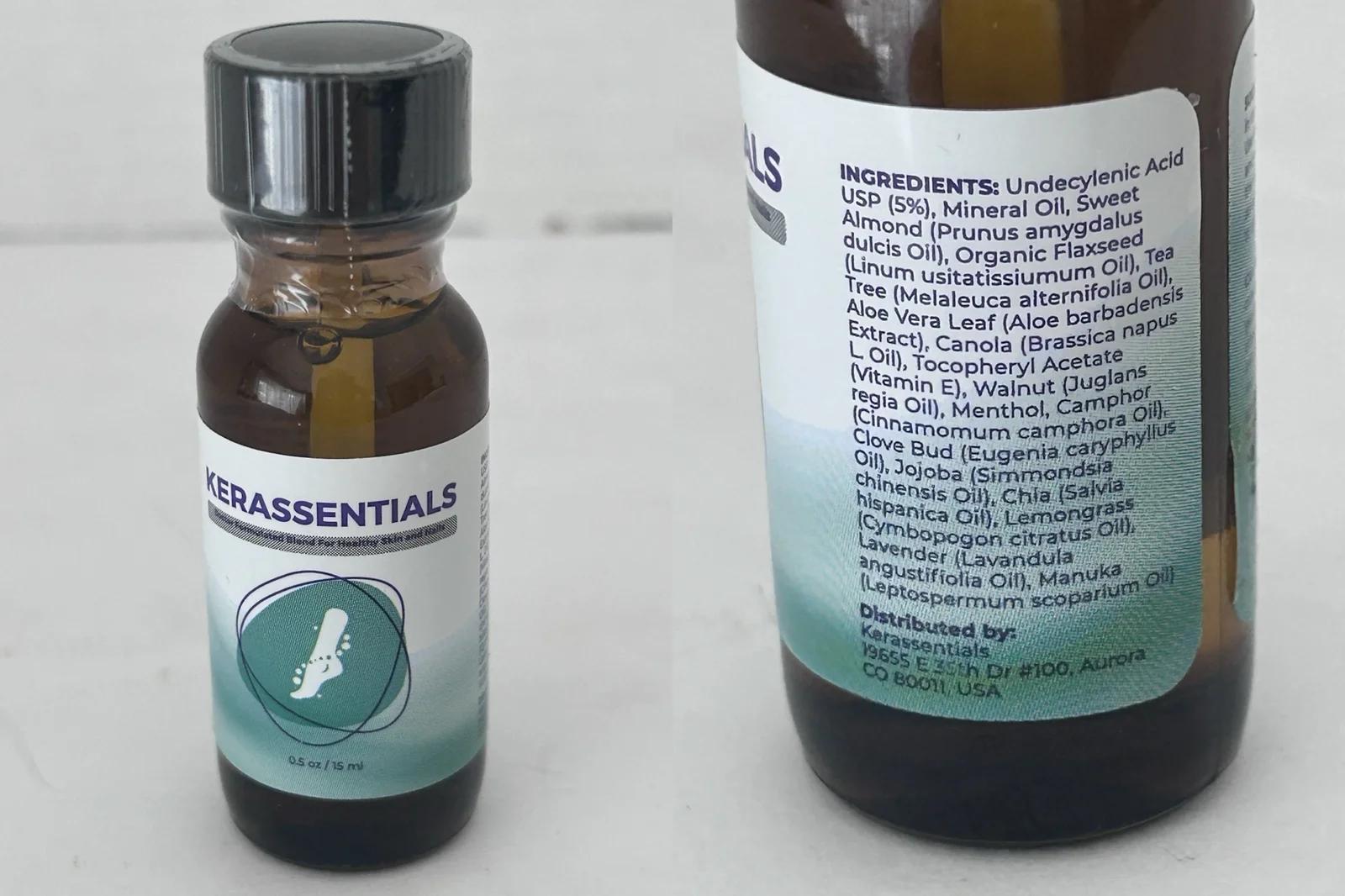
Kerassentials is a topical nail and cuticle oil marketed to people concerned about toenail fungus. It combines botanical oils, aloe vera, a vitamin E derivative, and undecylenic acid in a liquid that can be brushed directly onto the nail. The applicator is useful when dryness or roughness is concentrated around one toenail and a general foot cream is more than you need.
The distinction is important if you’re shopping because a toenail has changed color or started to crumble. A brush-on oil can improve how the surface looks and how the surrounding skin feels. An infection within or beneath the nail plate is a different concern. If fungus is suspected, a clinician can examine the nail and, when appropriate, test a clipping or scraping before recommending treatment.
What the Oil Does After You Brush It On
The most straightforward action of Kerassentials happens on the nail surface and the skin around it. The carrier oils leave a light coating that can smooth the feel of dry edges and add a subtle sheen. Applied sparingly, the blend also makes it easy to condition a narrow cuticle line without spreading oil across the whole foot.
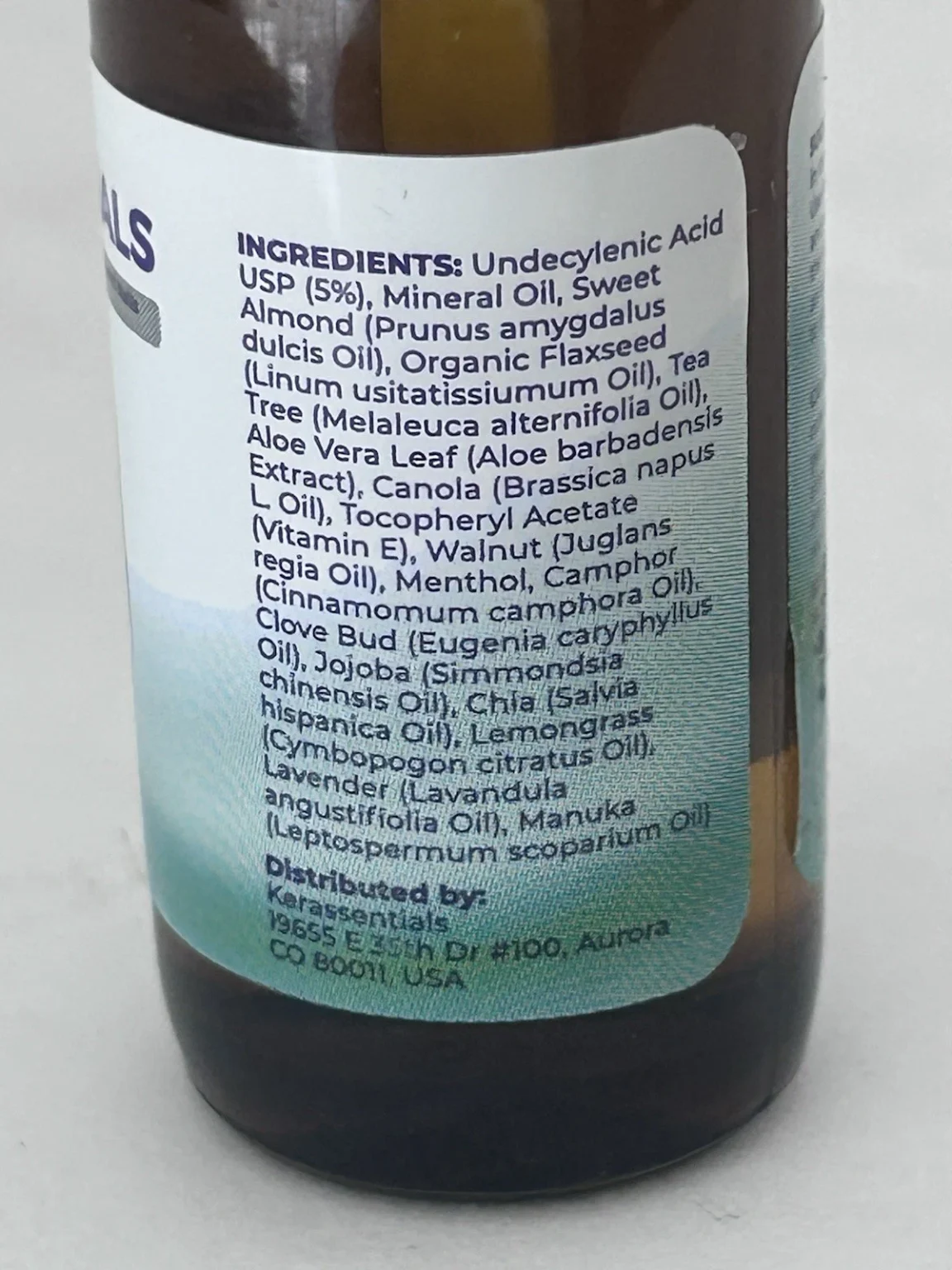
The ingredient list also includes tea tree oil and undecylenic acid, both associated with antifungal products. That association has limits. The National Center for Complementary and Integrative Health finds the evidence for tea tree oil in fungal nail infections insufficient, and U.S. labeling for relevant OTC skin antifungals distinguishes skin use from effectiveness on the nail. Published clinical evidence establishing that the finished oil clears toenail fungus could not be verified.
The Eight Highlighted Ingredients in Kerassentials
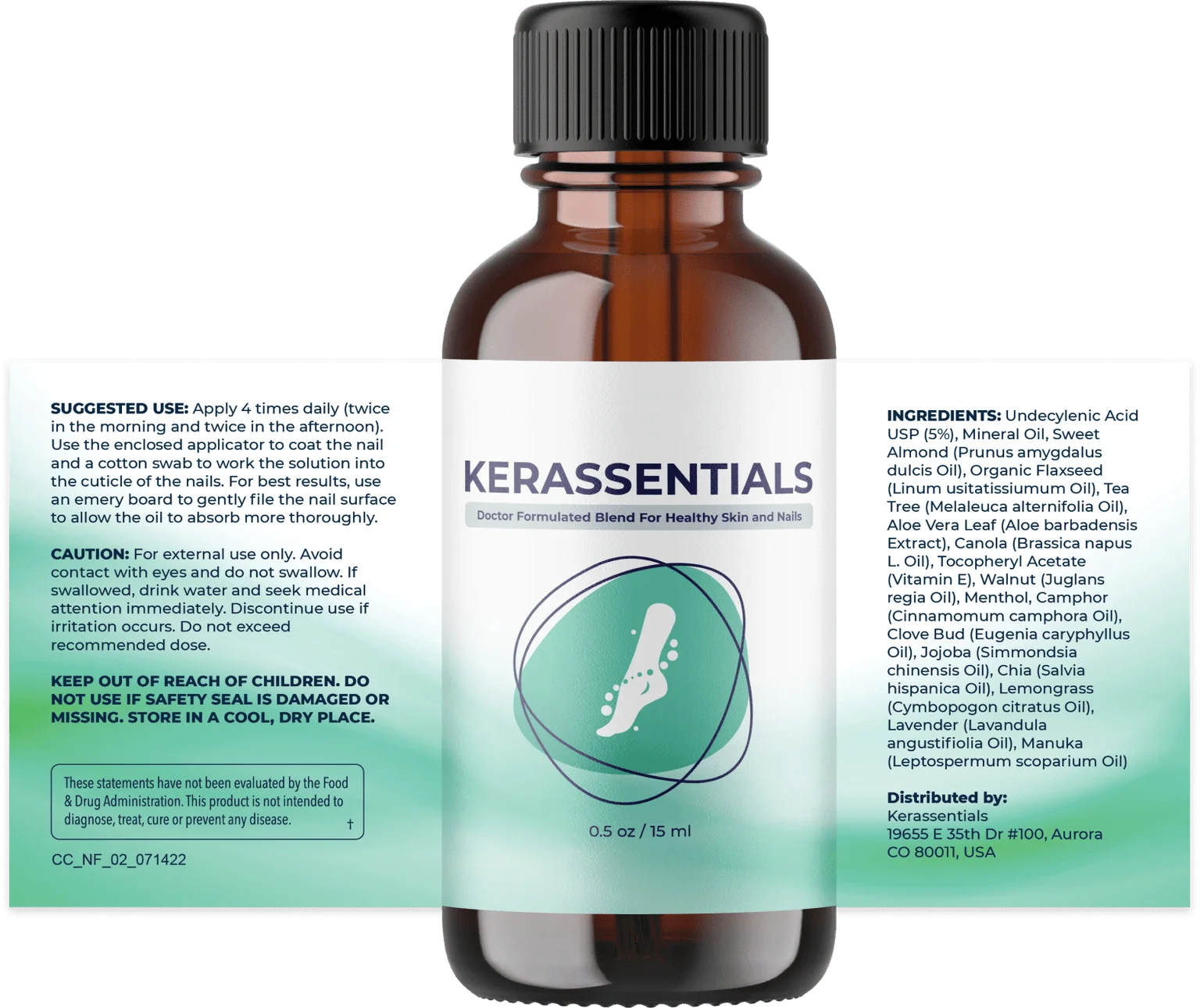
Before using Kerassentials, check the full label for ingredients you already know you react to. Essential oils can irritate skin, especially when it is already inflamed, and almond oil deserves particular attention if you have an almond allergy. The ingredients below are highlights from the seller’s published formula.
🍃 Lavender Oil
Lavender gives the blend a soft herbal note. In a product applied close to the skin, scent can be part of the appeal, especially for someone who finds the medicinal smell of some foot products unpleasant.
Lavender oil has also been studied in laboratory settings. Its clearest contribution here is sensory. If fragranced skin products routinely leave you red or itchy, treat lavender as a fragrance ingredient when deciding whether the formula suits you.
🍃 Organic Flaxseed Oil
Flaxseed oil is naturally rich in unsaturated fatty acids. In a topical blend, its practical job is to act as an emollient, helping the oil spread over rough-looking cuticles and leaving the surface feeling more supple.
That role is different from what flaxseed contributes to the diet. Here, it helps create a conditioning layer where the product is placed. A thin application makes more sense than trying to saturate the nail.
🍃 Almond Oil
Almond oil is another carrier oil. It gives the blend slip, which matters when a brush or cotton swab is being moved around a dry cuticle. A small amount can cover the area without much rubbing.
Its conditioning role is particularly relevant to the skin at the sides of the nail, where dryness can make the edges feel coarse. Anyone with a known almond allergy should avoid the blend unless an allergist advises otherwise.
🍃 Tea Tree Oil
Tea tree is the ingredient most readers will recognize from foot-care products. Its distinctive scent comes from the leaves of Melaleuca alternifolia, and it has a long history of external use.
It is also one of the ingredients most worth watching for irritation. Tea tree oil should never be swallowed, and topical exposure can cause redness or an itchy rash in some users. Keep the bottle away from children and stop using it if a reaction develops.
🍃 Lemongrass Oil
Lemongrass brings a bright, citrus-like note to the blend. It gives the formula a different scent profile from plain carrier oil and helps explain why the fragrance may be noticeable during application.
Its aromatic compounds are also a consideration for fragrance-sensitive skin. If persistent itch or odor is the issue that sent you looking for a nail oil, a fresh scent should never be used as a sign that the underlying problem has cleared.
🍃 Aloe Vera
Aloe vera is a familiar skin-conditioning ingredient. In this blend, its inclusion makes sense because the directions cover the cuticle as well as the nail plate. The surrounding skin is where most of the conditioning benefit is likely to be felt.
The aloe in a blended product should be judged as part of the formula. If the skin around a nail is cracked, hot, or weeping, adding an oil because it contains aloe is a poor substitute for finding out what is causing the irritation.
🍃 Tocopheryl Acetate
Tocopheryl acetate is a stable derivative of vitamin E commonly used in cosmetics. It fits the blend’s emphasis on conditioning the nail folds and cuticles, much as vitamin E derivatives do in dedicated cuticle oils.
For someone comparing labels, the useful point is its skin-conditioning role. Vitamin E on an ingredient list says more about the product’s grooming focus than it does about nail growth or whether an existing damaged area will change.
🍃 Undecylenic Acid
Undecylenic acid is a fatty acid used as an active ingredient in some OTC products for certain fungal skin infections. It stands apart from carrier oils such as almond and flaxseed, which are included primarily for conditioning.
The application site is important. A product intended for fungal skin conditions has different evidence and labeling from a treatment intended to clear infection inside a toenail. Read the intended use on the label rather than relying on the ingredient name alone.
Six Practical Benefits to Look For
Kerassentials makes the most sense when the goal is specific. The benefits worth looking for are changes you can see or feel during ordinary nail care, from how the cuticle feels after a shower to how bare nails look between pedicures.
⭐ Softer-Feeling Dry Cuticles
Dry cuticles can feel papery and stiff, particularly after frequent washing or long days in closed shoes. The emollient oils can leave those edges feeling more supple after application. That is the clearest benefit to look for if the skin around your toenails often feels dry.
Focus on the intact cuticle rather than trying to work oil under the nail. A light coating at the edge is enough to judge whether you like the effect, and it leaves less residue than a heavy application.
⭐ A More Even-Looking Finish on Bare Nails
Dry-looking patches can make a bare toenail appear dull in certain light. A thin film of oil can add a subtle sheen across the surface, which gives the nail a more even-looking finish while the oil is present.
This is a useful option between pedicures or when you want to go without polish. Check the nail clean and dry before applying so that the temporary sheen doesn’t obscure a color change you are trying to monitor.
⭐ Less Scratchy Skin at the Nail Edges
The skin along the sides of a toenail can feel rough against a sock even when the cuticle itself looks fine. Lightly conditioning those intact side folds can smooth the feel of surface dryness in that very specific spot.
The benefit is most relevant when the sensation comes from dry skin. If a sharp nail corner is digging in or the pressure comes from a tight shoe, address that cause directly rather than adding more oil.
⭐ A Tidier Nail Line Without Cutting the Cuticle
When dry cuticle edges stand out, it can be tempting to clip them for the sake of appearance. Conditioning can make those surface edges look neater and let you leave the cuticle undisturbed during routine grooming.
This is especially useful for at-home pedicures, where it is easy to take off more skin than intended. If a fold already looks torn or inflamed, skip the oil there and avoid further trimming until the area settles or can be assessed.
⭐ Targeted Conditioning Without Coating the Whole Foot
Some people want moisture around the toenails and dislike an oily feeling on their soles or between their toes. Local application lets you condition the dry area while keeping the rest of the foot free of product.
That distinction is useful before pulling on socks. Apply a thin layer, give it time to settle, and keep the spaces between your toes dry. There is no advantage to spreading a nail and cuticle oil onto areas that do not need it.
⭐ An Easier Way to Keep Track of Nail Changes
A regular bare-nail routine makes it easier to notice where a mark sits and whether it moves toward the tip as the nail grows. That observation comes from checking the nail consistently, rather than from the oil changing the speed of growth.
If you are monitoring a spot, take an occasional photo before applying oil, using the same angle and lighting. A new or changing dark streak, a lifting nail, or discoloration spreading toward the base warrants professional attention.
How to Apply Kerassentials
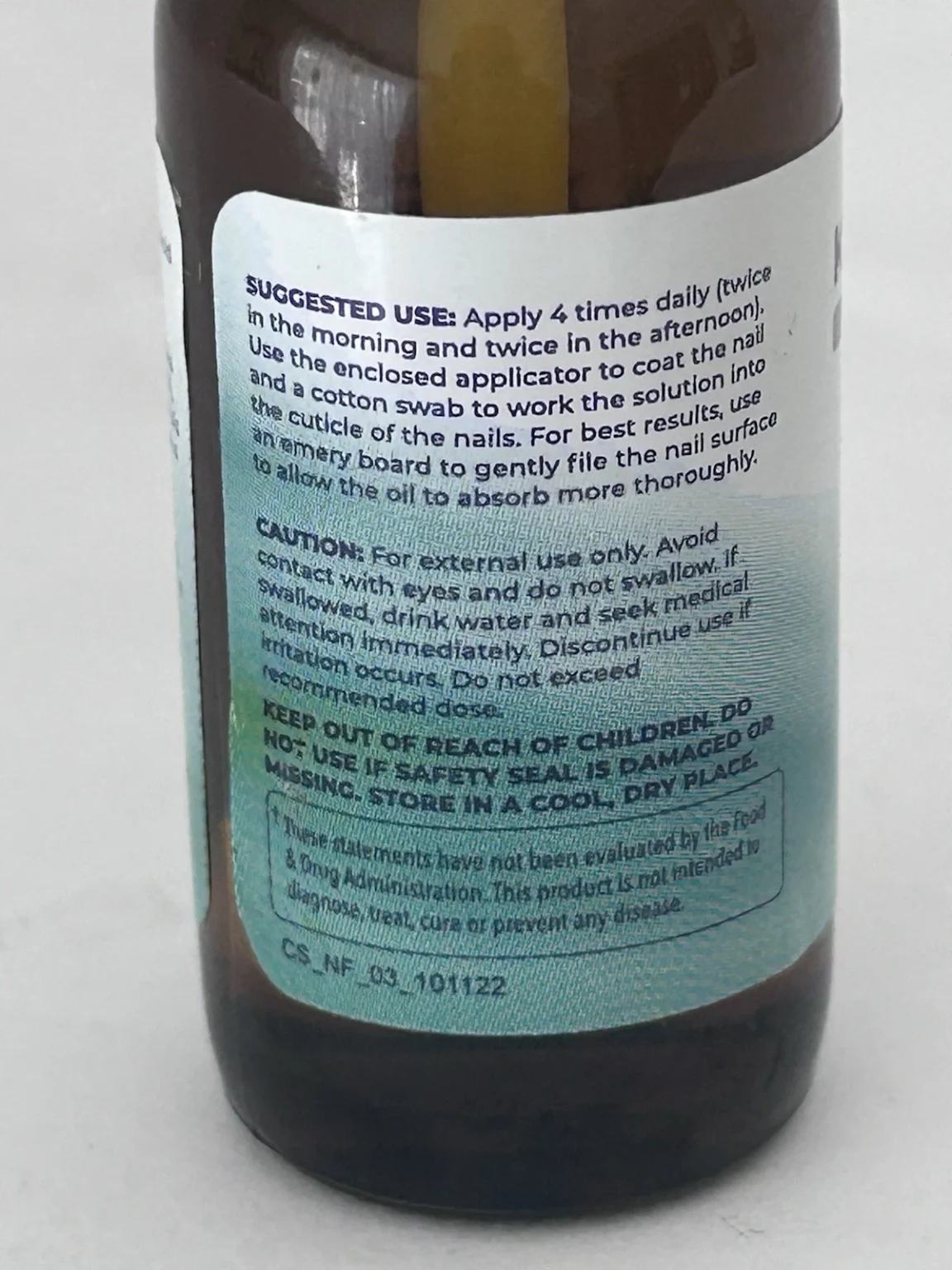
The seller recommends applying Kerassentials four times daily, twice in the morning and twice in the afternoon. Start with clean, thoroughly dried feet. Use the enclosed brush to coat the nail lightly, then use a clean cotton swab to apply the oil along the intact cuticle. There is no need to push the swab under the nail or press it into the skin.
The first application can fit naturally after a morning shower. Think through when the remaining applications would work before choosing a pack size. If four applications would be difficult on workdays, weigh that against how important a dedicated nail routine is to you.
Kerassentials Pros and Cons
The strongest case for Kerassentials is its focused coverage of the nail and cuticle. The trade-offs are mostly about how the routine fits your day, how your skin tolerates the blend, and what you want the oil to accomplish.
| Pros | Cons |
|---|---|
| Precision around the cuticle. The brush covers the nail surface, while a swab lets you reach narrow cuticle edges. That is useful when one or two areas need attention and you want to avoid coating the entire toe. | Four applications take planning. The schedule may suit someone at home during the day. People working in boots or commuting between shifts may find two afternoon applications difficult to fit in. |
| A conditioning base with slip. Almond and flaxseed oils help distribute a small amount across the nail and nearby skin. That makes the format useful when rubbing a thick cream into the nail folds feels cumbersome. | The aromatic blend will not suit everyone. Tea tree, lavender, and lemongrass give the oil its character, but fragrance-sensitive users or people with a known ingredient allergy should choose accordingly. |
| Useful for bare-nail grooming. A light sheen can make a dry-looking nail surface appear more even without colored polish. That makes it easy to keep a groomed appearance while still seeing the underlying nail. | The goal needs to be clear. Buyers primarily concerned about a thickening, lifting, or progressively discolored nail should get it assessed. A conditioning oil fills a different role from a prescribed antifungal. |
| No oral dose to manage. The entire routine takes place on the nail and surrounding skin. It is a straightforward format for readers looking specifically for topical grooming rather than another pill or powder. | A return requires keeping the packaging materials. The seller asks for every bottle and the packing slip, and the buyer covers return postage. Anyone comparing bundles should consider the practical cost of sending one back. |
| Targets small areas of dryness. You can keep the application to the cuticle and nail folds rather than moisturizing unaffected skin. That is particularly convenient if you dislike a greasy feel under socks. | |
| A defined refund window for direct orders. The seller counts the 60 days from delivery and accepts opened or empty bottles under its policy. Saving the paperwork up front makes the option easier to use. |
Side Effects to Watch For
The main possible side effects of Kerassentials are local irritation or an allergic skin reaction. Watch for burning, redness, new itching, or a rash where you applied it. If those symptoms develop, wash off the oil and stop using it. A reaction is a reason to pause rather than a sign that the formula is working.
Seek medical advice if the reaction persists or gets worse. Spreading redness, warmth, pus, or increasing toe pain should also be assessed promptly, particularly for someone with diabetes or poor circulation.
Is Kerassentials Safe to Use?
Kerassentials is intended for external use on nails and nearby intact skin. Use a thin layer, keep it away from your eyes and mouth, and avoid raw or broken skin. For first-time use, start on a small area so it is easier to notice irritation.
If you have diabetes, reduced sensation, or poor circulation, ask a clinician about a changing toenail before starting self-care. Being able to feel and spot a small skin injury matters more than finding a new nail product.
Using Kerassentials With Other Medications
Kerassentials is applied to the nail rather than taken as a supplement. The immediate question is whether you already use a medicated lacquer, antifungal solution, or prescription cream on the same area. A pharmacist can check whether oil or residue could interfere with that product’s directions and whether the two should be used separately.
If you take an oral antifungal, continue it as prescribed. It is worth showing the product label to the prescriber if you want to add the oil, especially when the nail or nearby skin is already irritated.
Kerassentials Oil Bonuses

Who Is a Good Fit for This Nail Oil?
Consider Kerassentials if your main goal is keeping bare nails and cuticles looking groomed. The better the goal matches the product, the easier it is to decide whether the routine is worth keeping.
Who Should Consider Using It
- Adults with dry cuticles and intact skin. A targeted oil makes sense when the dry area is concentrated around the nail and the rest of the foot does not need extra moisture.
- People who prefer grooming without polish. The oil can give bare nails a light sheen while leaving the surface visible. That is convenient between pedicures or while observing a mark that has already been assessed.
- People who can follow a daytime routine. The schedule fits best if you can comfortably access your feet in the morning and afternoon and let a thin layer settle before putting socks back on.
Who Should Avoid It or Get Advice First
- Anyone allergic to almond or another listed ingredient. Check the bottle label before applying. A formula that includes a known allergen is a poor choice even when the amount used is small.
- People with broken skin, pain, swelling, or a worsening nail change. These are reasons to get the toe checked first. The same applies if several nails start thickening or separating from the nail bed.
- People with diabetes, poor circulation, or reduced foot sensation. A podiatrist or other clinician can check the nail and advise on safe grooming before you add an oil or file the surface.
Is Kerassentials Legit?
Kerassentials is a marketed nail oil with identifiable purchase, support, and return channels. The seller promotes positive customer feedback, but its testimonials are selected by the seller. They can describe individual experiences without establishing the results a new buyer should expect.
The Better Business Bureau lists complaints concerning product performance, service, and delivery. Those reports do not establish how often problems occur across all orders, but they provide a practical reason to save the order confirmation, keep the packaging materials, and check the return deadline early.
Three Amazon Alternatives for Different Nail-Care Goals
When comparing Kerassentials with Amazon options, focus on what you want to condition. A nail-surface solution is a different purchase from an oil intended mainly for the cuticle, even when both sit in the same shopping category.

- Kerasal Nail Renewal. This option is aimed at the appearance of damaged nails and uses urea and lactic acid to address roughness and thickness at the surface. It suits shoppers looking for a nail-focused solution rather than a botanical oil for surrounding skin.
- CND SolarOil Cuticle Oil. This is a traditional cuticle conditioner made with jojoba, sweet almond oil, rice bran oil, and a vitamin E derivative. It fits a manicure or pedicure routine centered on dry nail edges. Check the label if almond oil or fragrance is a concern.
- Sally Hansen Vitamin E Nail & Cuticle Oil. This brush-on cosmetic oil includes vitamin E, apricot kernel oil, and aloe. It is an option for readers looking for ordinary cuticle conditioning as part of a hand-and-foot grooming routine.
How the 60-Day Money-Back Guarantee Works
The seller’s 60-day money-back guarantee for Kerassentials applies only to eligible orders placed through the official website. The published policy starts the clock on the day the package is delivered. Marketplace listings and third-party orders are subject to the terms of the seller that took the payment.
Keep your delivery confirmation, packing slip, and every bottle, even if opened or empty. If you decide to request a refund, contact support before the window closes and confirm the current return instructions. The published policy requires the bottles and packing slip to be sent back and says the customer covers return shipping.
One detail is easy to miss. The seller’s suggested evaluation period is longer than its refund window. Mark the 60-day deadline when the order arrives and decide before it passes, rather than assuming additional time will be granted.
Frequently Asked Questions
These questions cover what to check before ordering Kerassentials and what to pay attention to once you start the routine.
Q: What should improve first if the oil suits you?
A: Look for softer-feeling cuticles or a smoother-looking finish after application. Those are more useful early measures of cosmetic performance than waiting for a discolored part of the nail to grow out.
Q: Can it be used on fingernails?
A: Check the label for the intended application areas and use it only as directed. If using a nail oil on the hands, take extra care to keep it away from the mouth, especially if you bite your nails.
Q: Should you apply it right after showering?
A: After a shower is a practical time for the first application once the nail and surrounding skin are dry. Blot the nail folds and between the toes first so water does not mix with the oil or remain trapped under socks.
Q: What happens if you miss an application?
A: Resume the usual schedule at the next convenient time. A thicker layer can leave extra residue and create more skin exposure, so there is no practical reason to double the amount.
Q: Can you apply it over nail polish?
A: A bare nail makes it easier to follow the brush-on directions and see changes in the nail surface. If you use polish, the oil can still contact intact skin around the nail, but there is no reason to assume it performs the same way through a coating.
Q: Do you need to file the nail before using it?
A: The seller suggests using an emery board, but aggressive filing can damage the nail or surrounding skin. Get professional guidance before filing a painful or lifting nail, especially if you have poor circulation or reduced sensation.
Q: What if odor or itching is the main problem?
A: Check where the symptom starts. Itching or scaling between the toes can involve the skin rather than the nail, and persistent symptoms merit assessment. An aromatic oil can change what you smell during application without addressing the cause.
Q: How can you tell whether a discolored nail is growing out?
A: Compare photos taken with the nail clean and dry under the same lighting. A mark moving toward the tip as the nail grows is different from discoloration widening or appearing near the base. Get new or unexplained changes checked rather than drawing a diagnosis from photos alone.
Final Verdict on Kerassentials
Kerassentials has a clear place in cosmetic nail and cuticle care. Its brush-on format makes it easy to condition a small area, and the blend is most appealing for dry edges and bare nails that could use a better-groomed finish. If there is pain, lifting, or a persistent change in color or thickness, getting the nail assessed takes priority.
For shoppers who enjoy botanical oils and can fit four applications into their day, the routine is easy to understand before committing. If that sounds like a good fit, check the current Kerassentials offer and review the return terms before ordering. Save the confirmation and note the delivery date so the refund window is easy to track.

Disclaimer
This article provides general information and does not diagnose or treat nail conditions. The publisher may earn a commission from qualifying purchases made through links in the review.
References
- American Academy of Dermatology | Nail Fungus Diagnosis and Treatment. Explains how clinicians distinguish fungal infections from similar-looking nail changes and choose treatment based on the nail involved and the patient’s health.
- American Family Physician | Onychomycosis: Rapid Evidence Review. Reviews diagnostic testing and treatment options. It also explains the slow timetable for complete toenail regrowth, which helps put early cosmetic changes in perspective.
- National Center for Complementary and Integrative Health | Tea Tree Oil: Usefulness and Safety. Summarizes the limited research on tea tree oil for fungal nail infections and identifies important safety concerns, including skin reactions and the risks of swallowing it.
- Cornell Legal Information Institute | U.S. Labeling Rules for OTC Antifungal Drug Products. Reproduces the U.S. rule for labeling relevant topical antifungals and helps clarify the distinction between treating certain skin infections and treating fungus in the nail.
- British Journal of Dermatology | British Association of Dermatologists Guideline for Fungal Nail Infection. Provides evidence-based recommendations for confirmed fungal nail infections and explains how the infection pattern and patient factors influence treatment selection.