

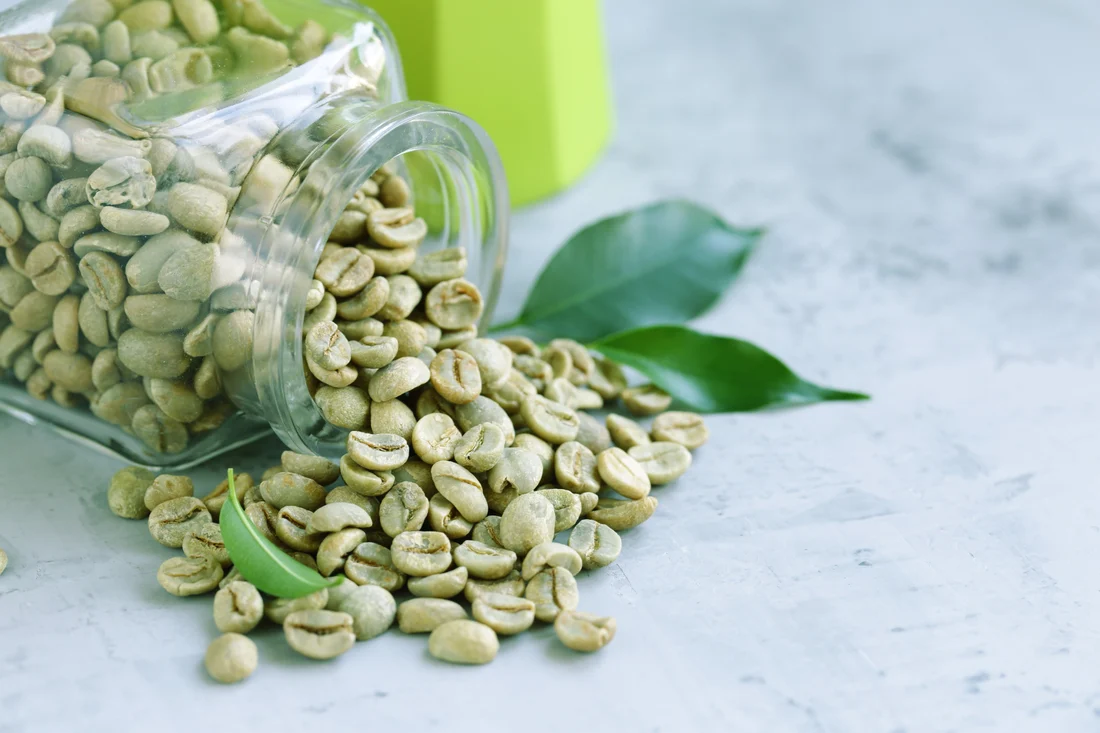
Green coffee bean extract has had an unusually long life in the weight-loss supplement world. I remember when it first became one of those ingredients people seemed to encounter everywhere—inside capsules, metabolism formulas, “fat-burning” blends, and articles promising surprisingly large changes on the scale. The basic story sounded appealing: take the compounds naturally found in unroasted coffee beans, concentrate them into a supplement, and potentially influence the way the body handles glucose, fat, and energy. It is exactly the kind of idea that sounds plausible enough to deserve a closer look.
After digging into the research, though, I think the most useful answer to “Does green coffee bean extract help with weight loss?” is more measured than either side of the debate often suggests. There is some human evidence showing modest reductions in body weight or BMI, particularly in certain groups and in shorter clinical trials. At the same time, the research base is relatively small, study quality has often been inconsistent, and not every meta-analysis has found a statistically significant reduction in body weight.
So I would not describe green coffee bean extract as useless, but I certainly would not call it a proven shortcut to substantial weight loss either. The available evidence points toward a possible modest supportive effect—not the dramatic transformation often associated with weight-loss advertising. In this article, I’ll break down what green coffee bean extract actually is, how researchers think it might work, what the clinical evidence says, what I would realistically expect from it, and how supplements such as Soda Slim fit into the bigger weight-management picture.
What Is Green Coffee Bean Extract?
Green coffee beans are simply coffee beans that have not yet gone through the roasting process used to create the familiar brown beans we grind and brew. Although roasted and unroasted coffee come from the same basic plant material, roasting changes the chemical profile of the bean. One particularly important difference involves compounds known as chlorogenic acids, which are naturally occurring polyphenols found in relatively high concentrations in green coffee.
Chlorogenic acid is the component that receives most of the attention when people discuss green coffee bean extract and weight loss. Green coffee also naturally contains caffeine, although the amount found in a supplement depends on the extraction process and formulation. Some green coffee supplements are deliberately standardized to contain a particular concentration of chlorogenic acids, while others provide less detail about their active compounds. That difference matters because two products carrying the words “green coffee bean extract” on the front label are not necessarily equivalent.
The NIH Office of Dietary Supplements describes green coffee beans as unroasted coffee beans and notes that green coffee bean extract has been promoted for reducing fat accumulation and influencing glucose metabolism. Importantly, the NIH does not present it as a powerful or established weight-loss therapy. Its consumer guidance describes the potential effect much more cautiously, stating that green coffee bean extract might help people lose a small amount of weight. That wording is much closer to how I think the evidence should be presented. NIH Office of Dietary Supplements — Dietary Supplements for Weight Loss
Why Green Coffee Bean Extract Became Associated With Weight Loss
The weight-loss theory behind green coffee bean extract largely revolves around chlorogenic acids and, to a lesser extent, caffeine. Researchers have investigated whether chlorogenic acids can influence glucose handling, carbohydrate metabolism, fat accumulation, and other metabolic processes. Some laboratory and animal findings have been interesting, but translating those mechanisms into meaningful human weight loss is considerably more complicated.
One proposed mechanism is that chlorogenic acids may influence how glucose is absorbed or processed. If that produces small changes in post-meal glucose responses or energy metabolism, it is conceivable that repeated effects over time could contribute to changes in body weight. Green coffee’s naturally occurring caffeine may also increase energy expenditure temporarily. Caffeine is a stimulant, and research has long shown that it can increase thermogenesis—the production of heat and expenditure of energy—at least temporarily.
There is an important distinction I always make when looking at supplement claims, however: a biologically plausible mechanism does not automatically prove a meaningful clinical result. An ingredient can influence an enzyme, metabolic pathway, or laboratory marker without causing substantial fat loss in everyday life. Ultimately, what matters most is whether randomized human trials consistently show that people taking the ingredient lose meaningfully more weight than people taking a placebo. That is where green coffee bean extract becomes much more interesting—and much more complicated.
What Does the Research Actually Say About Green Coffee and Weight Loss?
One reason this topic can be confusing is that different reviews have produced somewhat different conclusions. A 2020 systematic review and meta-analysis published in Complementary Therapies in Medicine looked at 15 randomized controlled trials involving 897 participants. Researchers reported an average reduction of approximately 1.23 kilograms in body weight, along with modest improvements in BMI and waist circumference among people taking green coffee extract. However, they did not find a significant reduction in body-fat percentage or waist-to-hip ratio, and they emphasized the need for additional well-designed research. PubMed — The Effect of Green Coffee Extract Supplementation on Anthropometric Measures in Adults
Another systematic review and dose-response meta-analysis published in 2019 reached a less impressive conclusion for actual weight. Across 13 articles containing 16 randomized controlled trials, the researchers found a modest statistically significant improvement in BMI, but the overall change in body weight was not statistically significant. The estimated difference was about 0.59 kilogram compared with controls. Interestingly, subgroup analyses suggested that people starting with a BMI of at least 25 kg/m² might respond somewhat better than leaner participants. PubMed — The Effect of Green-Coffee Extract Supplementation on Obesity
A more recent 2023 systematic review and meta-analysis narrowed its analysis to randomized trials involving green bean coffee extract providing at least 500 mg per day of chlorogenic acid. Only three trials with a combined total of 103 participants met the relevant criteria. The analysis found an average weight difference of about 1.30 kilograms in favor of green coffee bean extract, but the researchers explicitly acknowledged the small sample size and short duration of the available studies. That is an encouraging signal, but a few dozen participants per group are nowhere near enough for me to consider the question definitively settled. PubMed — Chlorogenic Acid in Green Bean Coffee on Body Weight: A Systematic Review and Meta-Analysis
Green Coffee Bean Extract Research at a Glance
When I put the better-known reviews side by side, the pattern becomes easier to understand. We are not looking at research showing routine losses of 10, 20, or 30 pounds from taking green coffee extract alone. Instead, most estimates that favor the supplement fall into a much narrower range, usually representing relatively modest differences from placebo groups.
The table below is the one comparison I think is particularly useful because it highlights how conclusions can change depending on which trials are included and how researchers analyze them.
| Research | Evidence Reviewed | Main Weight Finding | What I Take From It |
|---|---|---|---|
| 2011 systematic review | 3 randomized trials | About 2.47 kg greater loss than placebo | Promising result, but trials were considered poor quality |
| 2019 meta-analysis | 16 randomized trials across 13 articles | About 0.59 kg reduction; not statistically significant overall | Evidence for actual weight reduction was weak |
| 2020 meta-analysis | 15 RCTs, 897 participants | About 1.23 kg greater reduction | Suggests a small benefit, but more rigorous trials were recommended |
| 2023 meta-analysis | 3 RCTs, 103 participants | About 1.30 kg reduction | Positive signal, but based on a very small evidence base |
What stands out to me most is not simply whether one number is statistically significant. It is the size and reliability of the effect. Even the more favorable contemporary analyses suggest something closer to a kilogram or so of additional weight change, not the dramatic results sometimes implied in advertisements. I therefore see green coffee bean extract as a possible supporting ingredient rather than something capable of overriding calorie intake, activity level, sleep, food environment, genetics, medications, or the many other factors that affect body weight.
The Big Problem With the Famous Green Coffee Weight-Loss Story
Anyone researching green coffee bean extract eventually runs into an older trial that appeared to show exceptionally dramatic results. In that study, a small group of overweight participants reportedly lost substantial amounts of weight while taking green coffee extract. The numbers were impressive enough to help propel green coffee into mainstream weight-loss culture, particularly after the ingredient received significant television exposure.
There was one major problem: the study was eventually retracted. The U.S. Federal Trade Commission reported serious concerns surrounding the research, including problems with participant measurements, treatment assignments, trial duration, and the reliability of the underlying data. In 2014, the company involved in marketing the green coffee ingredient agreed to settle FTC allegations concerning unsupported weight-loss claims based on the flawed study. The FTC described the underlying research as so seriously compromised that reliable conclusions could not be drawn from it. Federal Trade Commission — Green Coffee Bean Manufacturer Settles FTC Charges
I think this history is worth emphasizing because those dramatic figures still echo through the supplement industry years later. A study does not become trustworthy merely because its result sounds exciting, and an ingredient does not inherit permanent scientific credibility from a headline-generating trial. When I assess green coffee bean extract today, I exclude those extraordinary claims from my expectations and focus instead on the broader body of randomized evidence. Once I do that, the likely benefit becomes considerably smaller and more believable.
So, Does Green Coffee Bean Extract Help With Weight Loss?
Based on the research currently available, my answer is possibly—but probably only by a modest amount. Several meta-analyses indicate some improvement in weight, BMI, or waist measurements, while another sizable analysis found no statistically significant overall change in body weight. Those findings are not completely contradictory. They may simply reflect a small effect that becomes significant under some study conditions but disappears under others.
The strongest practical conclusion I can draw is that green coffee bean extract should not be treated like a stand-alone fat-loss treatment. If someone is maintaining a substantial calorie surplus, regularly sleeping poorly, barely moving, and consuming a diet that makes appetite control difficult, I would not expect a capsule of green coffee extract to compensate for all of that. Weight loss is fundamentally driven by sustained changes in energy balance, although the biology affecting hunger, expenditure, and adherence is considerably more complex than the phrase “calories in, calories out” sometimes implies.
I would therefore put green coffee bean extract in the category of “potentially helpful adjunct, uncertain magnitude” rather than “proven weight-loss solution.” Someone who responds well might experience a small additional benefit over time, especially when the supplement accompanies a calorie-controlled eating pattern and consistent physical activity. Someone else may notice no measurable difference at all. Both outcomes are compatible with the current research.
How Much Weight Could Green Coffee Bean Extract Realistically Help You Lose?
This is where I think realistic expectations protect people from wasting both money and motivation. Looking across the more credible meta-analyses, I would not expect green coffee bean extract by itself to produce large, rapid weight loss. Depending on which analysis one uses, the average additional effect has ranged from statistically insignificant to roughly 1–2 kilograms compared with control conditions.
It is also important to understand what an average means. If a clinical analysis reports a 1.3-kilogram difference, it does not mean everyone taking the supplement lost exactly 1.3 kilograms. Some participants may have lost considerably more, some less, and some may have gained weight. The average simply tells us how the groups differed overall. Individual response can be influenced by starting weight, diet, physical activity, caffeine tolerance, metabolic health, adherence, the precise extract used, and dozens of other factors.
Personally, I would be skeptical of advertisements suggesting that green coffee bean extract alone reliably produces dramatic transformations. Claims such as effortless double-digit weight loss without dietary or activity changes should immediately raise questions about the quality of the evidence behind them. The published research supports modest expectations, not miracle expectations.
What Benefits Could Green Coffee Bean Extract Potentially Offer?
Even though weight loss is the headline benefit, I think it helps to understand what researchers are actually investigating beneath that headline. Chlorogenic acids have attracted scientific interest because of their potential effects on glucose metabolism, oxidative processes, and metabolic signaling. Those biological effects provide reasonable hypotheses for why green coffee might influence body composition, although proving the mechanism in humans requires more than laboratory observations.
The possible benefits I would keep on the radar include:
- A small additional reduction in body weight in some people when used alongside broader weight-management efforts.
- Modest changes in BMI or waist circumference, which have appeared in some meta-analyses.
- Potential metabolic effects related to glucose handling, although these should not be interpreted as treatment for diabetes or another metabolic disease.
- A mild stimulant or energy effect when the supplement contains caffeine, which some people may find useful for activity but others may find uncomfortable.
None of these potential benefits is guaranteed, and I would be especially careful not to blur the line between promising metabolic research and clinically proven outcomes. A person with diabetes, insulin resistance, cardiovascular disease, or another medical condition should never use a green coffee supplement as a substitute for appropriate medical treatment. The most defensible interpretation is that green coffee bean extract may provide a modest supportive effect within a comprehensive lifestyle strategy.
What I Would Look for in a Green Coffee Bean Supplement
The supplement label matters more than many buyers realize. Research normally investigates a particular extract at a particular dose, sometimes standardized for a particular level of chlorogenic acids. Buying an unrelated product with an unknown extract concentration does not guarantee that the product resembles the material studied in clinical trials. This is one of the biggest limitations of trying to translate supplement research directly into shopping decisions.
If I were evaluating a green coffee bean product, I would pay attention to a few practical details:
- A clearly stated amount of green coffee bean extract per serving.
- Disclosure of the extract’s chlorogenic acid concentration rather than vague proprietary language.
- Clear information about caffeine content, including caffeine coming from other ingredients.
- Independent quality or purity testing when credible documentation is available.
- A transparent Supplement Facts panel rather than a proprietary blend hiding ingredient quantities.
I would also avoid assuming that “more” automatically means “better.” A higher chlorogenic-acid or caffeine dose does not guarantee proportionally greater weight loss. The 2020 meta-analysis, for example, did not find a clear dose-response relationship between chlorogenic acid dosage and changes in the measured body-composition outcomes. More stimulant exposure can also increase the chances of unpleasant effects without necessarily improving the result.
Can Supplements Help? Where a Product Like Soda Slim Fits
I think weight-management supplements make the most sense when they are viewed as support tools rather than substitutes for the fundamentals. A well-chosen supplement might make a calorie-controlled routine slightly easier by providing energy, modest appetite support, or ingredients with limited evidence for metabolic effects. What it cannot reasonably be expected to do is erase the impact of consistently overeating or create major fat loss independently of lifestyle.
Soda Slim is one example of a multi-ingredient weight-management supplement that includes green coffee bean extract alongside ingredients such as caffeine, green tea extract, garcinia, and raspberry ketone according to currently available product information. That means it falls into a different category from a clinical trial investigating isolated green coffee extract. Even when individual ingredients have been researched, that does not automatically prove that their specific combination in Soda Slim produces a clinically meaningful amount of weight loss. Unless the finished formula itself is tested in a rigorous randomized controlled trial, claims about its overall effectiveness need to remain cautious.
This is why I would judge Soda Slim—or any similar formula—by transparency rather than by the excitement of its marketing. I would want to know the exact amounts of active ingredients, total caffeine exposure, quality-control standards, contraindications, and whether the finished formulation itself has peer-reviewed human evidence. The NIH Office of Dietary Supplements makes an important broader point here: manufacturers of weight-loss supplements rarely conduct large, long-term human studies on their finished products, and multi-ingredient formulas are especially difficult to evaluate because ingredients and dosages vary. NIH Office of Dietary Supplements — Weight-Loss Supplements, Health Professional Fact Sheet
Why Diet, Activity, Sleep, and Consistency Still Matter More
Supplements naturally attract attention because swallowing a capsule is easier than restructuring eating habits, finding an enjoyable exercise routine, improving sleep, or maintaining those behaviors for months. Yet when I compare the strength of the evidence, those foundational behaviors still matter far more than green coffee bean extract. A supplement might move the needle slightly; the surrounding lifestyle determines the direction and much of the distance.
A sustainable weight-management strategy usually involves creating an eating pattern that reduces energy intake without leaving someone constantly hungry. Higher-protein foods, minimally processed foods, vegetables, fruit, fiber-rich carbohydrates, and appropriate portion sizes can make that easier. Resistance training can help preserve muscle while dieting, while walking and other aerobic activity raise overall energy expenditure and improve cardiovascular fitness. Adequate sleep also matters because poor sleep can make appetite regulation and adherence significantly more difficult.
The NIH’s consumer guidance on weight-loss supplements makes essentially the same point: healthy eating, calorie reduction when needed, and physical activity remain the established foundations of weight loss. Supplements are not a replacement for those behaviors. NIH Office of Dietary Supplements — Dietary Supplements for Weight Loss, Consumer Guide I see green coffee bean extract as most reasonable when that hierarchy remains intact: lifestyle first, optional supplement second—not supplement first and lifestyle as an afterthought.
Safety: Is Green Coffee Bean Extract Safe?
Short-term trials generally suggest that green coffee bean extract is reasonably well tolerated, but that does not mean every product or dose is risk-free. The NIH notes that safety has not been studied as rigorously as efficacy claims sometimes imply. Reported effects have included headaches and urinary tract infections in some research, although the limited number and duration of trials make it difficult to characterize long-term safety with much confidence.
Caffeine deserves particular attention. Green coffee beans naturally contain caffeine, and some weight-management products combine green coffee with additional caffeine, green tea, guarana, or other stimulant ingredients. The total stimulant load can therefore become much higher than a consumer expects when looking at any single ingredient. Excessive caffeine can contribute to jitteriness, anxiety, sleep disruption, rapid heartbeat, gastrointestinal discomfort, and increased blood pressure in susceptible people.
I would be especially cautious about green coffee supplements in people who are particularly sensitive to stimulants or who have conditions or medications that could interact with them. Relevant concerns can include:
- Cardiovascular conditions or poorly controlled blood pressure.
- Significant caffeine sensitivity or persistent anxiety.
- Chronic sleep problems.
- Pregnancy or breastfeeding.
- Use of medications or other supplements that may interact with stimulants or affect blood pressure or blood glucose.
For anyone in those groups, discussing the supplement with a qualified healthcare professional before taking it is the sensible approach. I would also check the caffeine content of coffee, energy drinks, pre-workouts, teas, and other supplements being consumed during the same day rather than evaluating the green coffee product in isolation.
Why Supplement Marketing Can Make the Evidence Look Stronger Than It Is
One thing I have learned from reviewing weight-loss supplements is that marketing often takes a technically true statement and stretches it much farther than the science allows. An advertisement might accurately say that green coffee contains chlorogenic acids that have been studied for metabolic effects. From there, however, it can leap to language suggesting rapid fat burning, dramatic appetite suppression, or effortless transformation. Those are very different claims.
The FTC history surrounding green coffee is a particularly useful warning. A spectacularly positive study helped fuel widespread enthusiasm before regulators identified major problems with the underlying research. That episode does not prove that green coffee bean extract has zero effect; later meta-analyses still indicate a possible modest benefit. What it demonstrates is that extraordinary supplement claims deserve proportionally strong evidence.
I therefore pay more attention to the quality of the research than to the confidence of the advertisement. Randomization, adequate sample size, placebo controls, trial duration, transparent reporting, independent replication, clinically meaningful results, and disclosure of conflicts all matter. A glossy label cannot compensate for weak evidence, and impressive before-and-after stories cannot tell us what would have happened to the same people without the supplement.
Who Might Get the Most Value From Green Coffee Bean Extract?
If green coffee extract does provide a meaningful benefit, research suggests that the effect may not be identical in everyone. The 2019 meta-analysis found that participants with a baseline BMI of at least 25 kg/m² appeared to experience greater improvements in some subgroup analyses than people starting below that threshold. That does not prove that green coffee specifically “works for overweight people,” but it raises an interesting possibility for future research.
I could see the supplement being most reasonable for an adult who already has a realistic nutrition and activity strategy, understands that the expected effect is small, tolerates caffeine appropriately, and wants to experiment with a relatively modest adjunct. In that situation, the person can evaluate whether the product adds anything meaningful without relying on it as the centerpiece of the plan.
I would be much less enthusiastic for anyone expecting the supplement to produce major weight loss without changing anything else. I would also avoid chasing the effect by continually increasing the dose or stacking multiple stimulant-based products. If a supplement only seems worthwhile when expectations are inflated beyond what clinical research supports, it probably is not worthwhile in the first place.
My Verdict: Is Green Coffee Bean Extract Worth Trying for Weight Loss?
After looking at the human evidence as a whole, I land somewhere in the middle. Green coffee bean extract is not supported strongly enough for me to call it a proven, substantial weight-loss treatment. However, the research is also not uniformly negative. Several systematic reviews have found small improvements in weight, BMI, or waist circumference, and a 2023 analysis again found a modest reduction in body weight among the limited trials meeting its criteria.
The size of the benefit is the important part. A realistic expectation is a possible small contribution to weight management—not a dramatic independent fat-loss effect. That distinction changes how I would use the supplement. I would never build a weight-loss plan around green coffee bean extract, but I would consider it an optional addition for someone who understands its limitations and has no obvious reason to avoid the ingredients.
So, does green coffee bean extract help with weight loss? My answer is maybe, a little. The evidence is interesting enough that I would not dismiss the ingredient, but incomplete enough that I would not oversell it. A calorie-conscious eating pattern, regular movement, resistance exercise, sufficient sleep, and sustainable habits remain far more important. Green coffee bean extract may sit on top of that foundation, but it should never be mistaken for the foundation itself.
References Used for This Article
I relied primarily on systematic reviews, meta-analyses, PubMed-indexed research, the NIH Office of Dietary Supplements, and the Federal Trade Commission rather than supplement retailer websites. That matters because product sales pages have an obvious commercial incentive, whereas systematic reviews and government health resources give me a much better basis for judging what has actually been demonstrated in humans.
I also gave more weight to newer reviews when evaluating the overall evidence, while retaining the older systematic review because it is historically important to understanding how the evidence around green coffee developed. Where studies disagreed, I did not try to force them into a single conclusion. The disagreement itself is useful information because it tells us that the effect is probably neither extremely large nor firmly established.
The following sources were particularly useful in preparing this article. Each link goes directly to the research or government resource rather than a commercial supplement website.
- PubMed / Systematic Reviews — “Chlorogenic Acid in Green Bean Coffee on Body Weight: A Systematic Review and Meta-Analysis of Randomized Controlled Trials.” This 2023 analysis examined randomized controlled trials and reported approximately a 1.30 kg reduction in body weight, while emphasizing the small sample size and need for longer trials.
Read the study on PubMed - PubMed — “The Effect of Green Coffee Extract Supplementation on Anthropometric Measures in Adults: A Comprehensive Systematic Review and Dose-Response Meta-Analysis of Randomized Clinical Trials.” This 2020 analysis included 15 randomized trials with 897 participants and reported modest reductions in weight, BMI, and waist circumference.
Read the study on PubMed - PubMed — “The Effect of Green-Coffee Extract Supplementation on Obesity: A Systematic Review and Dose-Response Meta-Analysis of Randomized Controlled Trials.” This 2019 review found a modest improvement in BMI but did not find a statistically significant overall reduction in body weight.
Read the study on PubMed - PubMed Central — “The Use of Green Coffee Extract as a Weight Loss Supplement: A Systematic Review and Meta-Analysis of Randomised Clinical Trials.” This earlier systematic review found a potentially favorable weight effect but concluded that the included studies had substantial methodological limitations.
Read the full article on PubMed Central - NIH Office of Dietary Supplements — “Dietary Supplements for Weight Loss: Fact Sheet for Consumers.” This resource summarizes current evidence and safety considerations for green coffee bean extract and numerous other ingredients found in weight-management supplements.
Read the NIH consumer fact sheet - NIH Office of Dietary Supplements — “Dietary Supplements for Weight Loss: Health Professional Fact Sheet.” This more technical resource discusses evidence quality, mechanisms, supplement regulation, caffeine, green coffee extract, and other common weight-loss ingredients.
Read the NIH health professional fact sheet - Federal Trade Commission — “Green Coffee Bean Manufacturer Settles FTC Charges of Pushing Its Product Based on Results of ‘Seriously Flawed’ Weight-Loss Study.” This FTC release explains the problems surrounding one highly publicized green coffee weight-loss trial and why its findings should not be relied upon.
Read the FTC report
Disclaimer
This article is intended for general educational and informational purposes only. It is not medical advice and should not be used to diagnose, treat, cure, or prevent obesity, diabetes, cardiovascular disease, or any other health condition. Research on green coffee bean extract continues to evolve, and individual responses to dietary supplements can vary considerably.
Anyone considering green coffee bean extract, Soda Slim, or another weight-management supplement should review the complete ingredient label and discuss it with a qualified healthcare professional when appropriate. This is particularly important for people who are pregnant or breastfeeding, sensitive to caffeine, taking prescription medication, or living with cardiovascular, metabolic, liver, kidney, blood-pressure, or other health conditions.
Finally, dietary supplements should not be viewed as substitutes for evidence-based weight-management care. Sustainable nutrition, appropriate calorie intake, regular physical activity, sufficient sleep, behavioral consistency, and professional medical support when needed remain the most important foundations of healthy long-term weight management.