

The most useful change I’d make for a stubborn yellow toenail doesn’t come in a dropper bottle. I’d start by finding out whether it’s actually fungus. A nail that spends every workday pressed against the front of a shoe can thicken and discolor, and so can a nail affected by psoriasis. Those problems need different care, even if they look nearly identical in a photo. Getting the cause right can save months of applying something to a nail that was never infected in the first place.
When I looked into natural ways to treat nail fungus, what stood out was how often three different goals get lumped together. One is making a rough nail or dry cuticle look better. Another is reducing the chances of picking up fungus again. The third is clearing an infection that’s already established. An oil might help with the first, and a few changes to your footwear routine can help with the second. Neither result tells you whether you’ve accomplished the third.
That’s how I’ve organized this guide. I’ll explain which home habits I’d start with, what researchers actually found when they tested popular remedies, and where a topical product such as Kerassentials oil fits. I’ll also cover when I’d skip the home experiments and get the nail checked. If your main reason for looking at natural options is that you’d rather not take a pill, there’s a useful distinction to keep in mind from the start. Some treatments that go directly on the nail are prescription antifungals, so the choice isn’t simply between a home remedy and an oral medication.
Before treating the nail, make sure fungus is the problem
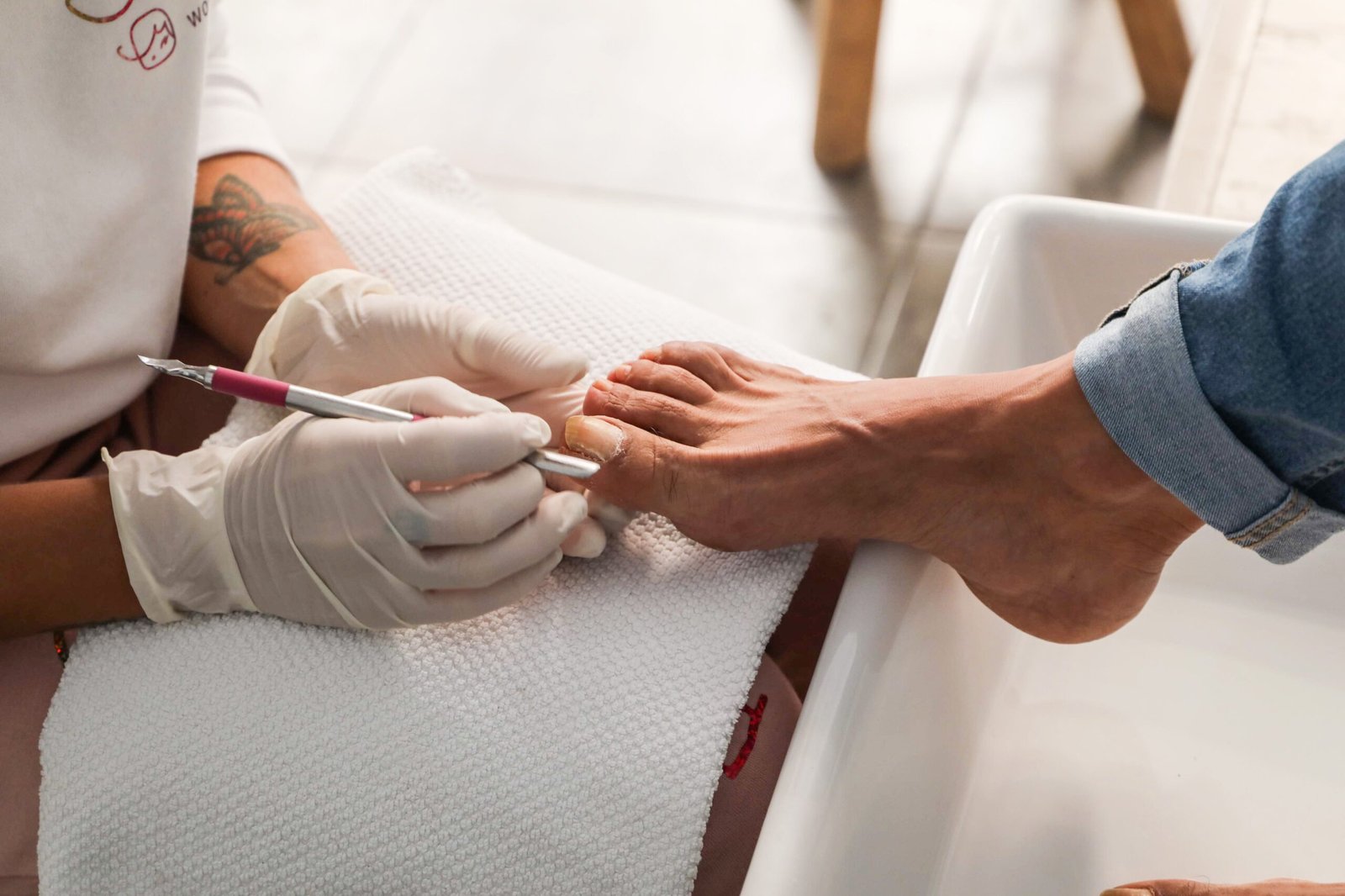
Nail fungus, or onychomycosis, can affect fingernails and toenails. A common pattern starts near the tip or side of a nail. The area might turn white, yellow, or brown, then become thicker or more brittle over time. You may notice material collecting under the nail, or the nail may start to lift away from the skin underneath. When it’s a toenail, the thickness or lifting can make an otherwise comfortable pair of shoes start to rub. Some people first notice the change when a corner crumbles during trimming.
None of those changes proves there’s an infection. Repeated pressure from shoes, an old injury, and nail psoriasis can produce overlapping signs. The history can be as useful as the color. A single big toenail that changed after you started running downhill in snug shoes has a different backstory from several nails changing gradually while the skin between your toes keeps peeling. Either pattern can turn out to be something other than your first guess, which is why I wouldn’t diagnose it by comparing photos online.
A primary care clinician, dermatologist, or podiatrist can examine the nail and, when appropriate, take a clipping or scraping. The sample may be checked under a microscope or sent for another laboratory test, depending on what’s available and what the clinician suspects. That conversation is especially worthwhile before taking an oral antifungal. It can also be useful before spending money on several months of an over-the-counter routine. If you’ve already been applying something, mention what it was and when you last used it so the clinician can advise you about testing.
The other detail I’d pay attention to is where the change starts and how much of the nail it covers. A small area at the tip presents different treatment decisions from a thick nail that’s lifting across much of its surface or changing near the cuticle. The same is true when several nails are involved. I’d make a note of when I first saw the change, whether it’s spreading, and whether there’s any pain when I walk. Those details are more useful during an appointment than trying to decide whether the discoloration is technically yellow or brown.
The home-care habits I’d start with
The home measures I find most worthwhile are simple enough to keep up even on a busy workday. They won’t clear an established nail infection on their own, but they can cut down on dampness, reduce pressure on a damaged nail, and help prevent repeat exposure. They’re also compatible with most treatment plans. You don’t need to wait for a diagnosis to stop sharing nail clippers or to change out of wet socks.
- Dry your feet thoroughly and change damp socks. After a shower, dry between the toes as well as the tops and soles of your feet. If your socks get damp during a long shift, a workout, or a commute in the rain, change them when you can. Keeping a spare pair at work or in a gym bag is a small adjustment that makes this easier to do consistently.
- Let shoes dry and make sure there’s room at the toe. Alternate pairs when you can, especially if one pair tends to stay damp after you take it off. Look at the fit with the socks you normally wear. If your longest toe strikes the front when you walk downhill or your big toenail feels sore after exercise, switching to a roomier fit can reduce repeated trauma. That won’t treat fungus, but it can stop the shoe from adding another source of damage.
- Trim gently and keep your tools to yourself. Cut toenails straight across and smooth rough edges without digging underneath the nail or cutting back the cuticle. Clean nail tools after use and don’t share clippers or files. If the nail is too thick to trim comfortably, or if you have reduced feeling or poor circulation in your feet, ask a podiatrist or clinician about safe nail care instead of trying to thin it aggressively at home.
- Wear sandals in shared wet areas and take peeling skin seriously. Shower sandals are useful around pools, in locker rooms, and in communal showers. At home, pay attention to persistent itching, scaling, or cracking between your toes. Those symptoms can be signs of athlete’s foot, which can spread to the toenails. A pharmacist or clinician can help you choose an appropriate treatment for the skin rather than guessing whether the same product will work on both skin and nails.
The habit I’d give particular attention to is checking the skin between the toes. It’s easy to concentrate on the nail because it’s the part that looks different, then overlook an itchy patch that’s been coming and going for months. A product that treats athlete’s foot on the skin won’t necessarily treat fungus inside a nail. The reverse is also worth remembering. A solution prescribed for the nail doesn’t automatically replace whatever care your clinician recommends for a separate skin infection.
Popular nail fungus remedies and what the evidence shows
My approach to home remedies is to look past the label and ask what the study counted as success. A shinier nail in a photograph, a smaller discolored patch, and a nail sample that no longer tests positive for fungus are different results. A good study also needs a comparison group so you can tell whether an improvement is more likely to come from the product than from ordinary nail growth, trimming, or another change in the person’s routine. Keep those distinctions in mind when comparing the options below.
| Approach | What it may reasonably do | What I’d consider before relying on it |
|---|---|---|
| Dry footwear, clean socks, and gentle nail care | Reduce prolonged dampness and repeated nail trauma, and help lower the chance of reinfection. | These habits are worth keeping whether or not you need medication, but they don’t directly clear fungus from within an infected nail. |
| Tea tree oil | Has shown some activity against fungi, and researchers have tested it in people with nail fungus. | Human studies used different formulas and reported mixed results. It can irritate the skin or trigger a rash, and a blend containing tea tree oil is not automatically equivalent to a studied product. |
| Mentholated chest rub | Small preliminary studies reported improvement in some participants with toenail fungus. | The studies don’t tell us reliably how much improvement was due to the rub itself. I wouldn’t use it in place of getting an extensive or worsening nail change evaluated. |
| Vinegar soaks | The acidity offers a plausible reason to study vinegar, but a plausible mechanism isn’t evidence of a cure. | There isn’t reliable clinical evidence that a household vinegar soak clears nail fungus. It can sting cracked or inflamed skin, and prolonged soaking works against the goal of keeping feet dry if they aren’t dried well afterward. |
| Topical nail oils such as Kerassentials oil | An oil may soften dry cuticles or make the nail and surrounding skin look less dry. | Cosmetic conditioning isn’t the same as treating onychomycosis. Ingredient research doesn’t establish that a finished blend clears an infection. |
| Prescription antifungals | Treat confirmed nail fungus. Nail-specific topical medicines are an option in some cases, while oral medicines generally have stronger evidence for clearing toenail infections. | The decision depends on which nails are affected, how extensive the infection is, and your medical history. Both approaches still leave you waiting for the damaged nail to grow out. |
Tea tree oil has been studied, but the results don’t support a simple DIY recipe
Tea tree oil is one of the more interesting natural options because researchers have looked beyond the laboratory and tested it in people with onychomycosis. The trouble is that the studies aren’t all asking the same question. Some tested tea tree oil on its own. Others used a blend containing additional oils or paired it with an antifungal drug. If a blend performs well, you can’t assume tea tree oil was responsible, and you can’t expect a different bottle with a different concentration to produce the same result. Some studies also count partial visible improvement, which is easier to achieve than a completely clear nail with no fungus detected.
I wouldn’t take a study that used a concentrated oil as a reason to copy the formula at home. Tea tree oil can cause skin irritation or allergic contact dermatitis, and a rash around the nail can make it harder to tell what’s happening. It shouldn’t be swallowed. If a nail product causes burning, redness, itching, or swelling, stop using it rather than assuming the sensation means it’s working. There’s no benefit in turning a nail problem into a skin problem as well.
Mentholated chest rub has a small amount of human research
Vicks VapoRub is sometimes described online as a home remedy with clinical backing. That’s only part of the story. A frequently cited study followed 18 people with toenail fungus who applied the rub over an extended period. Some improved, but the study didn’t have a comparison group. That matters because an encouraging set of outcomes in a small study doesn’t tell us how reliably the product works or which patients are likely to benefit. It’s a reason to do better research, not a reason to give it the same weight as a medication studied specifically for the nail.
I can see why the idea appeals to people. It uses a familiar product, there’s no prescription to fill, and it feels like a low-effort first step. The disappointing part is how much time a trial can cost. If months go by while a thick, uncomfortable nail continues changing, that time would have been better spent confirming the diagnosis and discussing a treatment designed for it. I’d give that consideration more weight than the fact that a jar is already in the bathroom cabinet.
Vinegar and other kitchen remedies are low on my list
Apple cider vinegar sounds convincing when the explanation stops at “fungi don’t like acid.” The real question is whether a household soak delivers enough of the active substance to the infected area for long enough to clear the fungus without irritating nearby skin. Those aren’t conditions you can infer from a jar of vinegar or a laboratory finding. There isn’t good clinical evidence that a vinegar soak cures onychomycosis, and I wouldn’t use visible softening immediately after a soak as a sign that an infection is resolving. A nail can look different simply because it has absorbed water.
I’d also skip household bleach and improvised mixtures of harsh chemicals or concentrated essential oils. The skin beside a lifting nail is easy to irritate, especially if it’s already cracked. If a remedy requires you to tolerate stinging or scrub until the area feels raw, it doesn’t belong in a sensible home routine. I’d put that effort into drying the feet, changing damp socks, and making sure the affected nail isn’t repeatedly hitting the inside of a shoe.
Can supplements and nail oils help? Where I’d put Kerassentials oil
The word “supplement” can be confusing when you’re shopping for nail products. A pill or gummy is taken by mouth. Kerassentials oil is applied to the nail and surrounding skin, so it’s a topical product, not an oral dietary supplement. The distinction is important because an oil and a nutritional supplement address different things. An oil might be used for dry cuticles or to improve the appearance of a rough nail. A nutritional supplement may address a deficiency if one is present. Neither of those uses should be equated with treating a confirmed fungal infection.
What I’d expect from a topical oil
I’d judge a nail oil first on what it can do at the surface. For someone with dry skin around the nail or rough cuticles, an oil may soften those areas or make them look less dry. You might see a cosmetic difference soon after applying it. That’s a real difference if your goal is grooming. It’s just not evidence that an ingredient made it through the nail or reached the area where the fungus is growing. The same distinction applies to a before-and-after photo taken with freshly oiled nails. The finish may look better while the underlying infection is unchanged.
For Kerassentials oil specifically, I didn’t find a published clinical trial showing that the finished formula clears nail fungus. That is the evidence I’d want before using it as an antifungal treatment. Studies of an individual botanical or an oil used at a particular strength don’t tell us how a commercial blend performs. Ingredients that slow fungal growth in a lab also aren’t necessarily reaching an infection beneath a thickened nail. The more useful question for a shopper is whether people with confirmed onychomycosis were given the actual product and whether researchers checked for fungal clearance after treatment.
If I were considering Kerassentials oil as an optional grooming product, I’d look at the label on the bottle for the current ingredients and directions rather than relying on descriptions copied across sales pages. I’d be cautious with fragranced or essential-oil products if I’d had a rash from similar formulas before. I wouldn’t put one on open or inflamed skin, and if I were already using a prescription nail solution, I’d ask a pharmacist or clinician before layering an oil over or under it. A second product isn’t necessarily helpful if it complicates a routine that depends on applying the medication as directed.
Oral supplements can help address a deficiency, not clear nail fungus
Biotin is a useful example of how nail-health research gets stretched. A few small studies examined whether biotin helped people with brittle nails, and some participants reported or showed improvements in nail firmness or thickness. But the studies were limited and didn’t establish that biotin clears a fungal infection. A stronger-looking fingernail and a fungus-free toenail are different outcomes. If several nails are brittle at once, particularly alongside other symptoms or a change in diet, it makes more sense to ask about possible causes than to start a high-dose supplement simply because the label says “hair, skin, and nails.”
There’s also a practical downside worth knowing about. Biotin can interfere with certain laboratory tests, including some thyroid tests and some tests used to assess possible heart damage. If you already take it, tell your healthcare team what product you use and how much you take, especially before blood work. I wouldn’t assume a supplement is harmless simply because it’s marketed for cosmetic purposes, nor would I take one specifically to try to clear a fungal nail.
My spending decision would come down to the goal. If the main problem is a dry cuticle and I want it to look and feel better, an oil can be an optional addition to ordinary grooming. If I have a persistent nail change and want to know whether it’s fungus, I’d prioritize an examination or a nail test. And if a clinician diagnoses a deficiency that could be affecting nail health, I’d address that on its own merits. Buying several products for three different goals can feel like covering all the bases, but it makes it harder to know which problem you’re solving.
What progress looks like and how long it can take
When a nail starts recovering, the change I’d look for is at the base of the nail, near the cuticle. A clearer band of new growth that becomes wider over time is more informative than whether the far end looks brighter this week. The damaged section won’t suddenly change into healthy nail. New nail has to grow forward, and the older, affected portion gradually moves toward the tip, where it can be trimmed. An infection may have responded to treatment well before the nail looks normal, and a nail damaged by previous trauma may not return completely to its old appearance.
Fingernails generally grow out faster than toenails. A fingernail may take roughly three to six months to regrow, while a toenail can take up to about 18 months to replace itself fully. That doesn’t mean you should wait 18 months before checking whether a plan is helping. It means that a promise of a completely normal-looking big toenail in a few weeks deserves skepticism. It also explains why the medication schedule and the time it takes to judge the final cosmetic result can be quite different.
I find a monthly photo more useful than daily inspection. Take it in similar light, from the same angle, before applying oil or polish. Compare the new growth near the base and note whether other nails have started changing. A photo can help you describe what’s happened at an appointment, but it can’t confirm the fungus is gone. If the discolored area is expanding, moving toward the base, or appearing in other nails, I’d seek advice sooner instead of continuing a home trial just because toenails are slow to grow.
When I’d stop experimenting and see a clinician
A stable, painless change at the tip of a nail and a toe that’s becoming red and swollen aren’t the same situation. I’d arrange an appointment for a nail that stays thick, brittle, discolored, or lifted without a clear explanation, especially if it hurts in shoes or more than one nail is involved. If you have diabetes, reduced sensation in your feet, poor circulation, or a weakened immune system, I’d get guidance early instead of attempting aggressive trimming, soaking, or filing. Even a small cut is worth taking seriously when sensation or healing is impaired.
Spreading redness, warmth, swelling, pus, or worsening pain around a nail calls for prompt medical advice, particularly if you also have a fever or feel unwell. Those symptoms can indicate a problem beyond a chronic fungal nail. A new or changing brown or black streak deserves prompt assessment as well, especially if it widens or the surrounding skin also changes color. Not every dark line is dangerous, but it shouldn’t be assumed to be fungus or covered with polish while you see whether an oil helps.
Avoiding pills doesn’t mean relying on home remedies
If testing supports a fungal diagnosis and the affected area is limited, I’d ask whether a prescription treatment made for the nail is a reasonable choice. Depending on the case and what’s available locally, examples include ciclopirox, efinaconazole, and tavaborole. These aren’t interchangeable with athlete’s-foot creams, which are formulated for skin rather than for getting through the nail. Prescription topical treatments often require consistent use for months, so it’s worth asking which application routine you can realistically maintain and whether professional trimming would help.
For more extensive or stubborn infection, a clinician may recommend an oral antifungal such as terbinafine. Oral treatment generally has a better chance of clearing toenail fungus than topical treatment, but it isn’t appropriate for everyone. The clinician should consider your medical history, the medications you take, and whether liver testing is needed. I’d ask what the proposed treatment can realistically accomplish and when to come back if the nail worsens. That gives you a plan with a way to assess progress, instead of an open-ended commitment to try whatever remedy comes up next.
My bottom line on natural ways to treat nail fungus
If I noticed tomorrow that a toenail was turning yellow, I’d start with the practical changes I could keep up. I’d dry carefully between my toes, switch out damp socks, give my shoes more time to dry, and check whether the nail was rubbing against the toe box. Then I’d have a persistent or unexplained change checked before committing to months of treatment. If it turned out to be shoe trauma rather than fungus, that information would be just as valuable as a positive test.
I’d consider Kerassentials oil or another nail oil for cosmetic conditioning if dry cuticles were part of the problem, not as a substitute for treating an infection. I wouldn’t take biotin specifically for nail fungus, and I wouldn’t give vinegar or any other home remedy months of extra time if the nail was getting worse. The best plan separates the jobs clearly. Use home care to protect the nail and reduce reinfection risk, use appropriate treatment for confirmed fungus, and judge recovery by the new nail growing in rather than by how shiny the old nail looks.
Disclaimer
This article is for general educational purposes and isn’t a substitute for diagnosis or care from a qualified healthcare professional. The mention of Kerassentials oil is for comparison and is not a recommendation to use it to treat a fungal infection. If a nail change persists, becomes painful, spreads, or appears alongside redness, drainage, or a new dark streak, seek medical advice. If you have diabetes, poor circulation, reduced sensation, or a weakened immune system, ask a healthcare professional about safe foot and nail care before trying a home remedy.
References
- Frazier, Santiago-Delgado, and Stupka, American Family Physician. This clinical review compares diagnostic tests and antifungal treatment options and explains how the extent of the infection and a patient’s medical history influence treatment. It also provides the nail regrowth timelines used in this article. Onychomycosis: Rapid Evidence Review
- Nickles, Lio, and Mervak, Skin Appendage Disorders. This peer-reviewed systematic review evaluated 17 studies of complementary approaches, including tea tree oil, mentholated chest rub, and several botanical preparations. It explains how different formulas, study designs, and definitions of improvement limit what readers can conclude. Complementary and Alternative Therapies for Onychomycosis: A Systematic Review of the Clinical Evidence
- American Academy of Dermatology. Dermatologists outline practical steps for lowering the risk of nail fungus or reinfection, with guidance on footwear, shared wet areas, nail tools, and treating athlete’s foot. This supports the everyday habits discussed in the article, as distinct from treatments intended to clear an existing infection. 11 Tips to Prevent Nail Fungus
- National Institutes of Health, Office of Dietary Supplements. The professional fact sheet summarizes the small studies of biotin for brittle nails and explains how supplemental biotin can affect laboratory results. The distinction between brittle nails and onychomycosis is central to interpreting what this research can tell us. Biotin Fact Sheet for Health Professionals
- American Academy of Dermatology. This dermatologist-reviewed guide describes changes such as a new dark nail band or pigmentation in nearby skin that warrant an examination. It supports the recommendation not to assume a new or changing dark streak is a fungal infection. How to Check Your Nails for Melanoma