

For years, whenever I heard people talk about improving cognitive performance, the conversation seemed to revolve around the same familiar subjects: memory exercises, nootropics, caffeine, better sleep, meditation, omega-3 fatty acids, or whatever new “brain-boosting” ingredient happened to be popular at the time. Those things can certainly deserve a place in the conversation, but the more I learned about how the brain actually functions, the more interested I became in something much more fundamental: the health of the blood vessels supplying the brain and the role nitric oxide plays in regulating that circulation.
It makes intuitive sense once you think about it. The brain may represent only a relatively small percentage of total body weight, but it is an extraordinarily metabolically active organ. Neurons constantly require oxygen and metabolic fuel, and the cardiovascular system has to deliver those resources while removing metabolic by-products. When certain areas of the brain become more active, the circulatory system must also be capable of adjusting blood delivery to match those changing demands.
That is where the relationship between nitric oxide, healthy blood vessels, cerebral circulation, and cognitive performance becomes particularly interesting.
I do not think nitric oxide should be presented as some magical “smart molecule,” because human cognition is much more complicated than that. Memory, attention, processing speed, learning, mood, sleep, glucose metabolism, neuronal signaling, inflammation, vascular health, physical fitness, and many other biological systems interact with one another. Nevertheless, nitric oxide participates in several physiological processes that are directly relevant to how efficiently our vascular system functions.
The more useful way I have come to look at the subject is this: supporting nitric oxide production and vascular health may help create a healthier physiological environment in which the brain can perform its demanding work.
That distinction matters. Instead of chasing an artificial feeling of stimulation, the goal becomes supporting the underlying systems that keep the brain adequately supplied, responsive, and metabolically supported.
Why Circulation Matters So Much to Cognitive Performance
When I think about cognitive performance, I tend to think first about what happens inside neurons: electrical signals, neurotransmitters, synapses, and communication between different regions of the brain. Those processes are obviously essential, but neurons cannot operate independently of the vascular system surrounding them.
The brain requires a continuous supply of oxygen and nutrients delivered through the bloodstream. Unlike tissues that can tolerate relatively long interruptions in circulation, brain tissue is remarkably sensitive to inadequate blood flow. This is one reason the regulation of cerebral blood flow is so tightly controlled.
The important concept here is not simply having as much blood flowing through the brain as possible. Healthy cerebral circulation is dynamic. Blood supply needs to be appropriately distributed depending on what particular brain regions are doing at a particular moment.
When I am reading a difficult scientific paper, solving a problem, remembering a name, or concentrating intensely on writing, different networks of neurons increase their metabolic activity. Those active tissues require additional oxygen and energy. The vascular system responds through a collection of mechanisms often described under the broader concept of neurovascular coupling.
Essentially, neuronal activity and blood-vessel behavior communicate with each other.
Research into exercise and cognition reinforces this more nuanced picture. A recent scientific review noted that changes in global cerebral blood flow alone do not completely explain why exercise can temporarily improve cognition. Regional blood-flow responses, oxygen extraction, glucose metabolism, lactate utilization, and neurovascular coupling appear to be part of a much more complex system.
This is important because it prevents the conversation from becoming oversimplified. The objective is not to force maximum blood into the brain. It is to maintain a cardiovascular and cerebrovascular system that can respond efficiently to the brain’s changing metabolic needs.
And nitric oxide is one of the molecules involved in making that vascular responsiveness possible.
What Nitric Oxide Actually Is
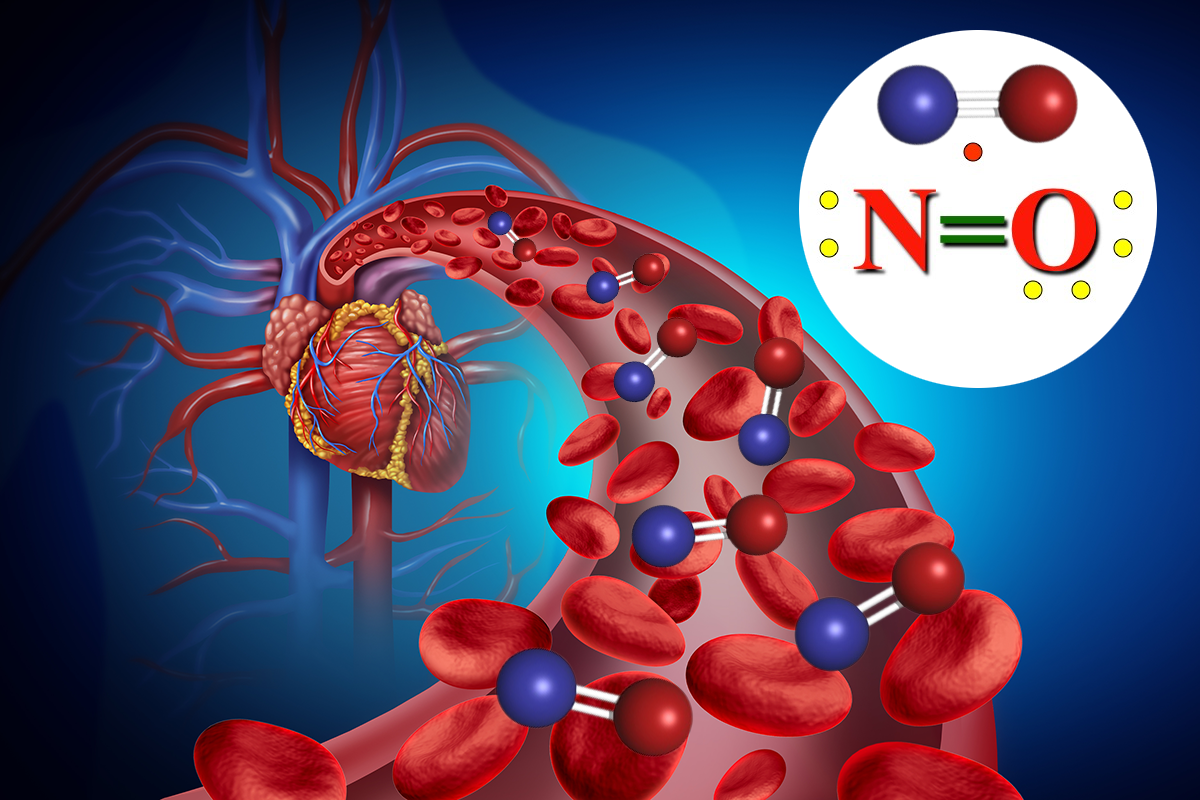
Nitric oxide, usually abbreviated as NO, is a tiny gaseous signaling molecule produced naturally throughout the body. Despite its simple chemical structure, it participates in an impressive range of biological functions.
In the cardiovascular system, one of its best-known roles involves blood-vessel regulation.
Cells lining the inside of blood vessels are collectively known as the endothelium. Far from being an inert coating, the endothelium is metabolically active tissue that releases signaling substances influencing vascular tone, inflammation, coagulation, and blood flow.
One important endothelial enzyme is endothelial nitric oxide synthase, or eNOS. Under appropriate conditions, eNOS helps produce nitric oxide from the amino acid L-arginine.
Once produced, nitric oxide can diffuse into nearby vascular smooth muscle and participate in signaling that encourages the vessel to relax. As the vessel relaxes, its diameter can increase, contributing to the regulation of blood flow and vascular resistance.
Scientific literature has therefore long recognized endothelial nitric oxide as an important regulator of vascular tone and local circulation. Reviews examining cerebral circulation specifically have likewise described endothelial NO as an important contributor to cerebrovascular regulation and cerebral perfusion.
That explains why I think nitric oxide deserves considerably more attention in discussions about brain performance.
If the endothelium is part of the system controlling blood delivery to the brain, and nitric oxide is one of the molecules helping the endothelium regulate vascular behavior, then nitric oxide biology becomes directly relevant to cerebrovascular health.
It still does not mean that taking an ingredient marketed as a “nitric oxide booster” instantly makes someone smarter. Human physiology is not that straightforward. But it does provide a biologically plausible bridge between cardiovascular health and cognitive health.
The Endothelium: An Overlooked Part of Brain Health
One of the biggest changes in my own perspective came when I stopped thinking about brain health and cardiovascular health as separate subjects.
We often divide the body into categories for convenience. We talk about the heart, the brain, the digestive system, muscles, hormones, and metabolism as though each operates independently. Biology does not respect those artificial boundaries.
The arteries supplying the brain are still blood vessels. They contain endothelial cells. They respond to mechanical and biochemical signals. Their ability to dilate, constrict, and adapt contributes to maintaining an appropriate environment for brain tissue.
This is why endothelial health can reasonably be considered part of brain health.
Scientific reviews have explored the possibility that endothelial nitric oxide connects cerebrovascular function with cognitive function. Experimental research has associated reduced endothelial nitric oxide signaling with changes involving cerebral blood vessels, neuroinflammation, amyloid-related pathways, and cognitive performance. Much of the mechanistic evidence in this particular area comes from laboratory and animal research, so I would not translate those findings directly into promises for humans. Still, the biological relationship is important enough that researchers continue to investigate endothelial nitric oxide as part of cognitive and cerebrovascular health.
For me, this reinforces a practical lesson: taking care of vascular health is not merely about protecting the heart. It is also about supporting the circulation on which the brain depends.
That perspective makes everyday choices such as exercise, diet, blood-pressure management, avoiding smoking, maintaining metabolic health, and staying physically active look very different. These are not just “heart healthy” habits. They potentially influence the environment in which the brain has to function for decades.
Nitric Oxide and the Brain’s Demand for Oxygen and Energy
The brain has substantial energy requirements. Even though it cannot simply be described as an engine that runs only on oxygen and glucose, those resources are undeniably important to normal neural function.
When brain activity changes, circulation must adapt accordingly.
This coordination is especially relevant during mentally demanding activities. Concentrating deeply, processing information, working through calculations, retrieving memories, and controlling attention all involve active neuronal networks with metabolic requirements.
Nitric oxide participates within the broader vascular signaling network helping regulate blood-vessel diameter and tissue perfusion. Good endothelial function therefore helps preserve the flexibility of the vascular system rather than leaving blood vessels chronically rigid or poorly responsive.
Researchers studying lifestyle and cerebral circulation have consequently become interested in whether interventions that improve vascular function might also support cognitive function.
A scientific review of dietary factors, exercise, and cerebral blood flow concluded that improving cerebrovascular function may represent one pathway through which healthy lifestyle behaviors could help protect cognitive health. At the same time, the authors emphasized that evidence connecting specific changes in cerebral blood flow directly to cognitive improvements remains limited in several areas.
I appreciate that scientific caution because it prevents us from turning a promising mechanism into an exaggerated guarantee.
Healthy circulation matters enormously, but cognition is the result of an entire biological network rather than one measurement of blood flow.
Neurovascular Coupling May Be More Important Than Simply “More Blood Flow”
This is probably the most important distinction I would make for anyone researching nitric oxide for cognitive performance.
More is not always better.
The brain does not necessarily need continuously elevated cerebral blood flow. What it needs is an effective ability to match local blood supply with local neuronal demand.
Think of it more like an intelligent transportation system than an open fire hose. When one neighborhood becomes busy, resources need to be routed there efficiently. When activity falls, distribution changes again.
This matching process is part of neurovascular coupling.
Nitric oxide is not the only signal involved. Neurons, astrocytes, endothelial cells, smooth-muscle cells, metabolic signals, carbon dioxide, and other mediators all participate. But nitric oxide contributes to vascular regulation within this interconnected system.
Modern exercise research illustrates why that distinction matters. Scientists examining exercise-induced cognitive improvements have noted that global changes in cerebral blood flow do not fully account for improved cognitive performance. Regional perfusion and metabolic responses may matter considerably more than simply increasing total blood flow.
That makes the goal much clearer in my mind.
I am not interested in “flooding” my brain with blood. I am interested in maintaining the vascular flexibility, endothelial function, cardiovascular fitness, metabolic health, and nitric oxide signaling that allow the cerebrovascular system to respond normally.
What Happens to Nitric Oxide and Vascular Function as We Age?
Aging inevitably changes multiple biological systems, and the vascular system is no exception.
Endothelial function can decline with age, particularly when aging is accompanied by physical inactivity, elevated blood pressure, insulin resistance, oxidative stress, smoking, poor diet, or other cardiovascular risk factors.
One major issue researchers examine is nitric oxide bioavailability. Producing nitric oxide is only part of the equation. The molecule must also remain biologically available long enough to perform its signaling functions.
Oxidative stress can interfere with nitric oxide signaling. Under unfavorable conditions, reactive molecules can interact with NO and reduce its availability. Endothelial nitric oxide synthase itself can also function less efficiently under certain pathological circumstances.
The practical consequence is that vascular responsiveness may deteriorate.
In the brain, maintaining cerebrovascular endothelial function appears to be particularly important with aging. Research reviews have discussed regular exercise as one strategy capable of supporting endothelial function and cerebral blood-flow regulation throughout the aging process.
This is one reason I would rather think about nitric oxide as part of a long-term vascular-health strategy than as a temporary performance hack.
A twenty-minute feeling of stimulation is not the same thing as maintaining healthy blood vessels for decades.
Exercise May Be One of the Most Powerful Natural Nitric Oxide Strategies
If someone asked me where I would start before spending money on a supplement, exercise would be very high on my list.
Physical activity increases blood movement through the vascular system. That increased flow creates mechanical forces, including shear stress, along endothelial surfaces. Shear stress is an important physiological stimulus affecting endothelial nitric oxide signaling.
Over time, appropriately performed exercise can contribute to healthier vascular function and cardiovascular fitness.
This relationship becomes especially interesting when looking at the brain. During exercise, circulation and metabolism change substantially. Regular physical activity appears capable of producing adaptations in cerebrovascular function as well as more familiar cardiovascular adaptations.
A systematic review of human intervention studies examining physical exercise and cerebral blood flow found evidence that exercise training can influence regional cerebral blood flow, including changes observed in areas such as the anterior cingulate cortex and hippocampus. The researchers also found relationships between changes in fitness, regional blood-flow measurements, and cognitive outcomes, although they emphasized that more long-term research remains necessary.
Another systematic review and meta-analysis found differences in measures of cerebrovascular resistance and reactivity when comparing higher and lower cardiorespiratory fitness, supporting the idea that physical fitness and cerebrovascular health are meaningfully connected.
That is compelling to me because exercise does not target just one molecule.
It simultaneously affects blood pressure regulation, insulin sensitivity, cardiovascular fitness, mitochondrial health, vascular signaling, stress physiology, sleep quality, and numerous processes relevant to brain health.
Rather than looking for a single isolated “brain hack,” exercise works on the biological infrastructure supporting cognitive performance.
Dietary Nitrate Provides Another Route to Nitric Oxide
One of the most fascinating aspects of nitric oxide biology is that the body has more than one way of producing it.
The pathway involving nitric oxide synthase and L-arginine is important, but there is also a nitrate–nitrite–nitric oxide pathway.
Dietary nitrate is found naturally in foods, particularly certain vegetables. Beetroot has received enormous research attention because it can provide relatively high amounts of dietary nitrate in a convenient form.
After nitrate is consumed, part of it enters the circulation and eventually becomes concentrated in saliva. Oral bacteria can convert nitrate into nitrite, which can later contribute to nitric oxide formation under appropriate physiological conditions.
Researchers have investigated whether this pathway can affect cardiovascular function, exercise performance, cerebral hemodynamics, and cognition.
One randomized, double-blind study involving healthy adults found that nitrate-rich beetroot juice changed cerebral hemodynamic responses during cognitive tasks and was associated with improved performance on one subtraction task. Importantly, the results did not show a universal cognitive improvement across everything tested.
Another investigation in older adults found that a high-nitrate diet did not increase global cerebral perfusion but did increase regional perfusion in frontal white-matter areas associated with executive functioning.
Yet longer-term research reminds me why caution is necessary. A 13-week randomized trial involving overweight and obese adults aged 60 to 75 found that different doses of nitrate-rich beetroot juice did not produce significant improvements in cognitive function or the measured cerebral blood-flow outcomes.
These mixed results are exactly why I would never say, “Increase nitric oxide and your memory will automatically improve.”
The better conclusion is that dietary nitrate can influence nitric oxide physiology and vascular responses, and some studies suggest potentially interesting effects on regional cerebral circulation or particular cognitive tasks, but consistent cognitive enhancement has not been established.
That is less sensational, but considerably more useful.
Foods I Associate With a Nitric-Oxide-Friendly Diet
I prefer thinking about nitric oxide support through the context of an overall healthy eating pattern rather than obsessing over one ingredient.
Vegetables rich in dietary nitrate can contribute to the nitrate–nitrite–NO pathway. Beetroot is the most famous example because it is frequently used in research, but leafy greens and other vegetables can also contribute meaningful dietary nitrate.
At the same time, vascular health depends on much more than dietary nitrate.
A diet emphasizing vegetables, fruits, whole foods, appropriate protein sources, healthy fats, and minimally processed foods can provide antioxidants, polyphenols, potassium, fiber, vitamins, and other compounds that support cardiovascular and metabolic health.
That broader context matters because nitric oxide production is not very useful if the vascular environment is being simultaneously damaged by chronic smoking, uncontrolled blood pressure, severe metabolic dysfunction, inactivity, or a persistently poor-quality diet.
The same principle applies to cognitive health in general. I would never expect beetroot juice, an amino acid, or a capsule to compensate for consistently poor sleep, uncontrolled hypertension, sedentary behavior, heavy alcohol use, or untreated metabolic disease.
Supplements and specialized foods can potentially support the foundation.
They cannot replace the foundation.
L-Arginine, L-Citrulline, and the Nitric Oxide Pathway
Two ingredients frequently appearing in nitric-oxide supplements are L-arginine and L-citrulline.
L-arginine has a direct biochemical connection to nitric oxide because nitric oxide synthase enzymes use arginine in producing NO.
That sounds straightforward enough that one might assume swallowing large amounts of arginine would reliably create a major nitric oxide increase. In practice, human metabolism makes the situation more complicated.
Orally consumed L-arginine undergoes substantial metabolism in the gastrointestinal tract and liver. This limits how much reaches systemic circulation under certain conditions.
L-citrulline takes a somewhat different route. It can be absorbed and subsequently converted into arginine, thereby increasing circulating arginine availability. Scientific reviews have consequently suggested that citrulline can sometimes be a more efficient nutritional strategy for raising systemic arginine availability than simply consuming additional arginine itself.
A systematic review focusing on arginine and endothelial function has also examined its possible role in regulating vascular tone and endothelial health across several cardiovascular conditions.
Meanwhile, meta-analytic research into L-citrulline and watermelon intake suggests potential effects on certain vascular-function and cardiometabolic measurements, although results depend on the population, dose, study design, and outcome being examined.
What I would not do is take evidence that an ingredient affects arginine availability or vascular function and automatically turn that into a claim that it improves memory.
The pathway is biologically relevant, but the clinical outcome still has to be demonstrated.
That distinction is one of the most important things consumers should understand about supplements.
Can Better Nitric Oxide Production Actually Make Me Think Better?
This is where I think expectations need to remain realistic.
Cognitive performance cannot be reduced to nitric oxide levels.
Suppose someone is exhausted because they slept four hours. Another person has severe anxiety. Someone else has poorly controlled diabetes, nutritional deficiencies, medication side effects, depression, untreated sleep apnea, or an underlying neurological problem.
Increasing dietary nitrate or taking citrulline does not necessarily address the real reason those individuals are struggling cognitively.
Even in healthy people, performance depends on many things: attention, motivation, stress, prior learning, glucose availability, neurotransmitter systems, sleep, fitness, hormonal status, and the difficulty of the task itself.
Nitric oxide is better understood as one piece of the physiological infrastructure supporting brain function.
If better endothelial health allows the cerebrovascular system to respond more effectively, that may create conditions favorable to brain performance. Whether that translates into a noticeable change in memory or concentration for a particular person is another question.
This distinction is supported by the research. Exercise studies show relationships among fitness, cerebrovascular function, and cognition, but cerebral blood-flow changes are not the entire explanation for cognitive benefits. Dietary nitrate research likewise shows intriguing changes in hemodynamics without consistently producing broad cognitive improvements.
That is why I view vascular optimization as supportive rather than miraculous.
Why Blood Pressure and Metabolic Health Cannot Be Ignored
Whenever I discuss circulation and cognitive function, I think blood pressure deserves special attention.
Blood vessels in the brain are exposed continuously to the cardiovascular environment created by the rest of the body. Chronically unhealthy blood pressure can damage vascular tissue over time, while metabolic abnormalities can also contribute to endothelial dysfunction.
This makes the popular distinction between “heart health” and “brain health” increasingly artificial.
If I want my brain functioning well decades from now, protecting the cardiovascular system supplying it is an obvious priority.
The same reasoning applies to glucose regulation. The brain is metabolically demanding, and metabolic health influences vascular health, oxidative stress, inflammation, and energy utilization.
For me, the takeaway is simple: nitric oxide should be discussed as part of cardiovascular and metabolic health, not as an isolated cognitive-performance trick.
The people most serious about protecting their mental performance should therefore pay attention to the boring fundamentals: blood pressure, movement, sleep, diet quality, body composition, glucose control, smoking status, stress, and appropriate medical care.
Those fundamentals may not have the marketing excitement of a “limitless” brain pill, but biology usually rewards consistency more than novelty.
How Supplements Can Support Nitric Oxide and Cognitive Health
I see supplements as potentially useful when they are used for the right reason.
The word “supplement” itself is instructive. Ideally, a supplement adds to an already solid foundation rather than becoming a substitute for one.
For nitric oxide and circulation, supplement strategies may involve dietary nitrate sources such as concentrated beetroot products, amino acids involved in the arginine–NO pathway such as L-citrulline or L-arginine, or formulations that combine vascular-support ingredients with nutrients aimed at other aspects of cognitive performance.
The evidence differs substantially from ingredient to ingredient, and that matters.
For example, the biological pathway connecting L-citrulline with increased arginine availability and nitric oxide production is reasonably well established. Research has also evaluated effects of citrulline on vascular measurements. That still does not mean every commercial formula containing citrulline has been proven to improve cognition.
Similarly, beetroot-derived nitrate has been studied in controlled human experiments, but the cognitive results have been mixed rather than universally positive.
Ingredient evidence and finished-product evidence are not the same thing.
That is the standard I use whenever I look at a cognitive supplement.
Where a Supplement Like Memodyne Fits Into the Conversation
Memodyne is one example of the type of supplement being marketed toward people interested in memory, focus, brain health, and—on some current product pages—brain circulation and nitric-oxide support.
This is an area where I would pay particularly close attention to the actual Supplement Facts label on the exact bottle being purchased, because I found conflicting current descriptions of products being marketed online under the Memodyne name. Some pages describe a circulation-oriented formula involving ingredients such as L-arginine and L-citrulline, while another Memodyne-branded website describes a very different cognitive formula containing ingredients such as bacopa, ginkgo, phosphatidylserine, Huperzine A, acetyl-L-carnitine, and St. John’s wort.
For that reason, I would not assume that every website using the Memodyne name is describing the exact same formulation.
When discussing the circulation-oriented version, the most relevant ingredients are the nitric-oxide precursors. Current marketing materials for that version list forms of L-arginine and L-citrulline alongside other ingredients and position the formula around supporting healthy brain circulation. The biochemical rationale is understandable: arginine can serve as a substrate for nitric oxide synthesis, while citrulline can contribute to circulating arginine availability.
What I would not do, however, is jump from that mechanism to saying Memodyne has been clinically proven to improve memory because it improves nitric oxide. I have not found published independent clinical trials demonstrating that the finished circulation-oriented Memodyne formula itself improves cognitive performance. Evidence about individual ingredients cannot be treated as evidence for the entire commercial formula.
That does not make the concept meaningless. It simply means expectations should match the evidence.
Someone considering a nitric-oxide-support product such as this may be interested in complementing exercise, diet, sleep, and broader vascular-health habits. But I would evaluate the product based on its actual ingredient amounts, manufacturing transparency, interaction warnings, and evidence—not on dramatic promises about reversing memory loss or transforming brain function.
There is another reason caution matters. Ingredients capable of altering vascular tone may interact with medications or medical conditions. A person taking blood-pressure medication, nitrate medication, phosphodiesterase-5 inhibitors, anticoagulants, or other cardiovascular drugs should not casually stack circulation supplements without professional guidance.
And if the specific Memodyne formulation being considered contains completely different ingredients—particularly ingredients such as St. John’s wort—then the interaction profile changes dramatically. St. John’s wort is well known for clinically important drug interactions, making label verification especially important.
Finally, dietary supplements sold in the United States do not go through FDA premarket approval for effectiveness in the same way pharmaceutical drugs do. Manufacturers are responsible for product safety and substantiating labeling claims, while the FDA oversees the marketplace through regulatory mechanisms rather than approving every supplement before it is sold.
My approach therefore remains straightforward: a supplement can be an interesting addition, but I would never allow a supplement bottle to replace the fundamentals of cardiovascular and cognitive health.
The Lifestyle Strategy I Find More Convincing Than Any Single “Brain Hack”
If my objective were to support nitric oxide, circulation, and cognitive performance over the long term, I would build the strategy around several behaviors working together rather than searching endlessly for one perfect ingredient.
Regular aerobic exercise would be central because it provides repeated vascular stimulation while improving cardiorespiratory fitness. Resistance training would complement that foundation because preserving muscle, metabolic function, insulin sensitivity, and physical capacity becomes increasingly important with age.
I would also emphasize a vegetable-rich diet, including nitrate-containing vegetables, while making overall dietary quality the priority rather than obsessing over nitrate numbers.
Sleep would receive the same seriousness. No vascular supplement can turn chronic sleep deprivation into an optimal environment for learning and memory.
I would pay attention to blood pressure, particularly as I got older, because maintaining healthy vascular function becomes increasingly relevant to long-term brain health.
I would avoid smoking because endothelial health and smoking make terrible partners.
I would also remain physically active throughout the day instead of assuming one workout completely erases long periods of sedentary behavior.
If I decided to experiment with a nitric-oxide-support supplement, I would treat it as one small component of that larger system.
This approach is less glamorous than claiming one capsule will suddenly unlock extraordinary cognitive ability. But it aligns much better with what I see when I look at the scientific literature.
Why I Am More Interested in Long-Term Brain Resilience Than Short-Term Stimulation
There is another reason the nitric oxide conversation interests me.
A lot of cognitive-performance marketing revolves around what a person feels within an hour: more energy, stronger stimulation, sharper alertness, or greater motivation.
Those effects can feel impressive, but feeling stimulated and having a healthier brain are not synonymous.
Caffeine is the easiest example. It can clearly alter alertness, but that immediate sensation tells us little about endothelial health, neurovascular coupling, metabolic flexibility, or long-term cerebrovascular resilience.
The nitric oxide and circulation discussion encourages me to think over a much longer timeframe.
How well are my arteries functioning?
How healthy is my blood pressure?
Am I maintaining cardiorespiratory fitness?
Can my vascular system respond appropriately when tissues demand additional blood?
Am I giving my brain a healthy metabolic environment?
Those questions may matter far more over the next twenty or thirty years than whether I can squeeze another temporary burst of concentration out of an afternoon.
Research examining exercise, vascular health, and aging supports this broader perspective. Reviews indicate that exercise can benefit cerebrovascular function, cognition, and neuroplasticity in older adults, although researchers continue to investigate exactly how these adaptations interact.
That is the kind of cognitive enhancement I find most meaningful: building a body that gives the brain the best possible conditions in which to keep functioning well.
Signs That “Brain Fog” Should Not Simply Be Treated With Supplements
One mistake I think people make is assuming every concentration or memory problem needs a nootropic.
Occasional mental fatigue after a poor night’s sleep is one thing. Persistent or worsening cognitive symptoms are different.
Memory changes can have numerous causes, including medication effects, sleep disorders, nutritional deficiencies, mood disorders, endocrine problems, cardiovascular issues, substance use, infections, neurological conditions, and other health problems.
Someone experiencing significant new confusion, neurological symptoms, sudden cognitive changes, fainting, severe headaches, weakness, speech difficulty, or other concerning symptoms should seek appropriate medical attention rather than attempting to self-treat the problem by increasing nitric oxide.
Likewise, progressively worsening memory deserves professional evaluation.
Supplements are appropriate only after we remember that cognitive symptoms can sometimes be signals rather than inconveniences.
That is especially important for older adults and anyone with existing cardiovascular, neurological, or metabolic conditions.
My Final Thoughts on Nitric Oxide, Circulation, and Cognitive Performance
The deeper I have gone into this subject, the less interested I have become in the simplistic claim that “more nitric oxide equals a better brain.”
The real story is far more interesting.
Nitric oxide is an important biological signaling molecule involved in vascular regulation. Endothelial nitric oxide contributes to the control of vascular tone and cerebral circulation. The brain depends heavily on a healthy vascular network capable of directing oxygen and metabolic resources toward active tissue. Exercise can influence endothelial and cerebrovascular function. Dietary nitrate can increase nitric oxide availability through an alternative physiological pathway, while amino acids such as arginine and citrulline interact with nitric oxide metabolism through another route.
Taken together, those facts create a convincing biological reason to care about nitric oxide and healthy circulation as part of cognitive health.
What the evidence does not justify is treating nitric oxide like an instant intelligence switch.
Some human trials have reported changes in regional cerebral blood flow or certain measures of cognitive performance following dietary nitrate interventions. Other studies have failed to demonstrate meaningful cognitive improvements. Exercise appears to produce broader benefits, but even there the relationship between blood flow and cognition involves complex interactions among regional circulation, metabolism, fitness, and neuronal activity.
My own takeaway is therefore much more practical.
Protect the blood vessels that protect the brain.
Exercise consistently. Eat a nutrient-dense diet rich in vegetables. Protect metabolic health. Manage blood pressure. Sleep properly. Avoid smoking. Stay physically active. And if a well-designed supplement fits into that foundation, evaluate its ingredients and evidence carefully rather than expecting the capsule to do everything.
Products such as Memodyne may appeal to people interested in supporting circulation and cognitive performance, particularly when the formulation uses nutrients connected with nitric oxide metabolism. But I would always separate biological plausibility from clinically demonstrated results, verify the exact current formula before buying, and check for medication interactions.
Ultimately, the strongest lesson I take from nitric oxide research is not that the brain needs another shortcut.
It is that cognitive performance depends partly on the health of the biological infrastructure supporting the brain, and circulation is a major part of that infrastructure.
When the vascular system remains responsive, the endothelium functions well, cardiovascular fitness is maintained, and the brain can efficiently match circulation with metabolic demand, we are supporting something considerably more valuable than a temporary feeling of stimulation.
We are investing in the physiological foundation on which attention, memory, learning, and long-term cognitive resilience depend.
References
1. PubMed – National Library of Medicine
Endothelial Nitric Oxide: Protector of a Healthy Mind
https://pubmed.ncbi.nlm.nih.gov/24357508/
2. PubMed Central – National Library of Medicine / NIH
Role of Endothelial Nitric Oxide in Cerebrovascular Regulation
https://pmc.ncbi.nlm.nih.gov/articles/PMC3196792/
3. PubMed – National Library of Medicine
Emerging Roles of Endothelial Nitric Oxide in Preservation of Cognitive Health
https://pubmed.ncbi.nlm.nih.gov/36848426/
4. PubMed – National Library of Medicine
Effects of Physical Exercise Training on Cerebral Blood Flow Measurements: A Systematic Review of Human Intervention Studies
https://pubmed.ncbi.nlm.nih.gov/36170974/
5. PubMed – National Library of Medicine
Endothelium-Dependent Control of Cerebrovascular Functions Through Age: Exercise for Healthy Cerebrovascular Aging
https://pubmed.ncbi.nlm.nih.gov/23792680/
6. PubMed – National Library of Medicine
Benefits of Exercise Training on Cerebrovascular and Cognitive Function in Ageing
https://pubmed.ncbi.nlm.nih.gov/32954902/
7. PubMed – National Library of Medicine
Effects of Cardiorespiratory Fitness and Exercise Training on Cerebrovascular Blood Flow and Reactivity: A Systematic Review With Meta-Analyses
https://pubmed.ncbi.nlm.nih.gov/34018848/
8. PubMed – National Library of Medicine
Cerebral Blood Flow Measurements in Adults: A Review on the Effects of Dietary Factors and Exercise
https://pubmed.ncbi.nlm.nih.gov/29693564/
9. PubMed – National Library of Medicine
Dietary Nitrate Modulates Cerebral Blood Flow Parameters and Cognitive Performance in Humans: A Double-Blind, Placebo-Controlled, Crossover Investigation
https://pubmed.ncbi.nlm.nih.gov/26037632/
10. PubMed – National Library of Medicine
Acute Effect of a High Nitrate Diet on Brain Perfusion in Older Adults
https://pubmed.ncbi.nlm.nih.gov/20951824/
11. PubMed – National Library of Medicine
Incremental Doses of Nitrate-Rich Beetroot Juice Do Not Modify Cognitive Function and Cerebral Blood Flow in Overweight and Obese Older Adults: A 13-Week Pilot Randomised Clinical Trial
https://pubmed.ncbi.nlm.nih.gov/35268027/
12. PubMed – National Library of Medicine
Arginine and Endothelial Function
https://pubmed.ncbi.nlm.nih.gov/32781796/
13. PubMed – National Library of Medicine
Therapeutic Potential of Citrulline as an Arginine Supplement: A Clinical Pharmacology Review
https://pubmed.ncbi.nlm.nih.gov/32140997/
14. PubMed – National Library of Medicine
Effects of L-Citrulline Supplementation and Watermelon Consumption on Longer-Term and Postprandial Vascular Function and Cardiometabolic Risk Markers: A Meta-Analysis of Randomized Controlled Trials in Adults
https://pubmed.ncbi.nlm.nih.gov/34863321/
15. U.S. Food and Drug Administration (FDA)
Dietary Supplements: How FDA Helps Keep You Safe
https://www.fda.gov/media/158340/download
16. NIH Office of Dietary Supplements
Dietary Supplement Fact Sheets
https://ods.od.nih.gov/factsheets/list-all/
Disclaimer
This article is provided for educational and informational purposes only and should not be interpreted as medical advice, diagnosis, or treatment. Nitric oxide metabolism, cerebral circulation, cognitive symptoms, and cardiovascular health can be affected by medications, medical conditions, age, diet, and individual physiology. Dietary supplements, including products marketed for nitric oxide production, circulation, memory, or cognitive support, are not substitutes for appropriate medical care.
Always consult a qualified physician, pharmacist, or other licensed healthcare professional before starting a new supplement, particularly if you take prescription medications, have low or high blood pressure, cardiovascular disease, kidney or liver disease, a neurological condition, are pregnant or breastfeeding, or are preparing for surgery. Ingredients that influence vascular function may interact with blood-pressure medications, nitrate drugs, PDE5 inhibitors, anticoagulants, and other treatments. Product formulas can also change, so always verify the current Supplement Facts label and safety information before use.
Statements concerning dietary supplements have not necessarily been evaluated by the U.S. Food and Drug Administration, and supplements are not intended to diagnose, treat, cure, or prevent disease. Individual responses vary, and research involving individual ingredients should not be interpreted as proof that a finished commercial supplement will produce the same results.