

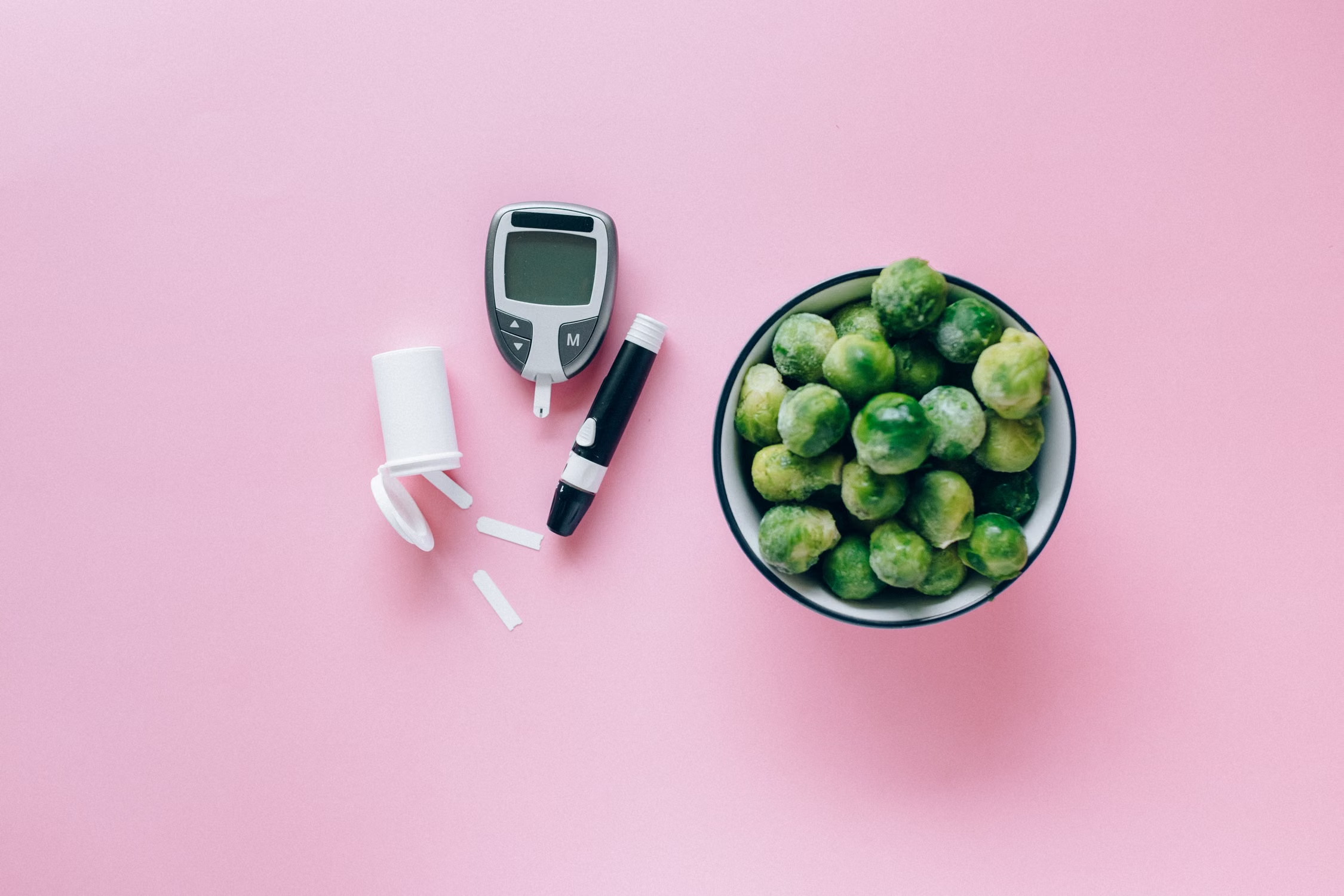
When people ask me about the best foods to help lower blood sugar, I think the most useful place to start is by clearing up one common misunderstanding. There is no single food that works like a medication and suddenly brings high blood sugar back into the normal range. What we eat absolutely matters, but blood glucose management is much more about the overall pattern of our meals: the type of carbohydrates we choose, how much fiber we eat, portion size, the balance between carbohydrates, protein and fat, and how consistently we follow those habits.
That distinction matters because the internet is full of dramatic claims about miracle foods, spices and drinks that supposedly “flush sugar out of the blood.” I have never found that approach particularly helpful. I prefer looking at foods that fit into a realistic, evidence-based way of eating—foods that can make meals more filling, provide more fiber and nutrients, replace highly refined carbohydrates, and help make the rise in blood sugar after eating more manageable.
The Centers for Disease Control and Prevention explains that carbohydrates raise blood glucose, but the speed of that rise can change depending on the type of carbohydrate and what else is eaten with it. Combining carbohydrate-containing foods with protein, fat or fiber can slow the rate at which blood sugar rises. The American Diabetes Association and the National Institute of Diabetes and Digestive and Kidney Diseases also emphasize vegetables, whole grains, beans, fruit, healthy protein sources and appropriate portions as part of a diabetes-friendly eating pattern.
So instead of looking for one magical ingredient, I like to build meals around foods that work together. Below are the foods I would prioritize most often when the goal is better blood sugar management.
Why the Foods You Choose Can Make Such a Difference
Blood glucose comes partly from the carbohydrates we eat. Foods such as bread, rice, pasta, cereal, fruit, milk, beans and starchy vegetables contain carbohydrates that the body can break down into glucose. That does not make carbohydrate foods “bad.” The important issue is that different carbohydrate foods are digested differently, and portion size also matters.
Highly refined carbohydrates tend to contain less fiber and are often digested relatively quickly. Whole-food carbohydrate sources such as beans, minimally processed whole grains and intact fruit generally bring fiber, vitamins and minerals along with their carbohydrates. Fiber is particularly important because the body does not digest it in the same way it digests other carbohydrates. The CDC notes that fiber can support blood sugar control, and soluble fiber can slow digestion.
That is one reason I focus much more on carbohydrate quality than on simply trying to remove every carbohydrate from the plate. For many people, a meal containing beans, vegetables, fish and a modest serving of whole grain is very different nutritionally from a meal built around white bread, sugary drinks and dessert—even if both meals technically contain carbohydrates.
The American Diabetes Association recognizes several eating patterns that may be appropriate for diabetes management, including Mediterranean-style, vegetarian, DASH and lower-carbohydrate approaches. There is no single diet that every person has to follow. What these successful patterns often have in common is an emphasis on whole foods, vegetables and thoughtful carbohydrate choices while limiting heavily refined foods and concentrated added sugars.
1. Leafy Green Vegetables
If I were rebuilding someone’s grocery list specifically around better blood sugar management, leafy greens would be one of the first foods I would add. Spinach, kale, collard greens, romaine lettuce, Swiss chard and similar vegetables can add a surprisingly large amount of food volume to a meal without loading the plate with refined carbohydrates.
What I appreciate most about leafy greens is how easy they make it to improve an otherwise ordinary meal. A bowl of scrambled eggs becomes more substantial when spinach is folded into it. A modest portion of chicken and brown rice looks and feels much more satisfying when half the plate contains a large salad. Soup becomes more nutrient-dense when chopped kale or chard is added near the end of cooking.
The broader category matters here as well. NIDDK’s plate method recommends making half of a meal non-starchy vegetables, with examples including leafy greens, peppers, carrots and green beans. The ADA similarly places non-starchy vegetables at the center of diabetes-friendly meal planning because they provide nutrients and fiber while generally containing fewer calories and carbohydrates than starchy foods.
I do not think leafy greens need to be eaten plain to be worthwhile. I would rather eat vegetables dressed with a modest amount of olive oil, herbs, lemon juice and seasoning than force myself through a dry bowl of lettuce and eventually give up on the habit altogether. Sustainable eating matters more than creating a theoretically perfect meal that nobody enjoys.
2. Broccoli, Cauliflower and Other Non-Starchy Vegetables
Leafy greens are only one option. Broccoli, cauliflower, Brussels sprouts, zucchini, asparagus, mushrooms, peppers, green beans, cabbage and eggplant are all foods I like to rotate through meals.
This variety is useful because one of the easiest mistakes to make when trying to eat for blood sugar control is turning the diet into a repetitive cycle of chicken and salad. That may work for a few days, but most people eventually want more flavor, texture and variety. Roasted cauliflower, sautéed mushrooms, grilled zucchini, steamed broccoli and cabbage stir-fries can completely change the personality of a meal without requiring a large serving of refined starch.
The CDC specifically recommends increasing non-starchy vegetables as part of a diabetes meal plan and suggests filling half of a nine-inch plate with vegetables such as salad greens, green beans and broccoli.
My practical approach is simple: instead of asking, “What carbohydrate should fill most of this plate?” I ask, “Which vegetables can fill most of this plate?” That single shift naturally changes the proportion of everything else.
3. Beans
Black beans, kidney beans, pinto beans, cannellini beans and similar legumes are among the foods I think deserve far more attention in discussions about blood sugar.
Beans contain carbohydrates, so I would never describe them as a carbohydrate-free food. What makes them interesting is that those carbohydrates arrive together with fiber and plant protein. The CDC lists black beans and lima beans among sources of soluble fiber, while both NIDDK and the ADA include beans among high-fiber or plant-based carbohydrate choices suitable for balanced diabetes meal planning.
I often find beans especially useful when replacing refined side dishes. Instead of making a large mound of white rice the dominant part of a meal, I might combine a smaller portion of grain with black beans, vegetables and grilled protein. In soups, salads, chili and stews, beans add enough substance that a meal can feel hearty without needing oversized servings of bread or pasta.
For convenience, canned beans work well too. I generally look for versions without added sugar and, when sodium is a concern, lower-sodium options can be useful. The ADA notes that dried beans and legumes are economical choices and recommends rinsing canned vegetables when reducing sodium is desired.
4. Lentils
Lentils deserve their own place on this list because they are one of the easiest ways I know to build a filling meal around fiber and plant protein.
Red, brown, green and black lentils can all work beautifully in soups, curries, salads and grain bowls. They require less cooking time than many dried beans and absorb seasonings extremely well. I especially like lentils for people who are trying to reduce the amount of meat they eat without replacing it with refined carbohydrates.
Like other legumes, lentils still contribute carbohydrates, which means portions matter. But they fit comfortably within eating patterns recommended by major diabetes organizations. The ADA’s Mediterranean-style pattern includes beans and other plant foods, while NIDDK includes beans among high-fiber carbohydrate foods that can occupy the carbohydrate quarter of the plate.
One of my favorite practical meals is a lentil soup filled with tomatoes, carrots, celery, spinach and herbs. Instead of thinking about it as a special “diabetic food,” I simply see it as a satisfying meal that happens to be built from ingredients that make sense for blood sugar management.
5. Oats
Oatmeal can be an excellent breakfast, but the details matter.
The oatmeal I have in mind is not necessarily an oversized bowl of instant flavored oats covered in brown sugar. I prefer plain oats combined with ingredients that add fiber, protein or healthy fats, such as berries, nuts, seeds or plain yogurt.
The CDC lists oats as a source of soluble fiber, while the ADA includes whole oats among its examples of fiber-rich whole grains.
Processing can also influence how quickly oat products are digested. Less processed forms such as steel-cut oats tend to digest more slowly than highly processed instant varieties. This is one reason I pay attention not only to the name of the food but also to the form in which I eat it.
For sweetness, berries, cinnamon or a small amount of chopped fruit can often do enough without turning breakfast into dessert. If someone monitors their glucose, comparing their response to different oat portions and preparations can also provide useful individualized information.
6. Barley
Barley is one of the most overlooked whole grains in my kitchen, and I think that is unfortunate. It has a pleasantly chewy texture, works well in soups and grain bowls, and provides fiber.
The ADA includes barley among examples of whole grains, and the CDC’s emphasis on fiber-rich carbohydrates makes grains such as barley a more interesting option than highly refined grain products.
I like barley especially when it is treated more like a supporting ingredient than the entire meal. A bowl containing roasted vegetables, grilled chicken or tofu, barley, herbs and a little olive oil gives me much more nutritional variety than a bowl dominated almost entirely by refined pasta.
This is an important pattern throughout the article: even nutritious carbohydrate foods still need sensible portions. A food being “healthy” does not mean unlimited amounts will have no effect on glucose.
7. Minimally Processed Whole Grains
Beyond oats and barley, whole grains such as quinoa, farro, brown rice, bulgur and whole wheat can all fit into a blood-sugar-conscious eating plan.
The key word for me is whole. Refining grains removes parts of the grain that naturally contain fiber and nutrients. The ADA recommends choosing whole grains and lists foods such as oats, quinoa, barley, farro and whole wheat as examples.
The CDC also recommends reducing refined grains such as white bread and focusing more heavily on whole foods.
I still pay attention to portion size because whole-grain carbohydrates can raise blood sugar too. A reasonable serving alongside vegetables and protein is very different from an enormous bowl of brown rice eaten by itself.
That balance is one reason I find the plate method so practical. Half the plate goes to non-starchy vegetables, roughly one-quarter to protein and about one-quarter to carbohydrate-containing foods. It creates structure without requiring every meal to become a mathematics exercise.
8. Berries
For anyone who assumes better blood sugar management means eliminating fruit forever, berries are a good reminder that the picture is more nuanced.
Strawberries, blueberries, raspberries and blackberries provide natural sweetness along with fiber and other nutrients. The ADA specifically includes berries among foods that can fit into a diabetes meal plan and notes their fiber and nutrient content.
My favorite way to use berries is as part of a balanced meal or snack rather than treating them as a free food. A handful of berries mixed into plain Greek yogurt with walnuts, for example, gives me a combination of fruit, protein, fat and fiber.
This also illustrates why I generally prefer whole fruit over fruit juice. Drinking fruit juice makes it very easy to consume the carbohydrate from several pieces of fruit rapidly while losing much of the fiber and chewing that come with the whole food. The CDC notes that juice can raise blood sugar faster than whole fruit, and the ADA recommends choosing whole citrus fruit over juice to retain the benefits of the fruit’s fiber.
9. Apples and Pears
Apples and pears are another practical whole-fruit choice, particularly because they travel well and require almost no preparation.
The CDC lists apples among sources of soluble fiber.
Rather than eating fruit in isolation when I know I need something that will keep me satisfied, I like pairing it with a protein or fat source. An apple with a small serving of peanut or almond butter is a classic example. A pear with a few walnuts is another.
The point is not that adding nuts somehow “cancels out” the carbohydrate in fruit. It does not. Instead, mixed meals containing carbohydrate together with protein, fat or fiber tend to be digested differently from rapidly absorbed carbohydrates eaten by themselves.
10. Nuts
Almonds, walnuts, pistachios, peanuts and other nuts are foods I keep around because small portions can make meals and snacks much more satisfying.
The ADA includes nuts and seeds in several evidence-based meal patterns for diabetes management, including Mediterranean-style and lower-carbohydrate approaches.
Nuts also make it easier for me to upgrade foods that might otherwise be dominated by carbohydrates. A tablespoon or two of chopped walnuts on oatmeal changes the balance of the meal. Almonds added to a salad make it more substantial. A small serving of nuts beside a piece of fruit can turn a light snack into something that holds me longer.
The portion deserves attention because nuts are energy-dense. I find it much easier to portion a small handful into a bowl than to eat directly from a large bag.
11. Chia Seeds, Flaxseed and Other Seeds
Seeds are another easy way to bring fiber, texture and healthy fats into meals.
Chia seeds can be stirred into yogurt or overnight oats, ground flaxseed can disappear almost unnoticed into oatmeal, and pumpkin or sunflower seeds can add crunch to salads.
The CDC lists nuts and seeds among food sources of fiber, and the ADA includes nuts and seeds as part of diabetes-friendly meal patterns.
One thing I would not do is treat seeds as medicine. I sometimes see exaggerated claims suggesting that a spoonful of chia or flaxseed will independently “reverse” diabetes. That is not how I look at these foods. Their value is that they make it easier to create an overall diet richer in whole plant foods, fiber and unsaturated fats.
That is a much more realistic reason to eat them.
12. Plain Greek Yogurt
Plain Greek yogurt is one of my favorite bases for a quick breakfast or snack because it can provide protein while serving as a vehicle for other useful foods such as berries, nuts and seeds.
The word plain matters. Many flavored yogurts contain substantial amounts of added sugar. The ADA recommends looking for yogurt products that are lower in added sugar and suggests pairing plain Greek yogurt with berries and walnuts.
I usually prefer creating the flavor myself. Berries, cinnamon, chopped nuts or a little vanilla can make plain yogurt much more interesting without turning it into a dessert-style product.
Yogurt does contain carbohydrates, so it still needs to be considered within the total meal, particularly for people who count carbohydrates or use insulin. What makes it useful is how easily it can be combined into a balanced snack.
13. Fish, Especially Fatty Fish
Salmon, sardines, trout, mackerel and other fish can help me build a meal around protein without relying heavily on refined carbohydrate foods.
The ADA’s Mediterranean-style and DASH patterns both include fish, and NIDDK’s plate method includes fish among protein options.
Fish does not need to be complicated. A piece of baked salmon with roasted broccoli and a moderate portion of quinoa can be a simple meal. Sardines with a large salad and beans can work when I want something faster.
I think this category is important because blood-sugar-friendly eating is not only about choosing better carbohydrates. It is also about constructing meals where carbohydrates no longer have to occupy most of the plate.
14. Tofu and Other Soy Foods
Tofu is another protein option I use when I want a meal that feels substantial without making meat the centerpiece.
NIDDK includes tofu and other soy foods among protein choices in the plate method, while the CDC also lists tofu as a lean-protein option when describing balanced meals.
The biggest advantage for me is versatility. Tofu can be added to stir-fries, soups, salads and grain bowls. When it is properly seasoned and browned, it becomes much more interesting than the bland reputation it sometimes gets.
Pairing tofu with a large serving of non-starchy vegetables and a smaller portion of brown rice or another whole grain creates the kind of meal structure I repeatedly come back to throughout this article.
15. Avocado and Olive Oil
Avocado and olive oil are useful examples of why I do not believe blood-sugar-friendly eating needs to mean dry, flavorless food.
The CDC lists avocado among sources of soluble fiber, while the ADA’s Mediterranean-style eating pattern uses olive oil as its primary added fat and includes nuts, seeds, vegetables and other plant foods.
I use avocado in salads, alongside eggs or mashed onto whole-grain toast in sensible portions. Olive oil is my go-to choice for roasting vegetables and making salad dressing.
These foods are calorie-dense, so more is not automatically better. But the right amount can make vegetables and whole foods far more enjoyable, and that matters because an eating pattern only works if someone can actually imagine following it for months and years.
What I Limit When I Want More Stable Blood Sugar
Adding beneficial foods is only half of the equation. I also pay attention to foods that can make blood glucose management harder when they dominate the diet.
Sugary beverages are high on that list. Regular soda, sweetened tea, energy drinks, heavily sweetened coffee drinks and many fruit drinks can deliver a large amount of rapidly absorbed carbohydrate without providing the fullness of a substantial meal. NIDDK recommends choosing drinks with little or no added sugar and lists water, unsweetened tea, unsweetened coffee and sparkling water among options.
Refined grains are another area I watch. White bread, many low-fiber cereals, pastries and heavily refined snack foods can crowd out the vegetables, legumes and whole grains that provide more fiber. The CDC specifically recommends eating fewer refined grains and added sugars while focusing more on whole foods.
I am not suggesting that one slice of white bread or one dessert destroys an otherwise balanced diet. I find all-or-nothing thinking counterproductive. What matters much more is what the everyday pattern looks like.
The Simple Plate Method I Keep Coming Back To
Whenever blood-sugar nutrition starts feeling too complicated, I come back to the plate method because it provides a visual framework that most people can understand immediately.
Using a roughly nine-inch plate, I aim for about half non-starchy vegetables, one-quarter protein and one-quarter carbohydrate-containing foods. NIDDK and the CDC both describe versions of this method for diabetes meal planning.
A practical dinner might look like grilled salmon, roasted broccoli and cauliflower, and a moderate serving of lentils or brown rice. Another could be tofu stir-fried with mushrooms, peppers and cabbage alongside a smaller portion of quinoa. Chicken, a large salad and beans works just as well.
The beauty of this approach is that it can accommodate different cultures and food preferences. There is no requirement to eat the same bland menu every day.
A Sample Day of Blood-Sugar-Friendly Meals
For breakfast, I might make plain oatmeal with berries, walnuts and chia seeds. Instead of sweetening it heavily, I would let the fruit provide most of the sweetness. Another option would be eggs with spinach, mushrooms and a slice of whole-grain toast.
At lunch, a large salad could include leafy greens, tomatoes, cucumber, peppers, beans, grilled chicken or tofu, avocado and an olive-oil-based dressing. The combination provides vegetables, protein, fat and fiber without requiring a huge portion of refined carbohydrates.
Dinner might be salmon with roasted broccoli and a modest serving of barley or lentils. If I wanted something plant-based, I could make a lentil-and-vegetable stew and serve it with a small amount of whole grain.
For snacks, I would consider choices such as an apple with peanut butter, plain Greek yogurt with berries, vegetables with hummus or a small handful of nuts.
None of these meals is exotic. That is exactly why I like them. Blood sugar management becomes much easier to sustain when the food looks like normal food rather than a temporary therapeutic diet.
Portion Size Still Matters
One of the most important lessons I have learned about nutrition is that a food can be nutritious and still need an appropriate portion.
Brown rice is a whole grain, but a giant restaurant-sized bowl of brown rice still provides a significant carbohydrate load. Fruit contains vitamins and fiber, but eating several large pieces at once may affect glucose differently from eating one serving. Nuts are nutrient-dense, but eating half a bag without noticing can add far more calories than intended.
The CDC points out that portion size and serving size are not the same thing and emphasizes portion awareness as part of blood sugar and weight management.
This is another reason I prefer building meals around non-starchy vegetables. They create volume, color and texture while allowing the more carbohydrate-dense parts of the meal to occupy a smaller proportion of the plate.
Why Fiber Is One of the First Things I Look For
If I had to choose one nutrition concept that deserves more attention in conversations about blood sugar, fiber would be near the top.
Fiber is found primarily in plant foods such as vegetables, fruits, whole grains and legumes. Because the body does not digest fiber in exactly the same way as other carbohydrates, it does not contribute to rapid blood glucose increases in the same manner. Soluble fiber can also slow digestion.
This does not mean I obsess over a fiber number every day. Instead, I use food choices as shortcuts. Beans instead of a refined side dish, berries instead of juice, oatmeal instead of sugary cereal, vegetables at lunch and dinner, and nuts or seeds in reasonable amounts naturally push the diet in a higher-fiber direction.
If someone currently eats very little fiber, however, dramatically increasing fiber overnight can cause digestive discomfort. Gradual changes and adequate fluid intake are generally more comfortable.
There Is No Universal “Perfect” Blood Sugar Diet
This is something I think every article on the subject should say clearly.
Two people can eat the same meal and experience different glucose responses. Medications, insulin production, insulin sensitivity, physical activity, sleep, stress, portion size and overall metabolic health can all matter.
That is why I hesitate whenever someone gives a universal carbohydrate target or claims that everyone with diabetes should follow exactly the same diet.
NIDDK states that there is no single right way to select healthy foods for diabetes and recommends working with healthcare professionals to create a meal plan appropriate for the individual. The ADA similarly recognizes multiple evidence-supported dietary patterns rather than prescribing one universal diet.
For people who monitor their blood glucose at home or use a continuous glucose monitor, personal readings can provide valuable information about how particular meals affect them.
What About Cinnamon, Vinegar and Other “Blood Sugar Hacks”?
I see these suggestions constantly, so I think they are worth addressing.
Certain foods, spices and dietary components have been researched for possible effects on glucose metabolism. That does not mean they should be treated as replacements for an overall eating plan, physical activity, prescribed medication or professional care.
NIDDK specifically states that there is no clear proof that particular foods, herbs, spices or dietary supplements can independently manage diabetes and recommends speaking with a healthcare professional before using supplements because they may cause side effects or interact with medications.
I have no problem using cinnamon because I enjoy the flavor. I simply would not depend on cinnamon while ignoring portion size, sugary drinks, medication instructions and the rest of the diet.
The fundamentals are less exciting, but they are much more useful.
My Practical Grocery List for Better Blood Sugar Meals
When I shop with blood sugar management in mind, my cart usually starts with vegetables. Spinach, broccoli, cauliflower, peppers, mushrooms, cabbage, zucchini and green beans give me enough variety to avoid boredom.
Then I add legumes and quality carbohydrates: black beans, chickpeas, lentils, plain oats, barley, quinoa, brown rice and whole-grain bread. I do not necessarily buy all of them at once, but having two or three available gives me choices throughout the week.
For protein, I rotate fish, chicken, eggs, tofu, beans, lentils and plain Greek yogurt depending on the meal. Berries, apples and pears handle most of my fruit needs. Nuts, seeds, avocado and olive oil round things out.
This type of grocery cart makes meal decisions much easier because most of the ingredients already fit the eating pattern I want. I do not have to rely on willpower at every meal.
The Bigger Picture: Food Is Powerful, but It Is Not the Only Factor
A good diet can play an important role in diabetes and prediabetes management, but I would never present food as the entire treatment plan.
NIDDK notes that healthy living, medication when needed, physical activity and blood glucose management all work together in diabetes care.
Sleep, physical activity, body weight, stress, medications and underlying health conditions can all influence glucose control as well.
That is why someone who is making significant dietary changes—especially someone taking insulin or medications that can cause hypoglycemia—should involve their healthcare team. NIDDK notes that insulin and medicines such as sulfonylureas can contribute to low blood sugar under certain circumstances, including skipped or delayed meals.
Changing carbohydrate intake dramatically while continuing the same medication regimen can sometimes require professional guidance.
Final Thoughts on the Best Foods to Help Lower Blood Sugar
When I think about foods to help lower blood sugar, I do not think about mysterious ingredients or miracle cures. I think about meals built from ordinary foods that give the body fiber, protein, healthy fats and nutrient-dense carbohydrates in sensible proportions.
Leafy greens, broccoli, beans, lentils, oats, barley, whole grains, berries, apples, pears, nuts, seeds, plain Greek yogurt, fish, tofu, avocado and olive oil can all play useful roles. None of them has to carry the entire burden of blood sugar management.
The bigger goal is to create a pattern.
I want vegetables taking up more space on the plate. I want whole-food carbohydrate sources replacing some of the highly refined ones. I want protein and healthy fats included so meals feel satisfying. I want water and unsweetened drinks taking the place of sugary beverages most of the time. And most importantly, I want the food to taste good enough that the pattern can continue long after the initial motivation wears off.
That is the approach I trust most because it is practical. Instead of searching for the next miracle ingredient, I would rather make dozens of small decisions that consistently move meals in a better direction.
Those choices may look ordinary from the outside, but when repeated every day, ordinary choices can become the foundation of a much stronger way of eating.
References
1. Centers for Disease Control and Prevention (CDC) — “Diabetes Meal Planning”
This CDC guide explains the diabetes plate method, carbohydrate portions, non-starchy vegetables, refined grains and how combining carbohydrates with protein, fat or fiber can influence the rate at which blood glucose rises.
https://www.cdc.gov/diabetes/healthy-eating/diabetes-meal-planning.html
2. Centers for Disease Control and Prevention (CDC) — “Fiber: The Carb That Helps You Manage Diabetes”
This resource discusses dietary fiber, blood sugar control, soluble and insoluble fiber, and food sources including oats, beans, fruits, vegetables, nuts and seeds.
https://www.cdc.gov/diabetes/healthy-eating/fiber-helps-diabetes.html
3. National Institute of Diabetes and Digestive and Kidney Diseases (NIDDK) — “Healthy Living with Diabetes”
This NIDDK resource covers meal planning, carbohydrates, healthy food choices, the plate method, medication considerations and the importance of individualized diabetes care.
https://www.niddk.nih.gov/health-information/diabetes/overview/healthy-living-with-diabetes
4. American Diabetes Association — “What Superstar Foods Are Good for Diabetes?”
This ADA resource discusses vegetables, berries, whole grains, yogurt and other nutrient-dense foods that can be incorporated into a diabetes eating plan.
https://diabetes.org/food-nutrition/food-and-blood-sugar/diabetes-superstar-foods
5. American Diabetes Association — “Diabetes Meal Patterns: Science-Based Nutrition Plans for Weight Loss & Management”
This ADA article outlines Mediterranean-style, vegetarian, low-carbohydrate, DASH and other dietary patterns that may be used for diabetes management.
https://diabetes.org/food-nutrition/eating-for-diabetes-management
6. American Diabetes Association — “Eating Well & Managing Diabetes”
This resource explains the Diabetes Plate approach and the role of non-starchy vegetables, protein, fruit, quality carbohydrates and fats in diabetes meal planning.
https://diabetes.org/food-nutrition/eating-healthy
7. American Diabetes Association — “Get to Know Carbs”
This ADA guide explains carbohydrate sources and discusses whole grains such as oats, barley, quinoa, brown rice and farro.
https://diabetes.org/food-nutrition/understanding-carbs/get-to-know-carbs
8. Harvard T.H. Chan School of Public Health, The Nutrition Source — “Carbohydrates and Blood Sugar”
This article explains how carbohydrate quality and glycemic index can influence how rapidly blood sugar rises after eating.
https://nutritionsource.hsph.harvard.edu/carbohydrates/carbohydrates-and-blood-sugar/
9. Harvard T.H. Chan School of Public Health, The Nutrition Source — “Whole Grains”
This resource discusses whole-grain intake, fiber, glucose metabolism and the differences between whole and refined grains.
https://nutritionsource.hsph.harvard.edu/what-should-you-eat/whole-grains/
10. MedlinePlus — “Glycemic Index and Diabetes”
This U.S. National Library of Medicine resource explains the glycemic index and how different carbohydrate-containing foods can affect blood glucose.
https://medlineplus.gov/ency/patientinstructions/000941.htm
Disclaimer
This article is intended for general educational and informational purposes only and should not be considered medical advice, diagnosis or treatment. Blood sugar responses to food can vary substantially from one person to another, particularly among people with diabetes, prediabetes, kidney disease, pregnancy or other medical conditions.
If you have diabetes or take insulin, sulfonylureas or other glucose-lowering medication, speak with your doctor, registered dietitian, certified diabetes care and education specialist or another qualified healthcare professional before making major changes to your carbohydrate intake or eating pattern. Significant dietary changes may alter your blood glucose levels and, in some cases, may require adjustments to medication under professional supervision. Never stop or change prescribed diabetes medication solely on the basis of nutrition information found online.