

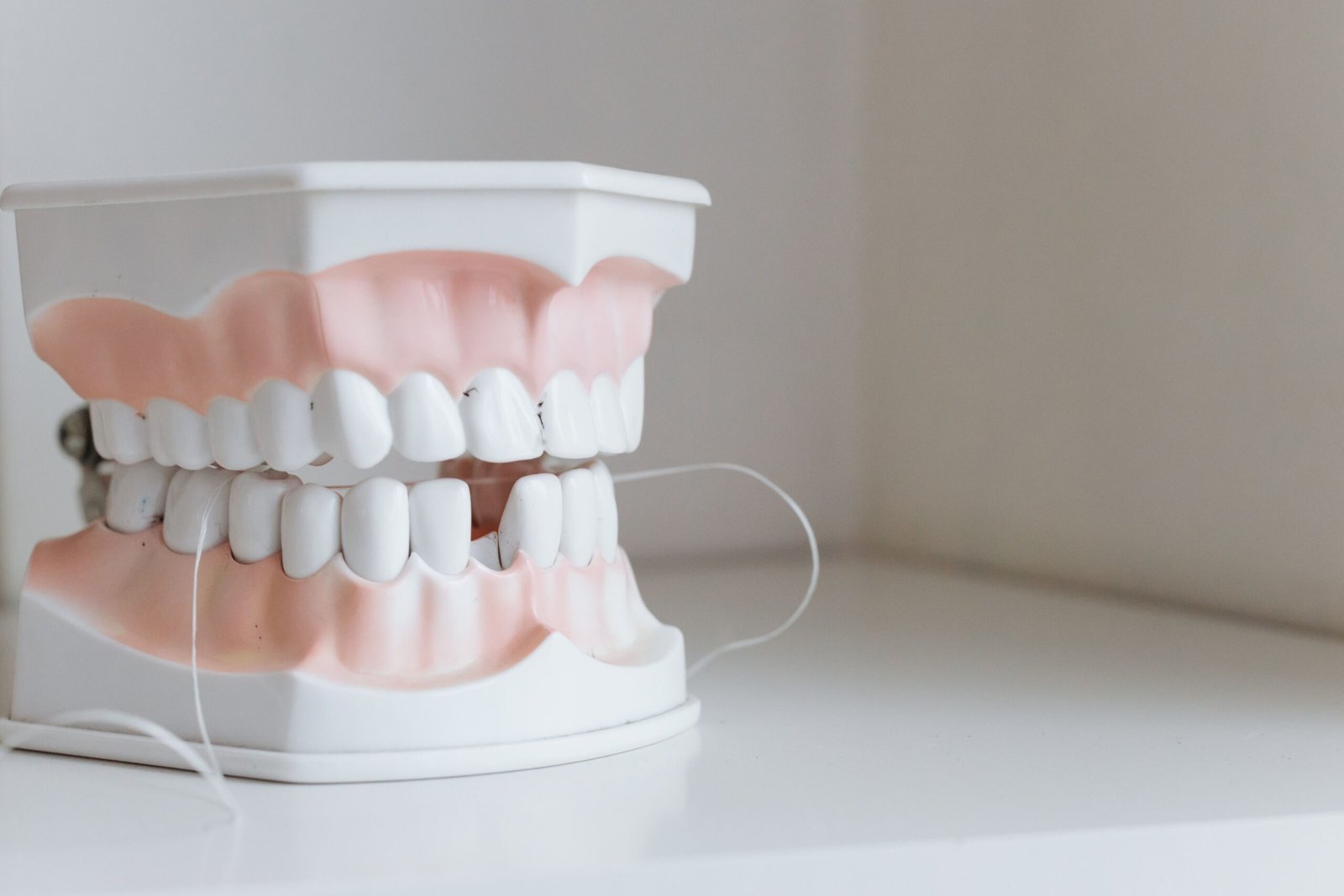
The first thing I noticed when looking into the benefits of probiotics to gum health was that the most interesting research didn’t start with a supplement. It started with people getting their teeth professionally cleaned, often below the gumline. Researchers then asked whether adding specific live bacteria could improve what happened next. That’s a narrower question than the one you might get from reading a bottle, but it’s also a more useful one. It tells us where an oral probiotic might fit into a routine and where it simply can’t do the job.
My takeaway is that certain oral probiotics may modestly improve some signs of gum inflammation when added to professional periodontal care. The most encouraging findings relate to measures such as plaque scores and bleeding during a dental exam. The findings are less convincing for gingivitis on its own, long-term results, and the outcome I’d most want to know about if I had advanced gum disease: whether using a probiotic helps protect the tissues and bone that keep teeth in place. Those aren’t small distinctions. They change whether a supplement is worth considering in the first place.
I also took a close look at ProDentim, a dissolving oral probiotic tablet, because it’s a good example of what a supplement label can and can’t tell you. Its format makes sense for something intended to spend time in the mouth, and its label names one strain precisely. But a product can be thoughtfully designed without having been shown to deliver the same results as the formulas in periodontal trials. I’ll explain how I make that distinction, what I’d check on the bottle, and which signs would send me to the dentist before I spent anything on a supplement.
The gumline is where the probiotic question gets interesting
I find it easier to understand the appeal of oral probiotics once I stop thinking of the mouth as one uniform space. A smooth tooth surface, the back of the tongue, and the narrow space between a tooth and its gum have different conditions. Plaque forms when microorganisms stick to a surface and build a community called a biofilm. At the gumline and between teeth, that film can be easy to miss. If it isn’t removed regularly, some of it can harden into tartar, which needs professional removal. A probiotic tablet doesn’t scrape off plaque or dissolve hardened deposits. (1)
Gum disease isn’t just about how many bacteria are present. It also involves how the body responds to the biofilm. The gum can become red, swollen, or prone to bleeding as part of that response. When inflammation is limited to the gum tissue and hasn’t caused loss of tooth support, it’s called gingivitis. With periodontitis, the tissues and bone supporting teeth have been damaged. Both can involve bleeding, so seeing pink in the sink doesn’t tell you which one you’re dealing with. A dental exam, and sometimes X-rays, can answer a question that a mirror can’t. (1, 2)
This is where the probiotic idea gets interesting. Researchers have explored whether selected bacteria might compete with other microbes for space or nutrients, produce substances that influence nearby bacteria, or affect how gum tissue responds to the biofilm. Those are plausible routes to better gum health, but how a strain behaves in the lab doesn’t necessarily tell us how it will behave in a mouth where saliva is flowing, meals are coming and going, and plaque is already established. Even if a product changes which bacteria show up in a sample, the benefit still has to show up in the gums. (2, 3, 4)
That’s why I pay more attention to what was measured at follow-up than to broad promises about “balancing” the oral microbiome. Less bleeding on probing, for example, tells me something about how the gum responds when a clinician checks it. A shallower periodontal pocket tells me something different. Neither is interchangeable with a minty taste or a smoother-feeling tooth. Those impressions can make a product pleasant to use, but they don’t tell me whether the gums are healthier.
What the research says about the benefits of probiotics to gum health
Some studies found less bleeding during periodontal care
Of all the potential benefits, less bleeding on probing is one of the most relevant to someone dealing with inflamed gums. During a periodontal exam, a clinician uses a small probe to check around each tooth and notes which sites bleed. That’s a more standardized measure than remembering whether your gums bled on Tuesday. It also lets the dental team compare the same areas across visits, which helps show whether a change is widespread or limited to a few spots.
A 2025 systematic review and meta-analysis in BMC Oral Health included 24 studies, 10 on gingivitis and 14 on periodontitis. In the periodontitis studies, the pooled results favored probiotics for bleeding on probing, but when the researchers separated studies by follow-up length, the difference was statistically significant only in the shorter-follow-up group. I read that as a useful short-term signal, not evidence that the effect persists for months or that it will continue once someone stops using the product. (3)
The gingivitis results surprised me more. Probiotic groups tended to have lower bleeding and plaque scores, but those differences weren’t statistically significant in the pooled analysis. That doesn’t rule out a benefit from a particular strain in a particular setting. It does mean I wouldn’t make a probiotic my first purchase for newly bleeding gums. I’d first want to know whether I’m missing plaque between certain teeth, whether there’s tartar I can’t remove at home, and whether the inflammation is limited to the gum tissue. (1, 3)
Plaque scores may improve without a supplement physically removing plaque
The same review found lower plaque scores in the periodontitis studies that used probiotics. A plaque score reflects how much plaque is detected on examined tooth surfaces. For a person already getting periodontal care, a difference in that score is worth studying because plaque doesn’t stop forming after an appointment. Researchers want to know what helps people maintain better conditions between visits. An add-on that improves a measured outcome could be useful even if it only makes a small contribution. (3)
Still, lower plaque scores in a study don’t mean a probiotic breaks up existing tartar or cleans between teeth. Think about the back of a lower front tooth or the space under a bridge. Deposits in those areas don’t disappear because a lozenge dissolves nearby. If I regularly missed a particular spot, I’d get more practical value from asking a hygienist to show me how to reach it than from assuming a supplement could make up for it. The prostate of the evidence here is about improving a measured outcome alongside care, not replacing the work of removing buildup. (1, 3)
I’d also want to know what the comparison group did. If everyone received the same professional care and home-care instructions, a difference between the probiotic and placebo groups is more informative than a before-and-after change in people who improved several habits at once. If someone starts flossing daily, gets a cleaning, and adds a tablet in the same week, any improvement is welcome. It’s just hard to assign that improvement to the tablet. That’s one reason I lean on controlled studies more than I do on customer accounts.
A change in pocket depth is harder to demonstrate consistently
A periodontal pocket is a deeper space between a tooth and the surrounding gum. A dental professional measures it with a probe, often at several points around each tooth. Those numbers help indicate where plaque may be difficult to control and which areas need reassessment. Pocket depth and bleeding give the most useful information when read together, along with measurements that show how much tooth support is present. A single reading doesn’t explain what is happening everywhere else in the mouth. (1, 2)
In the 2025 review, the overall difference in pocket depth didn’t reach statistical significance, although the shorter-follow-up studies did show a significant difference favoring probiotics. The European Federation of Periodontology’s S3 guideline, published in 2020, had already taken a more conservative position after examining trials of probiotics added to below-the-gum cleaning. It suggested against adding probiotics to subgingival instrumentation for stage I–III periodontitis. That’s a recommendation about a specific use in periodontal treatment, not a claim that every oral probiotic is ineffective in every setting. (2, 3)
I don’t see a contradiction between a review detecting a short-term signal and a clinical guideline declining to recommend routine use. An improvement in a particular measure can be a good reason for more research without being a good enough reason to tell most patients to buy a supplement. What would shift my view is a reliable result from an identifiable formula, in patients with a clearly defined condition, that holds up at later appointments. An early difference in pocket depth also doesn’t establish that a supplement regrows bone, reverses gum recession, or saves teeth. Those are separate outcomes and need separate evidence.
Probiotics vs. standard gum care at a glance
The comparison I find most useful is between what an oral probiotic is designed to do and what brushing, interdental cleaning, and professional care actually accomplish. It puts each approach in its proper place and makes it easier to decide where to spend time or money first. (1–4)
| What you’re trying to address | Standard home or professional gum care | Oral probiotic supplement |
|---|---|---|
| Soft plaque at the gumline and between teeth | Brushing and cleaning between teeth physically disrupt the sticky film. A hygienist can help identify missed areas and suggest tools that fit. | Some periodontitis studies report better plaque scores as an add-on. A dissolving tablet does not physically clean the tooth or the space between teeth. |
| Hardened tartar | Professional instruments remove hardened deposits. A dental team can assess whether buildup is also present below the gumline. | A probiotic does not dissolve tartar or clean the root surface. It cannot substitute for professional removal. |
| Bleeding and inflamed gums | A dental exam helps identify the cause. Plaque control and treatment tailored to the diagnosis address common sources of inflammation. | Periodontitis trials show a possible short-term improvement in bleeding on probing. Pooled gingivitis results were inconclusive. |
| Deep pockets or loss of tooth support | Periodontal measurements and, when needed, X-rays inform treatment. Follow-up shows whether pockets remain and further care is needed. | Some studies suggest a short-term effect on pocket depth, but overall findings are inconsistent. A probiotic is not a proven means of rebuilding lost support. |
| Knowing whether the plan is working | Follow-up exams can track bleeding, pocket depths, and changes in tooth support. Maintenance visits can be planned around the person’s risk. | Taste and perceived freshness are not measures of recovery. Any possible benefit is best interpreted alongside dental findings rather than from how the tablet feels. |
The row I’d come back to is the one about bleeding. Bleeding can make someone want a product that acts fast, especially if they’re already brushing twice a day and feel they’re doing everything right. But frequency alone doesn’t tell you whether the brush is reaching the gumline or whether the space between two back teeth is getting cleaned. A checkup can narrow down which sites are inflamed and whether the issue is something home care can address or something that needs professional cleaning. An exam answers the question a supplement can’t: what is making this particular part of my mouth bleed? (1)
How oral probiotic supplements can help, with ProDentim as an example
The practical case for an oral probiotic is that it delivers selected microorganisms in a format meant to contact the mouth. A lozenge or soft tablet that dissolves gives its ingredients more time to mix with saliva than a capsule you swallow straight away. I see that as a sensible design choice for an oral product. I wouldn’t take it as proof that the bacteria reach deep periodontal pockets, stay there, or change how an existing disease progresses. Contact with the mouth is a feature. A measured improvement in gum health is an outcome. (2, 4, 5)
What the ProDentim label tells me
For this article, I looked at the ProDentim soft-tablet label archived in the NIH Dietary Supplement Label Database. The version I reviewed lists a proprietary probiotic blend containing Lactobacillus paracasei, Lactobacillus reuteri, and Bifidobacterium lactis BL-04. It also lists chicory-root inulin and Streptococcus salivarius separately. I’m referring to that particular label. If you’re comparing products, use the Supplement Facts panel on the package you’re considering, since the format and ingredient list are more useful for identification than the product name alone. (5)
The detail I find most helpful is BL-04, the strain identifier following B. lactis. The numbers and letters might not look important, but they make it possible to check whether researchers used the same organism. Two products can list the same species and still use different strains. On the archived label, L. reuteri is named at the species level, without a strain code. Since periodontal studies used specific preparations, I wouldn’t transfer their results to ProDentim simply because both labels include the words L. reuteri. (2, 4, 5)
The same distinction applies to L. paracasei and S. salivarius. An ingredient can be an interesting choice for an oral formula, but its appearance on the label doesn’t tell me how much it contributes to the finished blend or what it does in the presence of the other ingredients. I didn’t find a peer-reviewed randomized trial in the sources I checked showing that this exact ProDentim formulation improves bleeding, pocket depth, or other periodontal outcomes. I’d evaluate it as an optional oral-care supplement, not as a clinically established treatment for gum disease. (2–5)
What “3.5 billion CFU” means in practice
The archived ProDentim label lists 3.5 billion colony-forming units, or CFU, at the time of manufacture for the proprietary blend. CFU estimate the number of viable microorganisms capable of forming colonies under test conditions. That figure tells me something about how the blend was formulated, but it doesn’t tell me the individual count for each strain. It also doesn’t tell me how many viable organisms will be present when I open the last tablet near the end of the bottle’s shelf life. NIH guidance makes the case for looking for a count through the expiration or use-by date rather than only at manufacture. (4, 5)
I wouldn’t rank oral probiotics by the largest number on the front of the bottle. If a study used a specific strain at a particular dose, the relevant comparison is with that strain and that dose, delivered in a comparable format. A larger combined count across several organisms doesn’t tell me whether the one I’m interested in is present at a comparable amount. That’s especially relevant if I’m shopping based on a particular study rather than simply looking for a dissolving tablet to add to an established routine. (4)
Where inulin fits into the formula
Inulin is a prebiotic fiber. It’s not another live organism and shouldn’t be counted as part of the probiotic CFU. In general, a prebiotic is a substance that certain microorganisms can use as fuel. Including inulin alongside probiotic bacteria makes the formula different from a tablet containing bacteria alone. But the presence of inulin doesn’t show that the tablet selectively feeds the bacteria someone wants around their gumline or changes the course of gum disease. Those claims would need data on the complete formulation and the gums themselves. (4, 5)
I also separate flavor from function. A pleasant taste can make something easier to use consistently, and a fresher feeling can be satisfying on its own terms. Neither means the product has removed deposits or reduced bleeding where the gum meets the tooth. For someone considering ProDentim, I think the most grounded case is the convenience of a dissolving oral format with a label you can inspect. If the reason for buying it is persistent bleeding, swelling, recession, or a tooth that feels loose, the more valuable first step is finding out what’s behind the symptom.
What I’d check before adding an oral probiotic
The most useful product comparisons happen after I’ve decided what I want to accomplish. If my only goal were to prevent gum disease and my dentist was happy with my gums, I wouldn’t assume a probiotic was necessary. If I were already receiving treatment and curious about a supplement, I’d bring the label to the appointment. That gives the dentist something concrete to assess, rather than asking whether probiotics as an entire category are “good for gums.” These are the three things I’d check. (1, 2, 4)
- Match the evidence to the goal. I’d look for human research on the outcome I care about, such as bleeding during a gum exam, rather than a study showing a change in saliva bacteria or perceived breath freshness. I’d also look at who was enrolled. People receiving deep cleaning for periodontitis are not the same as people with healthy gums who want to prevent a future problem.
- Read the strain, count, and storage details together. I’d look for complete strain identifiers, check whether the CFU count applies at manufacture or through expiration, and read the storage instructions. I’d also check the other ingredients if I had allergies or sensitivities. A label that makes those details easy to find is more useful to me than one with a long list of general wellness claims.
- Set a reasonable point to reassess. If my dental team thought a trial was appropriate, I’d agree on what the next visit would actually measure. I wouldn’t assume a nicer taste or a single morning without bleeding meant the problem was resolved. A follow-up exam can show which sites improved, which still bleed, and whether any pockets need more attention.
I’d also keep the timing of prescribed products and dental treatments separate from anything I read in a supplement ad. If my dentist had prescribed a rinse or given me specific instructions after a procedure, I wouldn’t stop, replace, or reschedule that treatment just to fit in a probiotic. I’d ask whether the supplement fits the plan at all. The product should earn a place in the routine without making the care I already need harder to follow.
When I’d skip the shopping and call the dentist
Repeated bleeding, swollen gums, persistent bad breath, new recession, pain when chewing, or loose teeth are reasons to arrange a dental evaluation instead of waiting to see whether a probiotic helps. Those symptoms don’t all mean advanced gum disease, and some can have other causes. The point is that you can’t reliably tell the difference at home. I’d also mention any smoking history or diabetes at the visit because both can affect periodontal risk and how a dental team approaches follow-up. (1, 2)
I wouldn’t rule out a problem just because there’s no pain. Gum disease can be present without dramatic discomfort, and an area that looks fine from the front might be difficult to clean on the inner side of a tooth. That’s another reason I like objective measurements. If there’s a change, the dental team can explain where it is, show how to care for that area, and decide whether it needs professional treatment. A supplement that makes the mouth feel fresher doesn’t provide any of that information. (1, 2)
There’s also a separate question of probiotic safety. NIH notes that common probiotics are generally well tolerated by healthy people, although some cause digestive symptoms such as gas. Rare serious infections have been reported, mainly in people who are severely ill or immunocompromised. Anyone with a significantly weakened immune system or serious illness should check with their medical team before starting a live-microbe supplement. I’d also check with an appropriate clinician before using an adult formula for a child or starting one during pregnancy or breastfeeding. A tablet that dissolves in the mouth is still a supplement, and the safety question depends on the person and the formula. (4)
My bottom line on probiotics for gum health
I came away more interested in oral probiotics as a research question than as a default purchase. The most persuasive evidence points to possible improvements in plaque and short-term bleeding measures for some people already receiving care for periodontitis. The evidence is less clear for uncomplicated gingivitis and for pocket-depth improvements that last. Those are useful findings as long as they aren’t stretched into a promise that a tablet can replace professional care or reverse damage that has already happened. (2, 3)
ProDentim illustrates both sides of the decision. It has a dissolving format designed for use in the mouth, and the archived label gives me concrete details to compare. It also shows why a familiar species name and a large combined CFU number aren’t enough to predict what will happen to an individual’s gums. If my gums were bleeding now, I’d book the exam and ask which sites needed more attention. If my care was already on track and I still wanted to explore a probiotic, I’d choose based on the strain, the outcome studied, and what my dentist could measure at follow-up.
Disclaimer
This article is for informational purposes and is not a dental diagnosis or a substitute for individualized advice from a dentist, periodontist, or other qualified healthcare professional. The discussion of ProDentim is based on an archived label and relevant scientific literature, not personal use or a clinical endorsement. Check the packaging you have for current ingredients and directions, and seek professional advice if you have ongoing symptoms, a weakened immune system, or questions about adding a supplement to your care plan.
References
- National Institute of Dental and Craniofacial Research. Periodontal (Gum) Disease. This NIH resource explains how plaque and tartar contribute to gum disease, which symptoms merit an exam, and how dental professionals diagnose and treat the condition. It provides the clinical background for separating routine plaque control from periodontal treatment.
https://www.nidcr.nih.gov/health-info/gum-disease - Sanz M, Herrera D, Kebschull M, et al. (2020). Treatment of Stage I–III Periodontitis—The EFP S3 Level Clinical Practice Guideline. Published in the Journal of Clinical Periodontology, this evidence-based guideline outlines staged periodontal care and gives a specific recommendation on the use of probiotics alongside below-the-gum instrumentation.
https://pmc.ncbi.nlm.nih.gov/articles/PMC7891343/ - Benavides-Reyes C, Cabello I, Magán-Fernández A, et al. (2025). Clinical Effects of Probiotics on the Treatment of Gingivitis and Periodontitis: A Systematic Review and Meta-Analysis. This BMC Oral Health paper separates gingivitis and periodontitis studies and examines plaque, bleeding on probing, and pocket depth. Its follow-up analysis helps put the most encouraging short-term results in context.
https://pmc.ncbi.nlm.nih.gov/articles/PMC11971800/ - National Institutes of Health, Office of Dietary Supplements. Probiotics: Fact Sheet for Health Professionals. This evidence-based overview explains strain identification, how to interpret CFU and shelf-life claims, and the safety considerations relevant to people with serious illness or compromised immune function.
https://ods.od.nih.gov/factsheets/Probiotics-HealthProfessional/ - National Institutes of Health, Office of Dietary Supplements, Dietary Supplement Label Database. ProDentim Soft Tablets, Archived Product Label. This manufacturer label, archived by NIH, documents the ingredient names, serving format, and manufacture-time CFU statement discussed in the article. The archive establishes what the label says, not whether the product is clinically effective.
https://api.ods.od.nih.gov/dsld/s3/pdf/298943.pdf